
What are the specifications of the top Bitcoin ASIC miners of 2026?
The latest generation of Bitcoin miners in 2026 deliver record-breaking performance. Each machine’s specifications tell a story of how far mining tech has come in terms of hashrate (TH/s) and power efficiency.
Leading 2026 ASIC models range from around 255 TH/s up to over 1,100 TH/s in hashrate, with power consumptions roughly proportional to their performance. For example, Bitmain’s flagship Antminer S23 series achieves 580 TH/s (Hydro-cooled) and even 1,160 TH/s in its top configuration, while competing models like the WhatsMiner M79S offer similar hash power (~1.04 PH/s) at higher wattage. Each miner’s efficiency (joules per terahash) reflects its design and cooling method – with hydro-cooled units generally leading in energy efficiency.
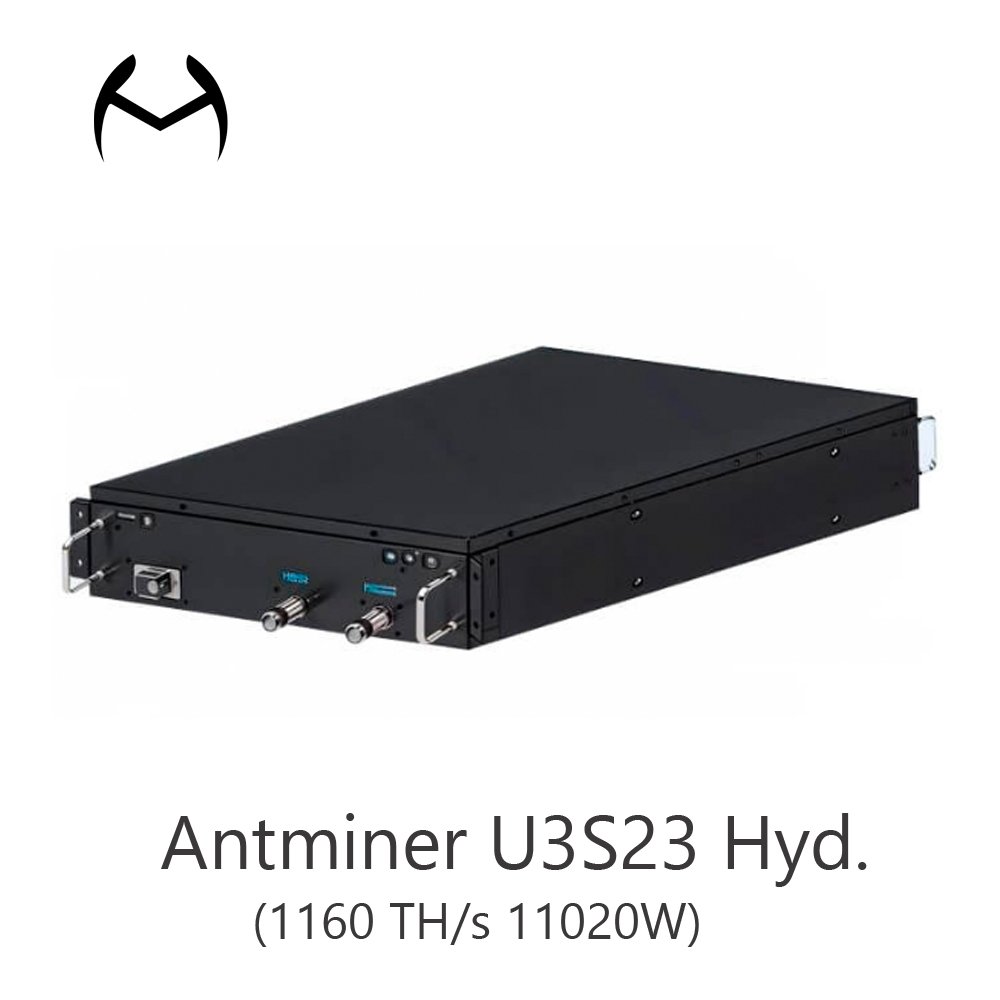
Let’s break down the specifications of the top Bitcoin ASIC miners of 2026. I’ve organized them by manufacturer, highlighting their hash rates, power usage, and efficiency:
Bitmain Antminer S23 & S21 Series
Bitmain’s Antminer lineup dominates the high-end with its S23 series and the late-model S21 series:
| Model | U3S23 Hydro | S23 Hydro | S23e U2 Hydro | S21e XP Hydro | S21 XP (Air) | S21 XP Immersion | S21 Hydro |
|---|---|---|---|---|---|---|---|
| Cooling Type | Hydro (3U) | Hydro | Hydro (2U) | Hydro | Air | Immersion | Hydro |
| Release Period | Early 2026 | 2025 | 2025 | Late 2024 | 2025 | 2025 | 2024 |
| Hashrate | 1,160 TH/s | 580 TH/s | 865 TH/s | 430 TH/s | 270 TH/s | 300 TH/s | 335 TH/s |
| Power Consumption | 11,020 W | 5,510 W | 8,650 W | 5,590 W | 3,645 W | 4,050 W | 5,360 W |
| Efficiency | 9.5 J/TH | 9.5 J/TH | 10.0 J/TH | 13.0 J/TH | 13.5 J/TH | 13.5 J/TH | 16.0 J/TH |
| Noise Level | ~50 dB | ~50 dB | ~50 dB | ~50 dB | ~75 dB | ~50 dB | ~50 dB |
| Form Factor | 3U Rack | 3U Rack | 2U Rack | 3U Rack | Standalone | Immersion Tank | 3U Rack |
| Key Highlight | First >1 PH/s miner | Best-in-class efficiency | High density rack design | XP chip efficiency upgrade | Most accessible high-end air unit | Stable immersion performance | Former efficiency flagship |
Bitmain clearly pushed the envelope with the S23 series. The 9.5 J/TH efficiency of the Antminer S23 models is the best in class. That means these machines produce less heat and waste per hash, which is crucial for miners facing high energy costs. It’s also notable that Bitmain’s move to hydro-cooling (and even immersion) across their top models has enabled these efficiencies. From my perspective running a mining hardware business, I’ve seen many large-scale operations jump on the S23 Hyd and U3S23 because they can pack incredible hashpower into their existing facilities without blowing out their power budgets. The S21 series, while a step behind in efficiency, still holds relevance for those who perhaps got them earlier or prefer air-cooled simplicity (in the case of the S21 XP 270T).
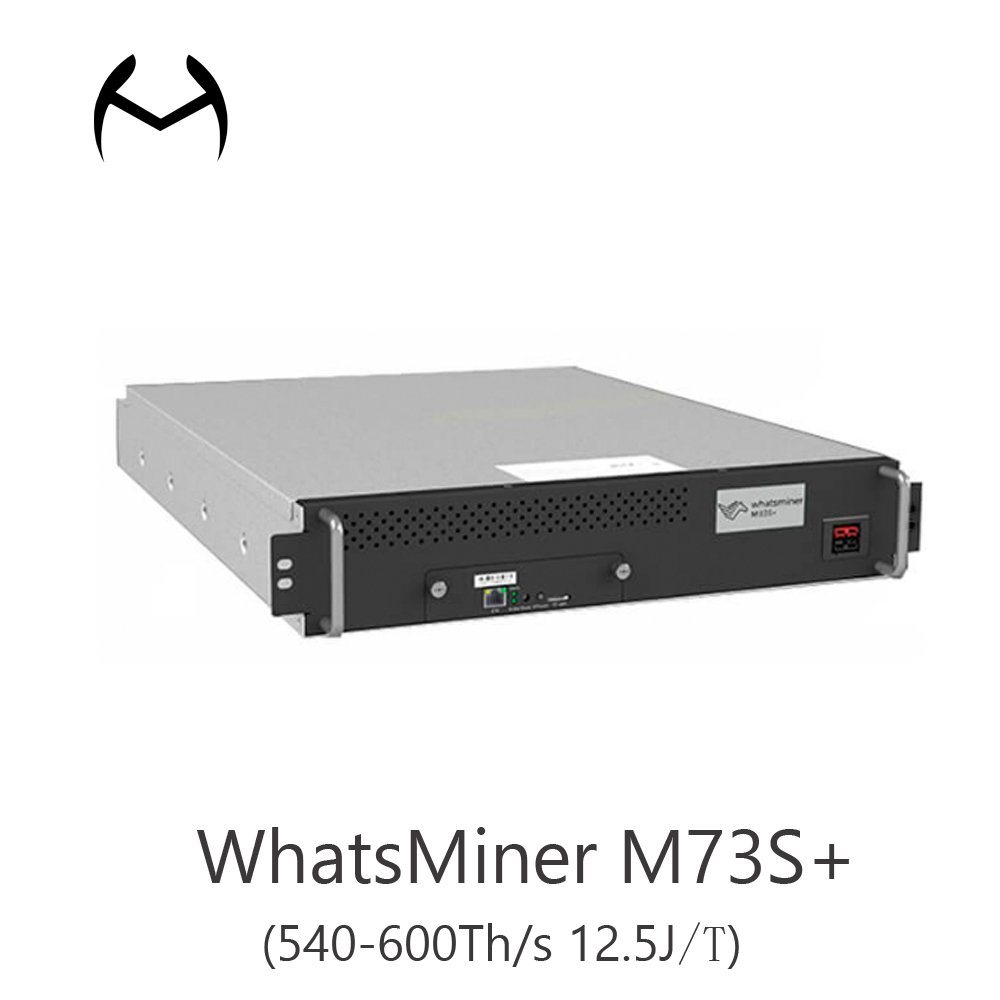
MicroBT WhatsMiner M63S, M73, and M79S
MicroBT’s WhatsMiner series is Bitmain’s chief competitor, known for rock-solid build quality. In 2026, their flagship models emphasize raw hashrate:
| Model | M79S Hydro | M73 Hydro | M63S Hydro |
|---|---|---|---|
| Release Period | Late 2025 | 2025 | Late 2023 |
| Cooling Type | Hydro | Hydro | Hydro |
| Hashrate | 1,040–1,350 TH/s | 512 TH/s | 390 TH/s |
| Nominal Marketed Hashrate | ~1,040 TH/s | 512 TH/s | 390 TH/s |
| Power Consumption | ≈20,000 W | 7,200 W | 7,215 W |
| Efficiency | 14.5–14.8 J/TH | ≈14.0 J/TH | ≈18.5 J/TH |
| Noise Level | ~50 dB | ~50 dB | ~50 dB |
| Infrastructure Requirement | Industrial-grade | Industrial-grade | Industrial-grade |
| Key Positioning | Maximum PH-scale output | Balanced high-power unit | Reliable prior-gen workhorse |
MicroBT clearly went for brute force with the M79S. I’ve spoken with clients (particularly in North America) who deployed WhatsMiner M-series rigs because they trust MicroBT’s engineering and want diversity beyond Bitmain. The M79S’s ability to hit ~1.3 PH/s is remarkable, but the cost is literally power – it draws almost double the wattage of Bitmain’s 1.16 PH/s miner. As a result, its efficiency lags behind. The M73 and M63S fill in the mid-to-high range: they’re solid, but if energy efficiency is your priority, Bitmain still has the edge. One thing I’ve noticed: the WhatsMiners often have robust air-cooled versions (like the M70 series not listed here) that some smaller miners prefer for simplicity, but in this “top miners” list, all the MicroBT entries are hydro-cooled because that’s where the performance maxes out.
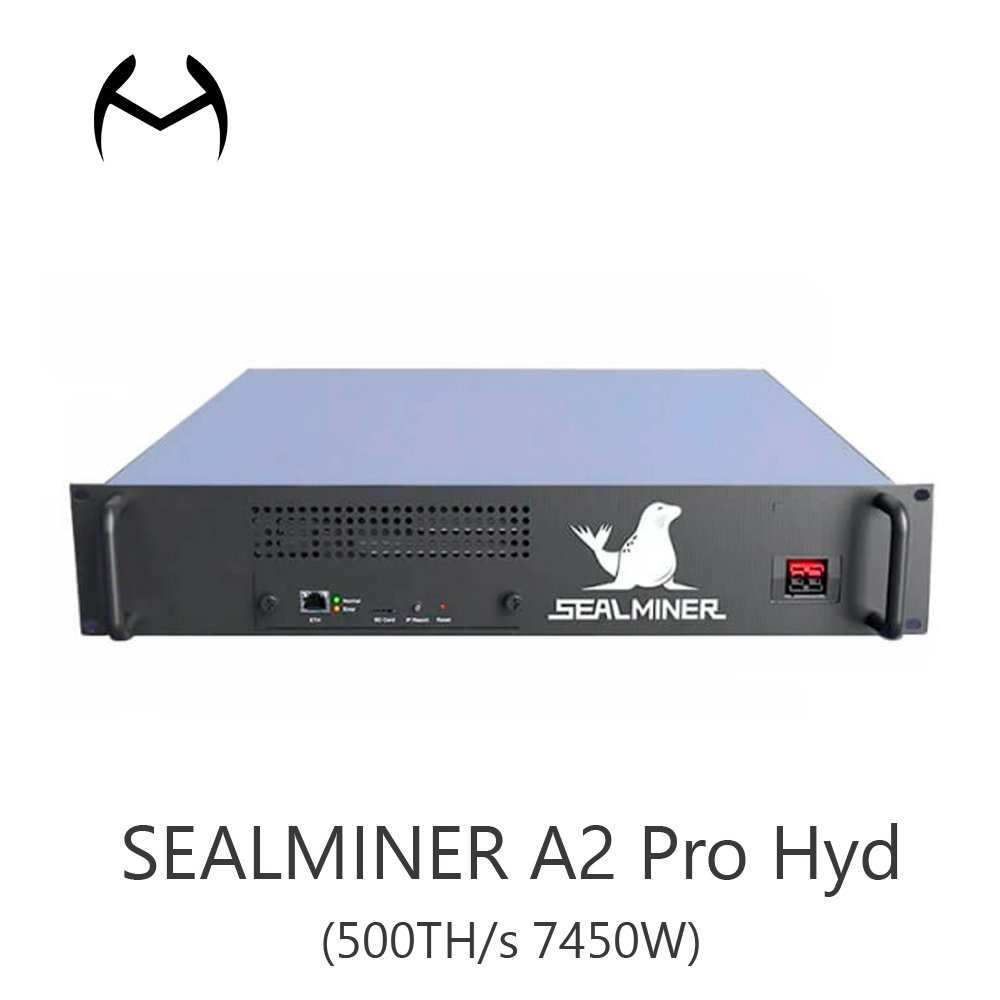
Bitdeer SealMiner A2 Series
A newcomer to manufacturing, Bitdeer (better known as a mining service company) introduced the SealMiner A2 series to shake up the market. They offer competitive hash rates at aggressive pricing:
| Model | SealMiner A2 Pro Hydro | SealMiner A2 Hydro | SealMiner A2 Pro Air |
|---|---|---|---|
| Release Period | Mid-2025 | Mid-2025 | Mid-2025 |
| Cooling Type | Hydro (Water-cooled) | Hydro (Water-cooled) | Air-cooled |
| Hashrate | 500 TH/s | 440 TH/s | 255 TH/s |
| Power Consumption | 7,450 W | ~6,600 W | 3,730 W |
| Efficiency | 14.9 J/TH | ~15.0 J/TH | ~14.6 J/TH |
| Noise Level | ~50 dB | ~50 dB | ~75 dB (air fans) |
| Form Factor | Hydro rack unit | Hydro rack unit | Standard air ASIC |
| Chip Architecture | Bitdeer SEAL chips | Bitdeer SEAL chips | Bitdeer SEAL chips |
| Warranty | 6–12 months | 6–12 months | 6–12 months |
| Installation Complexity | Requires water loop | Requires water loop | Plug-and-play |
| Key Positioning | High-output hydro flagship | Mid-tier hydro option | Accessible air-cooled model |
| Primary Advantage | Strong 500T output at competitive cost | Balanced hydro performance | Opens Bitdeer miners to small operators |
| Limitation | Requires hydro infrastructure | Requires hydro infrastructure | Lower total hashrate |
Bitdeer’s SealMiner A2 series carved out a niche by being cost-effective. As someone running a mining equipment business, I was initially skeptical of a “new” miner brand, but these units have proven themselves in the field for over a year now. They might not top the efficiency chart, but they are good enough and significantly cheaper per terahash. Many of my budget-conscious clients (especially some in emerging mining regions or those expanding farms on thin margins) showed interest in SealMiners.
The A2 Pro Hydro, delivering 500T at ~7.45 kW, fits well in farms that already use hydro-cooling and want to lower their hardware costs. Meanwhile, the Air-cooled A2 Pro (255T) is appealing for mid-size operations that want something a bit more advanced than last-gen air-cooled miners without dealing with liquid cooling. It’s also interesting that Bitdeer, as a company running mining datacenters, essentially built miners that they themselves would use – optimized for acceptable efficiency at a much lower purchase price. This strategy is clearly pushing competitors to adjust their pricing or features.
To summarize the specs, here’s a comparison table of these 15 top ASIC miners of 2026:
| Miner Model | Hashrate | Power | Efficiency (J/TH) | Cooling |
|---|---|---|---|---|
| Bitmain Antminer U3 S23 Hydro | 1160 TH/s | 11,020 W | 9.5 J/TH | Hydro (Water) |
| Bitmain Antminer S23 Hyd | 580 TH/s | 5,510 W | 9.5 J/TH | Hydro (Water) |
| Bitmain Antminer S23e U2 Hyd | 865 TH/s | 8,650 W | 10.0 J/TH | Hydro (2U) |
| Bitmain Antminer S21e XP Hyd | 430 TH/s | 5,590 W | 13.0 J/TH | Hydro (Water) |
| Bitmain Antminer S21 XP Imm | 300 TH/s | 4,050 W | 13.5 J/TH | Immersion Cooling |
| Bitmain Antminer S21 XP (Air) | 270 TH/s | 3,645 W | 13.5 J/TH | Air-Cooled |
| Bitmain Antminer S21+ Hyd | 319 TH/s | ~5,100 W* | ~16 J/TH (est.) | Hydro (Water) |
| Bitmain Antminer S21 Hyd | 335 TH/s | 5,360 W | 16.0 J/TH | Hydro (Water) |
| MicroBT WhatsMiner M79S Hyd | ~1040 TH/s | 20,000 W | ~14.8 J/TH | Hydro (Water) |
| MicroBT WhatsMiner M73 Hyd | 512 TH/s | 7,200 W | 14.0 J/TH | Hydro (Water) |
| MicroBT WhatsMiner M63S Hyd | 390 TH/s | 7,215 W | 18.5 J/TH | Hydro (Water) |
| Bitdeer SealMiner A2 Pro Hyd | 500 TH/s | 7,450 W | 14.9 J/TH | Hydro (Water) |
| Bitdeer SealMiner A2 Hyd | 440 TH/s | ~6,600 W | ~15 J/TH (est.) | Hydro (Water) |
| Bitdeer SealMiner A2 Pro Air | 255 TH/s | 3,730 W | ~14.6 J/TH (est.) | Air-Cooled |
*(Estimated values are based on known efficiency or scaling assumptions; “S21+ Hyd” figures are approximated since official specs weren’t publicly released by Bitmain in detail.)
Looking at this table, it’s clear that the top performers (by hashrate) are the Antminer U3S23 and WhatsMiner M79S, both breaching the 1 PH/s level. On the efficiency front, Bitmain’s S23 series (including the U3S23) leads with 9.5 J/TH, which is significantly better than the ~14 J/TH of most others. The lower end of the list (e.g., M63S, older S21 models) show how far we’ve come in just a couple of years – from ~18 J/TH down to ~10 J/TH or less. It’s an exciting time in the industry, with new cooling techniques like immersion and hydro becoming mainstream to keep pushing these numbers.
How do these top ASIC miners compare in profitability and power consumption?
Specification sheets only tell part of the story. As a miner, I care deeply about profitability – how much Bitcoin can these machines earn versus how much they cost to run. This boils down to power consumption (electricity costs) relative to hashpower, as well as how each miner’s efficiency holds up under real network conditions.
In terms of efficiency and power costs, Bitmain’s best miners (like the S23 series at ~9.5 J/TH) can generate Bitcoin at a lower electricity cost per terahash than less efficient models. For example, a 1.16 PH/s Antminer U3S23 consumes ~11 kW while a similarly powerful WhatsMiner M79S draws ~20 kW – meaning the Bitmain unit achieves the same hashrate with nearly 45% less power. This efficiency advantage translates directly into higher daily profit margins, especially in regions with expensive electricity. Less efficient miners (around 15–18 J/TH) remain profitable only if power is cheap or if BTC prices are high, as more of their revenue is eaten up by electricity costs.

When comparing profitability, I always start with efficiency (J/TH) because it tells me how many joules (and thus watt-hours) are needed for a given amount of work (hashes). Here’s a closer look at how efficiency differences impact power usage and profits:
Energy Efficiency and Electricity Costs
The most efficient miner on our list, the Antminer S23 Hyd, uses 9.5 J to produce 1 TH. In contrast, a miner like the WhatsMiner M63S uses about 18.5 J for that same 1 TH. This nearly 2× difference in efficiency has huge implications. Consider this scenario from my own operation:
- Running 1 PH/s of hashing power on S23-class machines (~9.5 J/TH) would consume about 9.5 MW per second of hashing. Over an hour that’s 9.5 MJ, which is roughly 2.64 kWh per TH per day. For 1 PH (1000 TH/s) that’s 2,640 kWh/day. Compare that to 1 PH/s on M63S-class miners (~18.5 J/TH), which would consume ~5,136 kWh/day for the same hashes. If I’m paying, say, $0.05 per kWh, the cost difference is $132 per day versus $257 per day – more than double the electricity expense to run the less efficient gear for the same hash rate.
| Miner Class | Efficiency (J/TH) | Energy Use for 1 PH/s | Daily Energy Use | Daily Cost @ $0.05/kWh | Daily Cost @ $0.10/kWh |
|---|---|---|---|---|---|
| S23-Class Hydro | 9.5 J/TH | 9.5 kW per PH/s | 2,640 kWh/day | $132/day | $264/day |
| M63S-Class Hydro | 18.5 J/TH | 18.5 kW per PH/s | 5,136 kWh/day | $257/day | $514/day |
Now, most people won’t run a full PH of older gear in 2026 – they’d upgrade. But even on a per-unit basis, these differences matter. Let’s compare two specific machines:
- Antminer U3S23 (1160 TH/s) – At 11,020 W, if electricity costs $0.05/kWh, it costs about $13.22 per day to run this miner. At $0.10/kWh, it’s roughly $26.45/day.
- WhatsMiner M79S (1350 TH/s) – At 20,000 W, the daily cost at $0.05/kWh is $24.00, and at $0.10/kWh it’s $48.00.
| Model | Hashrate | Power Draw | Efficiency | Daily Cost @ $0.05/kWh | Daily Cost @ $0.10/kWh |
|---|---|---|---|---|---|
| Antminer U3S23 Hydro | 1,160 TH/s | 11,020 W | 9.5 J/TH | $13.22/day | $26.45/day |
| WhatsMiner M79S Hydro | 1,350 TH/s | 20,000 W | 14.8 J/TH | $24.00/day | $48.00/day |
If we assume both miners generate similar daily Bitcoin revenue (which, at those hash rates, they do – roughly on the order of 0.0005–0.0006 BTC per day at current network difficulty), the difference in power cost is dramatic. At $0.10 power, the M79S might barely break even or even operate at a loss, whereas the U3S23 would still have some profit margin left. This illustrates why efficiency is often the deciding factor for miners in places like Europe or parts of North America where electricity can be $0.10/kWh or higher. On the other hand, miners in regions with very cheap power (like hydroelectric-rich areas at $0.03–0.04/kWh) might be less concerned – they could afford to run a few of the older or less efficient units because their cost per kWh is so low.
It’s also useful to mention breakeven electricity price. Many of these top miners remain profitable up to a certain electricity rate. From industry data:
- A highly efficient miner (~9–10 J/TH) might remain profitable at electricity prices up to $0.12 per kWh or more (depending on BTC price). For instance, at $0.12/kWh the S23 Hydro would use $31.6 of electricity per day at full load, which could still be viable if it earns more than that in Bitcoin.
- A less efficient miner (~15 J/TH) often requires power around $0.06–0.08 per kWh or below to stay profitable long-term. If you feed such a miner expensive power, the electricity could consume well over half of your mining revenue (if not all). In fact, industry experts note that even though models like the WhatsMiner M79S or SealMiner A2 are high-output, profitability depends heavily on energy prices for them.
Real-World Profitability Considerations
Profitability isn’t static; it depends on the Bitcoin network difficulty and BTC price too. I keep a close eye on these metrics:
- Network Difficulty and Hashrate: All these new machines have collectively pushed Bitcoin’s total network hashrate to new heights. When difficulty rises (as more of these units come online), each TH/s earns slightly less BTC per day. This means the advantage of having efficient hardware becomes even more critical – because you want your operating costs to be as low as possible when mining rewards are diluted. For example, when a flood of S23 and M79S units were deployed in early 2026, difficulty spiked, and some of my older S19J Pro miners basically became unprofitable overnight unless I had nearly free electricity. The new gear, however, could endure the difficulty increase due to their efficiency.
- Bitcoin Price Volatility: If BTC’s price surges, even inefficient miners turn profitable because the value of the mined BTC increases relative to costs. Conversely, if BTC price drops, only the efficient miners might remain above water. The top-tier miners give you more cushion. A quick anecdote: in late 2025, Bitcoin’s price dipped while we waited for the next bull run. I saw many miners turn off their older machines, but those who had invested in S21 Hydros or better were able to keep running – they could still make a small profit or at least break even, whereas older-gen units would be mining at a loss under the same conditions.
Multi-Miner Profit Comparison Example
To put numbers into perspective, here is a simplified comparison assuming a moderate BTC price and a fixed electricity rate of $0.05/kWh (a common industrial rate for mining in places with decent energy costs):
| Miner | Daily BTC Mined (est.) | Daily Revenue (USD) | Daily Electricity Cost (USD @ $0.05/kWh) | Daily Profit (USD) |
|---|---|---|---|---|
| Antminer S23 Hyd 580T | ~0.000250 BTC | ~$25.00 | $6.61 (5510W) | ~$18.4 |
| Antminer U3S23 Hyd 1160T | ~0.000500 BTC | ~$50.00 | $13.22(11020W) | ~$36.8 |
| WhatsMiner M79S 1.35PH | ~0.000580 BTC | ~$58.00 | $24.00(20000W) | ~$34.0 |
| SealMiner A2 Pro Hyd 500T | ~0.000250 BTC | ~$25.00 | $8.94(7450W) | ~$16.1 |
| Antminer S21 XP 270T (Air) | ~0.000135 BTC | ~$13.50 | $4.37(3645W) | ~$9.1 |
| WhatsMiner M63S 390T | ~0.000195 BTC | ~$19.50 | $8.66(7215W) | ~$10.8 |
(Daily BTC mined is estimated from network share – these values are illustrative. Actual revenue varies with network difficulty and block rewards. Electricity costs are calculated from power usage; profit is revenue minus electricity.)
From the table, you can see that at $0.05/kWh:
- The Antminer S23 Hydro and U3S23 Hydro yield healthy daily profits (around 70–75% of revenue remains after power costs).
- The WhatsMiner M79S, despite a huge output, loses a bigger chunk to electricity (only ~58% of revenue remains as profit in this scenario).
- The SealMiner A2 Pro Hydro, which has lower efficiency than S23 but also slightly lower hashrate, ends up with ~64% of revenue as profit.
- Older or smaller units like the S21 XP (air) and M63S still turn a profit at $0.05, but their margins are thinner (~67% and 55% of revenue as profit, respectively, in this example).
This simple analysis confirms a rule I always keep in mind: efficiency directly boosts profit margins. If energy costs are a significant part of your expenses, investing in more efficient hardware pays off daily. On the flip side, if you have a special situation like access to very cheap or subsidized electricity, you could tolerate running some less efficient (but perhaps cheaper to acquire) machines and still make money.
To wrap up, the key takeaways on profitability and power are:
- Bitmain’s S23 series and similar efficient models deliver the most hashing per watt, which is a huge advantage in high electricity-cost environments.
- Power-hungry models (like the highest-clocked WhatsMiners or older-gen gear) can earn more gross BTC due to high TH/s, but you must have low electricity rates to see good net profits.
- A balanced farm might employ a mix, but as of 2026, the trend is clear: miners are gravitating to high-efficiency ASICs to stay competitive. I’ve noticed even some of the “megafarms” which historically bought whatever was cheapest per TH are now prioritizing efficiency because it insulates them against future energy price fluctuations and increases in mining difficulty.
In the next section, I’ll discuss the costs of these units and how long it might take to recover the investment – which ties directly into this profitability discussion.
What are the costs and payback periods for these top ASIC miners?
Buying an ASIC miner is a significant investment. When I purchase new hardware for my own operation or advise clients, two big questions are: How much does it cost upfront? and How long will it take to pay for itself (ROI)? In 2026, with the mining landscape so competitive, calculating the payback period has become more important than ever.
High-end Bitcoin miners in 2026 vary widely in price, typically ranging from about $15 to $30 per terahash of capacity. Bitmain’s flagship models command the upper end (around $30/TH) – for instance, the Antminer S23 Hydro 580T debuted around $17,400 per unit. In contrast, Bitdeer aggressively prices its SealMiner A2 Pro at roughly $15/TH (a 500 TH/s unit for ~$7,500). These capital costs directly influence payback time: assuming stable mining conditions, a top-tier efficient miner might recoup its cost in roughly 1.5 to 2.5 years at $0.05/kWh electricity, whereas a less efficient or more expensive unit could stretch closer to 3 years or more. Rapid changes in Bitcoin’s price or network difficulty can further shorten or extend these payback periods.
Let’s unpack that step by step:
Upfront Costs of Top ASICs
The sticker price for an ASIC miner can be eye-watering, but it reflects the technology and demand. Here’s a breakdown of approximate prices (in USD) for the miners we’ve discussed, based on manufacturer or reseller listings around late 2025 / early 2026:
- Bitmain Antminer U3S23 Hydro (1160T) – Approximately $34,800 (launch price), which equates to $30 per TH. Bitmain actually priced most of its S23 series at about $30/TH initially. For example, the 580T S23 Hydro was ~$17k–18k (before any bulk discounts or coupons). This is a premium price reflecting its top efficiency and performance. (Bitmain often uses tiered pricing, so early batches cost more; sometimes there were promotions like 85% of list price for certain batches.)
- Bitmain Antminer S23e U2 Hydro (865T) – Roughly $13,000–16,000. There have been wholesale offers for around $15–$18/TH on this model in bulk, interestingly making it cheaper per TH than the flagship. I recall seeing a supplier listing one for about $13k when bought in quantity. Bitmain might have positioned the S23e as a value option for large deployments (lower efficiency, but also lower cost per TH).
- Bitmain Antminer S21e XP Hydro (430T) – Quoted around $9,245 per unit (spot price) which is ~$21.5 per TH. This aligns with it being an earlier gen (S21 family) product – cheaper per hash than S23 series, but also less efficient. The S21 XP Immersion (300T) was around $5,400 at one point (roughly $18/TH), showing how prices dropped for the older tech.
- MicroBT WhatsMiner M79S Hydro (~1.3PH) – These were often listed around $40,000–$50,000 initially (which is about $30–$37 per TH, depending on whether you consider it 1350T or 1040T). For instance, one retailer had it at $50k for 1.35PH, while another source indicated ~$7,000 which seems implausibly low (perhaps a deposit or a mistake). Realistically, big buyers likely negotiated better deals, especially if they were buying dozens of units. But it’s safe to say the M79S, being so powerful, was one of the most expensive single miners you could buy in 2026.
- MicroBT WhatsMiner M73 Hydro (512T) – A smaller sticker of around $8,000 (I’ve seen prices like $8,280 on some sites). That’s roughly $16/TH, reflecting that it’s not the top model and possibly that MicroBT offered it at a competitive rate to gain market share against Bitmain.
- MicroBT WhatsMiner M63S (390T) – By 2026, this older model’s price had fallen significantly. It launched in 2023 in the tens of thousands, but by the time it’s considered “last gen,” you might find it for just a few thousand dollars. Some resale prices were around $3,000–$5,000 (which is under $10/TH). Of course, many miners try to sell off older units when new ones come, often at a big discount.
- Bitdeer SealMiner A2 Pro Hydro (500T) – Official price $7,500 (or even lower with promotions). This was a game-changer: $15 per TH was basically half the cost per hash of Bitmain’s equivalent. Bitdeer could afford thinner margins, possibly because they use the machines in-house and also because they wanted to grab market share. I actually jumped on a batch of these for our inventory given the attractive pricing – it’s a selling point for customers who can’t stomach Bitmain’s prices. The SealMiner A2 (440T) was cheaper per unit, of course; I’d estimate it around $6,000 if proportional. And the A2 Pro Air (255T) might be in the ballpark of $4,000 or so.
- Other Bitmain S21 models (335T Hydro, 270T Air, etc.) – The S21 Hydro 335T was initially about $10,000+ but fell to maybe $6k-7k as S23 launched (so ~$18–20/TH and then down to ~$15/TH in late 2025). The S21 XP 270T (air) I’ve seen on listings for around $3,500–$5,000 new, depending on the retailer, which is also about $13–18/TH. Prices vary widely by batch and time, but older models drop as newer ones take over.
| Brand | Model | Hashrate (TH/s) | Cooling | Market Price (USD) | $/TH | Key Notes |
|---|---|---|---|---|---|---|
| Bitmain | Antminer U3S23 Hydro | 1,160 | Hydro | ~$34,800 (launch) | ~$30 | First >1 PH/s miner. Flagship S23 pricing. Tiered batch discounts sometimes applied. |
| Bitmain | Antminer S23 Hydro | 580 | Hydro | ~$17,000–$18,000 | ~$30 | Standard S23 Hydro. Premium efficiency class. |
| Bitmain | Antminer S23e U2 Hydro | 865 | Hydro | ~$13,000–$16,000 | ~$15–18 | Bulk wholesale deals seen near ~$13k. Value large-farm model. |
| Bitmain | Antminer S21e XP Hydro | 430 | Hydro | ~$9,245 | ~$21.5 | Earlier XP generation. Cheaper than S23, less efficient. |
| Bitmain | Antminer S21 XP Immersion | 300 | Immersion | ~$5,400 | ~$18 | Price dropped after S23 launch. |
| Bitmain | Antminer S21 Hydro | 335 | Hydro | ~$6,000–$7,000 (post-drop) | ~$15–20 | Initially >$10k, repriced after S23 release. |
| Bitmain | Antminer S21 XP Air | 270 | Air | ~$3,500–$5,000 | ~$13–18 | High-end air-cooled model. |
| MicroBT | WhatsMiner M79S Hydro | 1,040–1,350 | Hydro | ~$40,000–$50,000 | ~$30–37 | Extreme hashpower. Requires industrial 20kW infrastructure. |
| MicroBT | WhatsMiner M73 Hydro | 512 | Hydro | ~$8,000–$8,300 | ~$16 | Competitive pricing vs Bitmain. |
| MicroBT | WhatsMiner M63S Hydro | 390 | Hydro | ~$3,000–$5,000 (resale) | < $10 | Last-gen model, heavy resale discount. |
| Bitdeer | SealMiner A2 Pro Hydro | 500 | Hydro | $7,500 official | ~$15 | Market disruptor. Half Bitmain’s $/TH. 6–12 month warranty. |
| Bitdeer | SealMiner A2 Hydro | 440 | Hydro | ~$6,000 (est.) | ~$13–15 | Non-Pro variant. |
| Bitdeer | SealMiner A2 Pro Air | 255 | Air | ~$4,000 (est.) | ~$15–16 | Air-cooled version for smaller operations. |
The trend here is that newer, more efficient machines command a higher price per terahash. Buyers are willing to pay a premium for efficiency (because it pays back over time). Meanwhile, new entrants like Bitdeer undercut on price per TH but with slightly lower efficiency. For someone like me who runs a mining operation, this creates a decision: do I invest more upfront to save on power later, or do I save money now knowing I’ll pay more in electricity? Many actually do a mix, balancing short-term budget and long-term operational cost.
Payback Period (ROI) Analysis
The payback period is essentially: (Cost of miner) / (Daily profit). A lot of customers ask me, “How many days until this machine pays for itself?” It’s a vital question, though the answer is a moving target.
| Model | Hashrate (TH/s) | Market Price (USD) | Daily Profit (USD) | Payback Days | Payback Period (Years) | ROI Notes |
|---|---|---|---|---|---|---|
| Bitmain Antminer S23 Hydro | 580 | ~$13,000 | ~$18.4/day | ≈707 days | ≈1.94 years | Premium efficiency. Stable long-term model. |
| Bitdeer SealMiner A2 Pro Hydro | 500 | $7,500 | ~$16.1/day | ≈466 days | ≈1.28 years | Fastest ROI due to low upfront cost. Slightly higher risk brand. |
| Bitmain Antminer S21 XP (Air) | 270 | ~$4,000 | ~$9.1/day | ≈439 days | ≈1.20 years | Discounted last-gen efficiency sweet spot. |
| MicroBT WhatsMiner M79S Hydro | 1,040–1,350 | ~$45,000 | ~$34/day | ≈1,324 days | ≈3.63 years | Extreme power unit. ROI relies on very cheap power or BTC upside. |
Let’s compute a rough example using one of the top miners – say the Antminer S23 Hydro (580T): Now, 1.9 years is actually pretty good in mining – during some periods, ROI for new gear has been well over 2 years. But remember, this assumes current conditions hold. If BTC price rises, that profit could increase (shortening ROI to maybe 1 year or less in a bull run). If difficulty keeps climbing or BTC drops, ROI could lengthen.
For comparison, consider the SealMiner A2 Pro Hydro (500T): That’s notably shorter! How can the cheaper, less efficient machine pay back faster? The secret is in the low upfront cost. SealMiner gives you 500T for $7.5k, whereas an S23 gives 580T for $13k. So even though SealMiner uses more power and earns a bit less per day, you invested almost half the money. This is why some miners on tighter budgets love the A2 – the ROI on paper looks fantastic if they have cheap power. However, one must factor in potentially higher risk: Bitdeer is newer to hardware, and if something fails or if the machine’s resale value drops, that could affect the investment. Bitmain units might hold value longer on secondary markets due to brand trust.
Now, for a worst-case-ish scenario, the WhatsMiner M79S: Ouch – over three and a half years. In reality, few would buy a machine expecting a 3.6-year ROI; they’re likely betting that either Bitcoin’s price will go up significantly (which would increase revenue in USD terms), or they have nearly free electricity (which would make daily profit much higher by saving on cost), or they got a discount on that machine. If someone had $0.02/kWh power, for instance, the M79S profit might be more like $50/day, cutting ROI to 2.5 years. And if BTC doubles in price, revenue doubles, possibly cutting ROI to under 2 years. So, these ROI figures are snapshots in time.
A more moderate example Antminer S21 XP (270T air): This seems quite good, actually. It shows that purchasing slightly older but still efficient gear at a discount can yield fast ROI. The S21 XP was last gen but still efficient (13.5 J/TH), and by 2026 it became relatively affordable. I’ve seen some savvy small miners scoop up batches of S21 XPs instead of the absolute latest, because they felt they’d ROI faster before the halving hits (2028 halving looms in the minds of anyone calculating a 2+ year ROI).
Other Factors Affecting Payback
- Halving Cycles: Bitcoin’s block reward halving (the next is expected in 2028) will instantly cut revenue in half, unless price doubles around that time. If you buy a miner with a 3-year ROI right before a halving, you might be in trouble. Many miners plan their investments such that they recover costs before the next halving. This partly drives the frenzy to get the most efficient miners as early as possible post-halving (like in 2025–2026), so that they pay off by 2028. I often discuss this with customers – e.g., a miner purchased in early 2026 ideally should ROI by early 2028 before the halving reduces income, otherwise the payback could double in length after the halving.
- Resale Value: Sometimes you don’t need 100% ROI from mining income if you can resell the machine later. Higher efficiency models tend to retain value better. For example, an S23 Hydro in 2027 will likely still be a solid machine that someone might buy second-hand. So you might recover some cost by selling it (or using it as collateral) before it fully “pays for itself” via mining. On the other hand, a power-hungry model might become obsolete faster and have low resale value (like how S9’s became doorstops after a few generations).
- Downtime and Maintenance: A factor that can slow payback is if a machine goes offline due to maintenance or issues. The more complex the cooling (immersion pumps, hydro infrastructure), the more potential points of failure. In my experience, Bitmain and MicroBT machines are quite stable, but anything can happen (a pump failure could take a hydro miner out for days). Choosing reliable hardware and having spare parts can keep your uptime high, which keeps the BTC flowing towards that ROI.
To illustrate payback in a user-friendly way, I often present a quick comparison table or ROI calculator. For example:
Assume $0.05/kWh electricity and current mining economics:
| Miner | Price (USD) | Daily Profit (USD) | Estimated ROI |
|---|---|---|---|
| Antminer S23 Hyd 580T | $13,000 | ~$18/day | ~2.0 years |
| SealMiner A2 Pro Hyd 500T | $7,500 | ~$16/day | ~1.3 years |
| WhatsMiner M79S 1040T | $45,000 | ~$34/day | ~3.6 years |
| Antminer S21 XP 270T | $4,000 | ~$9/day | ~1.2 years |
| WhatsMiner M63S 390T | $3,500 | ~$11/day | ~1.0 year |
(These ROI numbers are simplified and assume stable conditions; actual results will vary.)
From this you can see: ironically, some older or mid-range models can have shorter ROI simply because they’re cheaper to buy, even though they earn less. The WhatsMiner M63S in the table, for instance, might pay back in ~1 year if you got it cheap and still run it efficiently – a testament to buying at the right time.
However, one must be cautious: a short theoretical ROI is meaningful only if the miner continues to run profitably for that duration. A miner like the M63S with 1-year ROI now might not stay profitable for a whole year if difficulty jumps or if energy prices rise. That’s why many larger miners go for the latest generation; they have a longer lifespan of profitability. In essence, there’s a trade-off between low upfront cost and future-proofing. I often advise clients to consider both their capex budget and operational outlook: if you can afford it, investing in the newest tech usually gives you a longer runway to earn back the money (and then profit) even if ROI in days is similar, because the older gear might drop out of profitability sooner.
In conclusion on cost and payback: the top-tier ASICs cost a pretty penny but are a safer long-term bet, whereas the budget-friendly options can give quicker returns if things go well. Every miner needs to run their own numbers – and as I do for my business, keep re-evaluating as conditions change. Now, let’s talk about who should be considering which of these machines, as different miners will find different models suit their circumstances.
Who are these ASIC miners suitable for?
Not every mining machine is right for every miner. Over the years, I’ve sold hardware to a wide range of clients – from huge data center operators to solo enthusiasts – and I’ve learned that choosing the appropriate ASIC is crucial. It comes down to the miner’s scale, technical capability, budget, and goals. So, who should consider buying these top 2026 ASIC miners?
The most powerful and efficient ASICs of 2026 (like Bitmain’s S23 series and the 1+ PH/s units) are best suited for large-scale mining farms or institutional miners that have the infrastructure – such as industrial power supply, advanced cooling (hydro/immersion), and capital for higher upfront costs. Medium-sized operations or mining co-ops might opt for slightly older or mid-range models (for example, the Antminer S21 XP or SealMiner A2 Pro) which offer strong performance at a lower price, fitting tighter budgets. Finally, individual miners or hobbyists will likely lean towards the more manageable units – typically air-cooled models with lower power needs (like the Antminer S21 XP 270T or SealMiner A2 Pro Air 255T) – as these can be run on standard electrical setups and are simpler to maintain.
Let’s break down the suitability by miner profile:
1. Industrial-Scale Mining Farms (Large Companies)
Suitable machines: Antminer S23 Hyd/U3S23, Antminer S23e, Antminer S21e XP Hyd, WhatsMiner M79S, M73, SealMiner A2 Pro Hyd (for cost-conscious farms).
If you’re running a large mining farm – think warehouse or container full of miners, tens of MW of power – you are going to want the highest hash-per-square-foot and hash-per-kilowatt machines. For my clients who run big operations in places like North America and the Middle East, the conversation almost always centers on efficiency and density.
- Bitmain S23 series: These are a no-brainer for large farms that can afford them. With 9.5 J/TH efficiency, an S23 Hydro or U3S23 lets a farm maximize output within power limits. In a big facility with proper water-cooling loops, installing racks of S23 Hydros is straightforward and yields tremendous hashrate. The quieter operation (50 dB range) is a bonus – operators can actually think in the mining hall without ear protection! Also, the reliability and long-term support from Bitmain (firmware updates, parts) tend to be solid, which big farms value. As one mining farm manager told me, “We invest tens of millions in infrastructure – we can’t risk it on unproven machines.” So they often choose Bitmain’s latest.
- WhatsMiner M79S (and M73): Some industrial miners prefer MicroBT’s hardware for its robust build. If the farm has abundant cheap electricity and robust cooling, M79S units can generate enormous hashpower. I’d say a farm needs to be quite advanced to handle M79S deployment: 20kW per miner means heavy-duty power distribution and cooling (water chillers or a cooling tower for the hydro fluid). Usually only big, professionally run farms can manage that. M73 (512T) is slightly easier to integrate (lower power per unit), so some medium-large farms might use those if they got a deal, but the trend I’ve seen is large players focusing on either the very top or skipping MicroBT if Bitmain offers better efficiency.
- SealMiner A2 Pro Hydro (500T): Interestingly, a number of large farms (including Bitdeer’s own farms, naturally) started using these in 2025 to expand hash capacity cost-effectively. If a farm has already a water-cooling setup, swapping in an A2 Pro Hydro is as easy as an Antminer. The difference is you can get roughly the same 500T for about half the price. The catch is the higher power draw (7.45 kW for 500T vs 5.51 kW for 580T on S23). A big farm in a region with $0.03/kWh might be perfectly fine with that trade-off. So for large-scale miners who are capital-constrained but power-plentiful, the A2 Pro Hydro is suitable. One of my large clients in Kazakhstan, for example, chose to order a batch of A2 Pros because they had megawatts of very cheap coal-based electricity but a limited investment budget – they figured they’d rather deploy more total TH/s for the dollar, even if each TH is less efficient.
Infrastructure needed: Large farms will have 3-phase high voltage power (380–415V typically for these miners, and they often have coolant distribution units (CDUs) or immersion tanks. They also have professional monitoring and maintenance teams. Machines like the U3S23 or M79S absolutely require this kind of environment – they are not plug-and-play in a home. These farms also usually negotiate directly with manufacturers, sometimes getting custom firmware or support.
Goal alignment: Large companies aim for long-term mining at scale. They plan around halving cycles and want hardware that stays profitable as long as possible. Thus, they lean towards the most efficient gear. They might accept a 2+ year ROI knowing the machine will likely run for 4+ years with some residual value at the end. For them, the S23 series is ideal – and indeed, industry reports show models like the Antminer S23 Hyd “remain top sellers” to institutional miners because of their efficiency and lifespan.
2. Mid-Sized Mining Operations (Small Farms, Mining Cooperatives, Hosted Miners)
Suitable machines: Antminer S21 XP (Air or Immersion), Antminer S21 Hydro, Antminer S21e XP, SealMiner A2 Pro (Air or Hydro), WhatsMiner M73/M63S, etc.
This category includes operations running maybe a few hundred terahash to a few petahash total – like a mining co-op in a warehouse, or a company with a smaller facility, or even individuals who host miners in a professional colocation. These folks have some infrastructure but perhaps not the most advanced. They also might be more cost-sensitive than the big players.
- Bitmain S21 Series (and similar): Many mid-tier miners in 2026 find great value in slightly older models like the S21 XP or even S19XP (not in our top list but still used) because the purchase price is lower and they can often utilize existing air-cooling. For example, an S21 XP 270T can run on 240V single phase (drawing ~16A) which some small facilities can handle per unit. A small farm might not have the water plumbing for hydro units, so they stick to high-performance air-cooled miners. The S21 XP air (270T) and even S19 XP (140T at 21.5 J/TH) are common in such farms. However, with the introduction of units like the SealMiner A2 Pro Air (255T), some are considering those as well – decent hash and efficiency at a low price, and just needs standard power and cooling (good airflow).
- SealMiner A2 Pro Air (255T) and A2 Hydro (440T): For a mid-sized operation looking to upgrade hashpower, the air-cooled A2 Pro is attractive because it doesn’t require new cooling infrastructure. They can slot into existing fan-cooled racks. I’d recommend these to a client who said, “I have a mining container with 200A spare capacity, what should I fill it with?” If water-cooling isn’t an option, go with the strongest air units available – be it Bitmain or Bitdeer. If a mid-size operation does have some immersion tank or a small water loop, they might venture into one of the hydro units like S21e XP Hyd or SealMiner A2 Hyd. It really depends on how technically savvy and well-equipped the team is.
- WhatsMiner mid-range (M73, M63S): A co-location or smaller farm sometimes picks up WhatsMiners because of their durability and straightforward operation. The M63S hydro ironically needs water, which not all have, but there are air-cooled WhatsMiner models (like M50S++, etc.) that mid-sizes use. However, since our list is top miners which skew hydro, I’ll say mid-tier folks might use M73 if they specifically have a small water cooling setup – maybe a closed coolant circuit for a handful of miners. But generally, MicroBT’s top stuff leans industrial.
Infrastructure & support: Mid-sized operations often have 3-phase power but maybe limited cooling. They might rely on high-powered fans, evaporative coolers, or a simple water loop rather than fancy immersion. They usually can’t afford a lot of downtime, but also might not have on-site engineers 24/7. So they prefer hardware that’s known to be stable or has warranty support. One reason some go for Bitmain is the global support network; but I have also seen people try newer brands if there’s a good warranty from a supplier.
Cost and strategy: These miners are often budget-conscious. They may not always buy the latest-gen on day one; they might wait a bit for prices to drop. For instance, a mining collective might have skipped the initial S23 launch and instead bulk-bought S21e models on clearance, figuring it’s a better bang for buck and they’ll ROI faster. They strike a balance between efficiency and upfront cost.
3. Individual Miners and Enthusiasts
Suitable machines: Antminer S21 XP (Air) 270T, SealMiner A2 Pro Air 255T, older-gen units like Antminer S19 series or WhatsMiner M50 series for those on tight budget/power, or even smaller devices if noise/power is an issue.
When we talk about individual miners, this could be someone running a few units in their garage or home (where possible), or perhaps in a rented space. These users often have constraints like limited electrical capacity (maybe a 240V dryer outlet or two), need to manage heat and noise, and obviously, they can’t do water cooling easily. Also, residential electricity rates can be higher (though some enthusiasts still mine either for the hobby or because they have solar power or similar).
- High hash in small package: The S21 XP 270T is a good example of a top miner that a determined hobbyist might run. It’s air-cooled and draws ~3.6 kW, which is like running three space heaters – challenging for a normal home circuit, but possibly doable with a 240V 30A circuit in a garage. Noise might be ~75 dB (guess for a high-power air miner), which is loud, but some hobbyists build sound-dampening enclosures. I’ve actually helped a client in Canada set up two S21 XPs in his workshop; he had 240V power and didn’t mind the heating in winter.
- SealMiner A2 Pro Air 255T: This one is also feasible for a home miner with appropriate power. 3.7 kW draw is similar to the S21 XP. The advantage might be cost – it’s cheaper to acquire, and perhaps availability. The disadvantage could be support or resale (Bitdeer is newer, so if something goes wrong, an individual might struggle to repair it themselves).
- Downscaling if needed: Some individual enthusiasts, especially those new, might not jump to a 270T machine. They might practice with a cheaper older miner like an Antminer S19j (90TH at 3kW) or even something like a used WhatsMiner M30S. Those aren’t in the “top 2026” list, but in reality many hobbyists cut their teeth on those. However, the question here focuses on the top machines, so assuming an enthusiast with experience and determination, yes – a single-unit “farm” of an S23 or M79S is unlikely (due to complexity), but running one or two S21 class or A2 Air miners is plausible.
- Why not Hydro/Immersion: For a lone miner at home, hydro-cooled units are usually impractical. They require a pump, radiator, plumbing – it’s doable (some creative folks have done water-cooled Antminers with custom loops, as a DIY project), but servicing a 50kg Antminer U3S23 with water lines in a garage is beyond most. Immersion is also rare at small scale, though I’ve seen a few hobbyists dunk an S19 in a fish tank of dielectric fluid just for fun. But none of the top hydro models would be my recommendation to an individual unless they really know what they’re doing and have a miniature data-center setup in their home.
Considerations for individuals:
- Noise & Heat: These machines are loud and hot. A home miner might prefer an air-cooled model known to have lower noise. Interestingly, the hydro units are quiet (no fans), but you then hear pump noise and need cooling towers – not exactly home-friendly. Some individuals might actually buy hydro units and convert them to immersion in oil with a DIY setup to manage noise – it’s rare, but that’s a hardcore enthusiast move.
- Electrical Limitations: A single S23 Hydro at 5.5 kW is beyond a typical home circuit (in many regions you’d blow fuses unless you have a special feed). So that alone takes it off the table for most. Running 2–3 kW machines is more realistic. Also, many residential miners have to watch out for 120V vs 240V. The top miners all need 220–240V; they won’t run on standard 110V outlets. So the user must have a 240V line installed (like for an EV charger, dryer, or oven outlet). This is doable – I installed a 240V outlet in my home for testing miners with the help of an electrician. But it’s a barrier for some hobbyists.
- Budget and ROI: A hobbyist often also cares about ROI but might be more willing to accept a longer or uncertain ROI because they enjoy mining or believe in Bitcoin’s future price. They might not drop $10k on a miner, but they might drop $3k on one. So the top-of-line $30/TH gear might be out of reach, but a mid-top like $15/TH gear could be attainable. That’s where the discounted older models or new budget models (SealMiner Air) come in.
Safety Note: I always counsel small miners on safety – these devices draw a lot of current and generate heat, so proper wiring, ventilation, and fire safety are critical. The suitability is not just can you profit, but can you operate it without burning down your house! A large facility has fire suppression, etc., but an enthusiast’s garage typically doesn’t.
Bridging the Gap – Hosted Mining
There’s also an in-between category: individuals or investors who purchase top miners but host them in a professional facility (often through services, including those run by companies like Bitdeer or others). For example, someone might buy an Antminer S23 but have it run in a Texas data center because they can’t run it at home. In such cases:
- They get the benefit of a top miner’s efficiency.
- The facility handles power and cooling.
- It’s suitable for someone who wants passive income from mining without managing hardware on-site.
In that scenario, the “suitable machine” is any, since the limitation is just capital and trust in the hosting provider. I bring this up because some smaller-scale investors might technically “own” a U3S23 but they are, in effect, behaving like a large-scale miner by proxy of using a hosting service.
Matching miners to the right user: A quick summary:
- Antminer S23/U3S23, WhatsMiner M79S: Made for big leagues. If you operate a large farm or you’re a mining company, these are your go-to for maximizing efficiency and total hash power. Not suitable for beginners or small setups – requires serious power and cooling. For example, a North American mining corporation with a 50 MW farm in Texas would definitely eye these models to stay competitive.
- Mid-range hydro units (S21e XP Hyd, SealMiner A2 Hyd, WhatsMiner M73): For mid-level farms or very tech-savvy small operations. Good if you have some infrastructure for liquid cooling but maybe not the budget for the absolute top tier. They’re kind of a sweet spot for expanding a medium farm’s capacity efficiently without breaking the bank on latest-gen gear.
- Top air-cooled units (S21 XP, SealMiner A2 Pro Air): For small farms and enthusiasts. These can run in traditional air-cooled mining rooms or even large ventilated closets. If you’re a serious hobbyist or running a mining boutique, these provide high performance without needing exotic cooling. For instance, a crypto enthusiast in Europe who has access to lower-cost electricity (maybe through a solar setup or a friend’s warehouse) might run a couple of S21 XP air units to stack sats, since those can be managed similarly to older Antminers in terms of setup.
- Older gen or low-power miners: For beginners and casual hobbyists. While not in our top list, it’s worth saying that someone completely new might start with a used S19 or similar to get the hang of things. There’s a learning curve to mining, and jumping straight into managing a 5kW liquid-cooled monster can be overwhelming.
From my perspective as the owner of a mining hardware shop (Miner Source), I tailor recommendations based on the client’s profile:
- A large institutional buyer (say, a mining company in Dubai or Canada) usually ends up with an order of the latest Antminers or a mix of those and WhatsMiners. They often say, “We need the lowest J/TH, we have X MW to fill.” So I suggest S23 Hydros or U3S23s, and maybe SealMiner for budget filler capacity.
- A medium-scale client (maybe a startup mining farm in Eastern Europe) might say, “We have some funding but need to watch costs, and we have a warehouse with good airflow.” I might recommend they consider a bulk deal on S21e Hydros or S21 XPs, which can often be had at a discount, or the SealMiner A2 if they want new gear cheaper. These give them solid efficiency and more GH/$.
- A small buyer or enthusiast often comes to me asking for “the best miner I can run at home.” I typically steer them to something like an S19 XP or S21 XP air, explaining the power requirements and perhaps pointing them to community resources on how to handle noise/heat. If they’re technically inclined, maybe the SealMiner A2 Air is an option – I’d ensure they understand the support available.
Ultimately, it’s about aligning the miner’s capabilities with the user’s capabilities. Each of these top miners is a powerful tool, but in the wrong environment, they can be a headache. I’ve seen a case where a small miner bought an industrial unit, couldn’t run it properly, and ended up reselling it at a loss – a situation best avoided by matching the person to the right hardware from the start.
Conclusion
Choosing the right Bitcoin ASIC miner in 2026 comes down to balancing performance, efficiency, cost, and practicality for your situation. By understanding the strengths of each top miner and who they’re best suited for, you can make a smart investment that keeps your operation both profitable and sustainable in the long run. Contact Miner Source Team Purchase Now


