
What Hardware Do You Need for Dogecoin Mining in 2026?
Not just any computer will do for mining now. You need specialized high-power Scrypt ASIC miners to mine Dogecoin in 2026. Modern rigs offer tens of GH/s of hash power. I rely on new devices like the Antminer L11 series to stay profitable.

Leading Dogecoin Mining Machines in 2026
To stay competitive, miners in 2026 are using the latest generation of Scrypt ASIC machines. These devices provide extremely high hashrate (mining power) dedicated to the Scrypt algorithm that Dogecoin uses. Here are some of the top mining hardware options and their capabilities:
| Model | Cooling | Hashrate (GH/s) | Power (W) | Efficiency (J/MH) | Noise (dB) | Connection | Notes |
|---|---|---|---|---|---|---|---|
| Antminer L11 HU2 | Hydro (2U) | 35 | 5,775 | 0.165 | 50 | Ethernet | Hydro version of L11 line; lower noise due to liquid cooling. |
| Antminer L11 HU6 | Hydro (6U) | 33 | 5,445 | 0.165 | 50 | Ethernet | Larger hydro chassis; similar efficiency class to HU2. |
| VolcMiner D1 Hydro | Hydro | 32 | 7,950 | 0.248 | 50 | Ethernet | High power draw; designed for industrial cooling loops. |
| Antminer U2L9H | Hydro (2U) | 27 | 5,670 | 0.210 | 50 | Ethernet | Bitmain hydro Scrypt unit; positioned between L9 and L11 tier. |
| VolcMiner D3 | Air | 20 | 4,000 | 0.200 | 75 | Ethernet | Air-cooled “farm-style” noise profile; confirm exact PSU/batch specs before buying. |
| ElphaPex DG2+ | Air | 20.5 | 3,900 | 0.190 | 75 | Ethernet | Strong efficiency for an air-cooled Scrypt unit. |
| VolcMiner D1 | Air | 18.5 | 3,900 | 0.211 | 75 | Ethernet | Lower hashrate tier; verify spec sheet because D1 variants exist. |
| ElphaPex DG Hydro 1 | Hydro | 20 | 6,200 | 0.310 | 50 | Ethernet | Hydro but relatively high J/MH vs other hydro units listed. |
| Antminer L9 | Air | 16 | 3,360 | 0.210 | 75 | Ethernet | Classic air-cooled Scrypt miner; widely sold, many batches on market. |
All of the above are ASIC miners built for Scrypt (the algorithm behind both Dogecoin and Litecoin). They deliver far more hashpower than previous generations. For example, the older Antminer L7 was around 9.5 GH/s – much lower than the 16–35 GH/s range of these 2026 machines. In practice, older rigs like the L7 struggle now, while these new units dominate mining.
Notably, these miners can mine Dogecoin and Litecoin simultaneously thanks to auxiliary proof-of-work (merge mining). That means the same work secures both networks and earns rewards in both coins without extra effort. It’s standard in 2026: if you run an ASIC like the L11, you automatically collect Dogecoin alongside Litecoin.
I’ve tested a few of these models in our facility. When we first got the Antminer L11 Hydro, I was amazed at the performance jump and efficiency compared to older units. In fact, we expanded our warehouse space in Hong Kong and Shenzhen just to stock enough of these new miners for clients. Many large-scale buyers and mining enthusiasts from North America (USA and Canada), Europe, and even the Middle East (like Dubai in the UAE) have been investing in these high-end machines. Each of these devices draws a lot of power (often 3–5 kW) and produces heat, so proper electrical setup and cooling are a must. But with the right hardware, you have the foundation needed to mine Dogecoin in 2026.
How Do Electricity Costs Affect Dogecoin Mining in 2026?
For any miner, electricity bills are a constant headache. High electricity costs can wipe out Dogecoin mining profits in 2026, finding cheaper power or improving efficiency is key. If you pay too much per kWh, even the best miner won’t save you from losing money.
Power Costs vs. Mining Profits
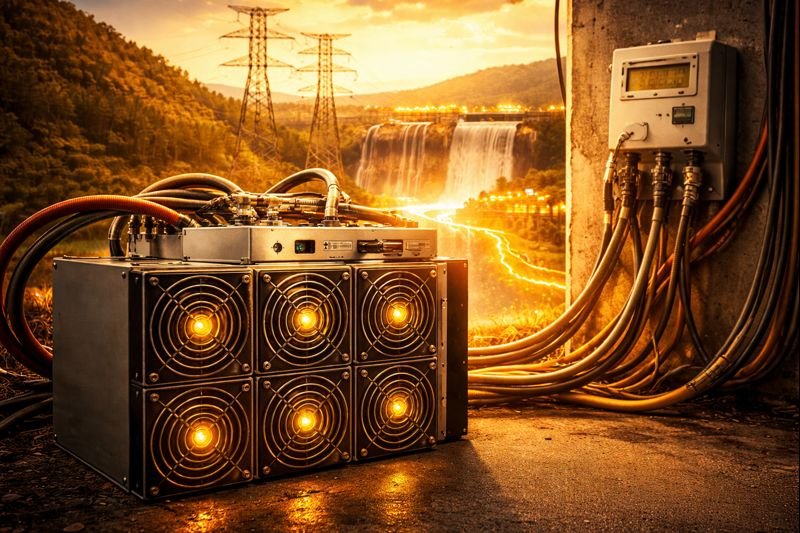
Electricity is often the largest expense in crypto mining. Every mining rig consumes a lot of power nonstop, so the price you pay per kilowatt-hour (kWh) directly affects your bottom line. I keep a close eye on this because it’s where a lot of my money goes each month.
For example, one of my mid-range Dogecoin miners uses about 3 kW of power. At an electricity rate of $0.10 per kWh (a common industrial rate), it costs roughly $7.20 in electricity to run per day (3 kW × 24h × $0.10). If that miner earns about $15 worth of Dogecoin and Litecoin per day, the net profit would be around $7–8 after paying the power bill. But if I were paying $0.20 per kWh (double the rate), the daily electricity cost would jump to about $14.40. Then my profit from that same miner would shrink to just a dollar or two – or it could even become a net loss if coin prices dip. This simple math shows how a slight change in power prices can be the difference between profit and loss.
In fact, many smaller home miners find they can only profit if their electricity cost is below a certain threshold. For instance, one compact Dogecoin/Litecoin miner model is only profitable up to around $0.19 per kWh in electricity cost. Anything above that, and it basically loses money.
To illustrate the impact of electricity rates on mining profitability, see the table below:
| Electricity Rate | Impact on Mining Profitability |
|---|---|
| $0.05 per kWh (very low) | Very cheap power. Mining is highly profitable; even older, less-efficient machines can stay profitable with this rate. |
| $0.10 per kWh (average) | Standard rate in many places. Efficient miners yield a solid net profit at this cost, though not huge. |
| $0.20 per kWh (high) | Expensive power. Profit margins become thin; only the most efficient miners still turn a profit, and older equipment likely loses money. |
| $0.30 per kWh (very high) | Very costly power. Most mining becomes unprofitable at this rate, unless you have some way to offset costs (for example, using the miner’s heat to replace other heating or getting special discounts). |
As you can see, cheaper electricity drastically improves profitability. This is why a lot of miners, especially big operations, locate their mining farms in regions with low electricity costs. Some go to places with surplus hydroelectric power or natural gas power that’s inexpensive. In my case, I actually moved part of my mining setup from a city (with around $0.12/kWh electricity) to a more rural area with about $0.08/kWh electricity. That $0.04 difference might not sound like much, but it almost doubled my net profits for those machines. The savings per kWh really add up over a month of 24/7 mining.
I also try to improve energy efficiency wherever possible. Small tweaks like using higher gauge cables (to reduce loss) and keeping the equipment clean (dusty machines can run hotter and less efficiently) have helped. Another trick some miners use is running machines on off-peak hours if their utility offers time-of-use pricing. In some places, electricity at night is cheaper, so a miner might reduce power during peak afternoon rates and run full tilt overnight when rates drop. Mining is a 24/7 job, but if power is much pricier at 3 PM than at 3 AM, it can make sense to adjust if your setup allows.
One personal approach I’ve taken is using the heat output of the miners. The electricity isn’t only “making Dogecoin,” it’s also producing a lot of heat as a byproduct. In winter, I route the hot air from my mining rigs into my office and storage room. This way, I’m heating my space for free while the miners work. It sounds funny, but it’s quite effective – my heaters stay off and the energy isn’t totally wasted. That effectively saves me money (since I’m not paying separately to heat the building), offsetting some of the electricity cost for mining. I know some miners who even heat their greenhouses or water boilers with their rigs. In a sense, they’re getting two uses out of the electricity: mining crypto and heating a facility.
Bottom line, managing electricity costs is absolutely essential for Dogecoin mining in 2026. I spend as much time thinking about power bills and cooling as I do about hashrate. The most successful miners I know are the ones who have secured power at a very low cost or use innovative ways to cut down their energy expenses. It’s a constant battle to keep costs down, but that’s how you stay profitable when mining.
What Are the Risks and Challenges of Dogecoin Mining in 2026?
I wish mining was all about counting profits, but there are real risks involved too. Over the years, I’ve seen some harsh lessons in Dogecoin mining.
Dogecoin mining in 2026 comes with several challenges. Regulations in some regions can restrict operations or add costs. The coin’s price can swing wildly, and expensive hardware can become outdated before it pays for itself. I always plan for these risks to protect my investment.
Navigating the Risks of Mining
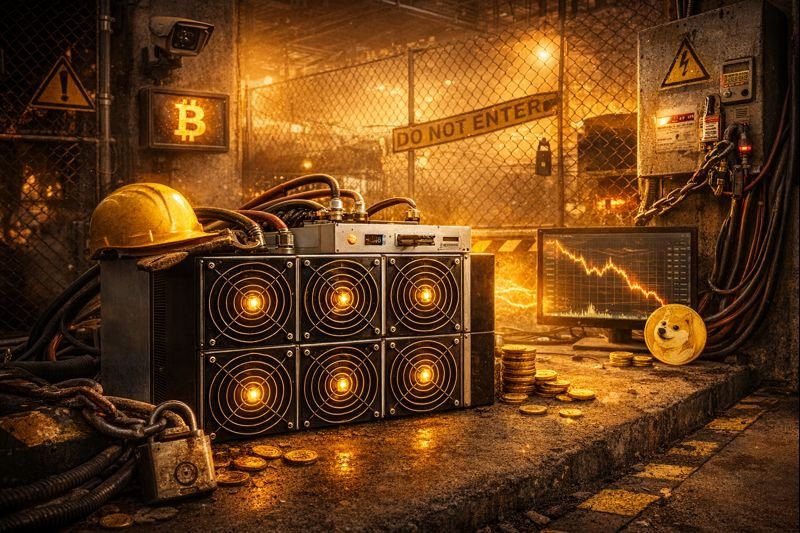
Mining isn’t a guaranteed win — far from it. While I’m generally optimistic about mining, I always keep in mind the various pitfalls that could derail profitability. Here are the key risks and challenges every Dogecoin miner (including myself) has to consider:
- Regulatory hurdles: Government rules can heavily impact mining. For example, some countries have banned or limited crypto mining due to energy concerns, and in Europe new regulations like MiCA require miners to get authorization and follow strict compliance rules:contentReference[oaicite:7]{index=7}. These regulations can increase costs or even make it impossible to operate in certain areas. I have to stay aware of laws both in China (where my business is based) and the countries where my clients operate. A sudden policy change can turn a profitable mining farm into a shutdown order overnight, so this risk is always on my radar.
- Price volatility: Dogecoin’s price is notoriously volatile. It can surge due to a social media trend or crash due to a market sell-off. I’ve lived through days where Dogecoin doubled in value and others where it dropped 30% in a week. This volatility means the value of the coins you mine can change drastically. If the price tanks after you mine, you might find that a whole month of mining now barely covers the electricity bill. Some miners try to mitigate this by immediately converting coins to a stable currency to lock in earnings, while others hold coins hoping the price will rise. Both strategies carry their own risks due to volatility.
- Rising difficulty and competition: We discussed how new hardware and more miners increase the network difficulty. This is a constant challenge: every time mining gets more competitive, your share of the rewards goes down. I remember a time when one of my older miners generated 1000 Dogecoin a day, but a year later it was making only 300 Dogecoin a day because so many more people were mining. The only way to keep up is to upgrade hardware or improve efficiency, which requires investment. If you don’t, you earn less and less as difficulty climbs. It’s a race that never really ends.
- Hardware lifespan and obsolescence: Mining hardware doesn’t last forever. The intense 24/7 operation can wear out components — fans fail, power supplies burn out, etc. I’ve had a mining rig’s power unit blow out in the middle of the night, causing downtime and requiring an expensive replacement. Beyond physical failure, there’s obsolescence: a miner that was top-of-the-line two years ago might now be barely breaking even because new models are so much more efficient. It’s painful to admit, but some of the gear I bought in the past simply will never ROI (return on investment) because by the time it could have earned enough, it’s already been outclassed by something better. Reselling used miners also gets harder when newer ones are cheap and more powerful, so you can’t count on much recovery value.
- Scams and security issues: The mining world has its share of scams and pitfalls. I’ve seen bogus websites selling miners that don’t exist (taking people’s money and disappearing), and I’ve heard of “too good to be true” hosting deals that turned out to be frauds. Even on the technical side, if you’re not careful, malware can infect mining rigs or someone could hack your network and steal your coins. Being in the hardware business, I always advise people to buy from reputable sources (and of course I strive to be one myself). Trust is important — whether it’s trusting your supplier, your mining pool, or even the team maintaining the Dogecoin network. One has to stay vigilant. I personally double-check any new service or seller, enable proper security on my systems, and keep backup plans in case something goes wrong.
| Risk Factor | What It Means | Real Impact on Miners |
|---|---|---|
| Regulatory Hurdles | Governments may restrict or ban mining, require licenses, or impose compliance rules. | Sudden policy changes can shut down farms or raise operating costs overnight. |
| Price Volatility | Dogecoin price fluctuates sharply due to market sentiment. | Mining revenue can double or collapse within days, affecting ROI stability. |
| Rising Difficulty & Competition | More miners and new hardware increase network difficulty. | Your coin output declines over time unless you upgrade equipment. |
| Hardware Lifespan & Obsolescence | Miners wear out physically and become outdated quickly. | Older rigs may never achieve ROI before becoming unprofitable. |
| Scams & Security Risks | Fake sellers, hosting fraud, malware, or hacked wallets. | Loss of funds, stolen coins, or receiving non-functional hardware. |
Each of these challenges means that successful Dogecoin mining requires more than just plugging in a machine. It requires planning, caution, and adaptability. I constantly ask myself “What’s my downside if X happens?” for various X. What if electricity prices jump? What if Dogecoin’s price crashes for a year? What if a new law outlaws my activity here? By thinking about these, I try to have a plan B. For instance, I keep my operation scalable — I can reduce the number of machines running if needed or shift some to a friend’s facility abroad if regulations change. This way, I’m not caught off guard.
In 2026, the miners who succeed aren’t just those who find cheap power or buy the best rig — they’re also the ones who manage risk the best. I’ve learned to respect the challenges as much as I chase the opportunities.
How Can You Maximize Your Dogecoin Mining Profits in 2026?
After facing tight margins, I’ve become creative about improving my mining returns. Every little tweak can help when you’re mining Dogecoin in 2026.
I maximize my Dogecoin mining profits in 2026 by focusing on efficiency and cost control. I use the most power-efficient miners available and secure low electricity rates. Good cooling, reliable mining pools, and repurposing waste heat also boost my overall profit.
Tips for Boosting Mining Profitability
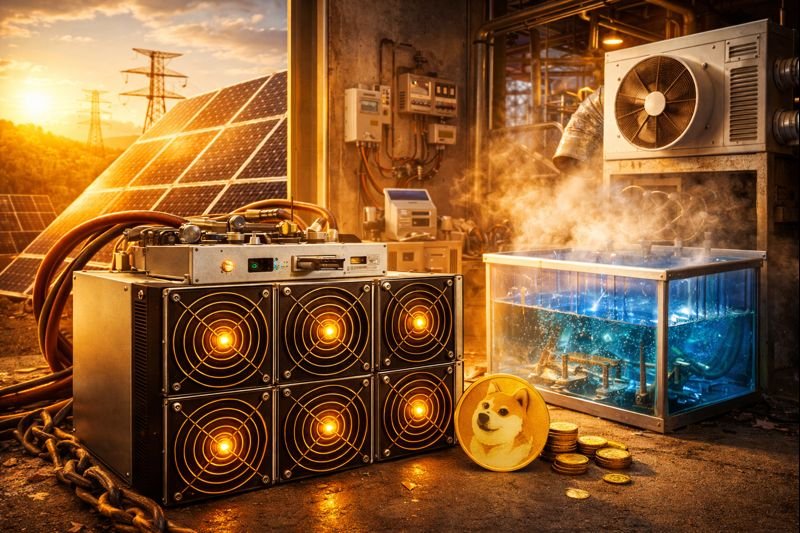
When profits are slimmer, optimizing your mining operation can make a significant difference. Through trial and error (and lots of late-night tinkering), I’ve found several ways to squeeze more profit out of my Dogecoin mining. Here are some strategies that have worked for me and other seasoned miners:
- Upgrade to efficient miners: Using the latest hardware can drastically improve your output per watt. I retired many of my older machines in favor of newer models like the Antminer L9 and L11 series. The newer ASICs give much more hash power for the same electricity use. This means I get more Dogecoin for every dollar on my power bill. While new miners can be expensive, the efficiency gain usually pays off. I always calculate the hash-per-watt and hash-per-dollar before I decide on a new miner. In 2026, if you’re still running very old ASICs, consider upgrading — the increase in efficiency can make a night and day difference in profitability.
- Reduce power costs: This one is huge. I already talked about how I moved some rigs to a location with cheaper electricity. If relocating isn’t an option, some miners negotiate with their utility companies or even set up their own small solar/wind installations to offset costs. I’ve experimented with solar panels feeding a portion of my mining farm; during sunny days, it takes some load off the grid. Every cent per kWh saved directly adds to profit. Also, be smart about power usage: I use high-efficiency power supplies and avoid running other unnecessary electrical equipment near my mining setup. All the savings add up.
- Improve cooling and ventilation: Heat is the enemy of electronics. If your miners run too hot, they can throttle (slow down to prevent overheating) or even shut off. Good cooling not only prevents downtime, it can also slightly boost performance — cooler machines can sometimes be run at higher settings safely. In my setup, I installed industrial fans and ducting to channel hot air away from the miners and bring in cool air. Some miners invest in AC or, like me, have tried immersion cooling (where you submerge the hardware in special coolant fluid). Immersion can dramatically lower temperatures and noise, and it allowed me to overclock one of my older units by about 10% without issues. Even simple fixes like cleaning dust filters and arranging machines with space between them helps maintain airflow. By keeping equipment cool, I ensure I’m always getting the maximum hashrate out of them.
- Use waste heat productively: As mentioned earlier, using the heat your miners produce is a form of cost-saving. Think of it as free heating. In winter months, my warehouse and office are warmed by the miners. I’ve set up a system of ducts and fans to push miner exhaust heat into the areas that need warming. This means I’m not paying separately to heat those spaces. For some large mining farms in cold climates, this idea has become an entire side-business: they sell heat to nearby greenhouses or buildings. In my case, it’s informal — I just heat my own workspace. But it effectively gives me a better return on the electricity I’m already using for mining. I love this because it turns a “waste” product (heat) into a benefit and improves the overall economics of the operation.
- Join a reliable mining pool: Mining on your own (solo) is nearly impossible to earn steady income with Dogecoin’s current difficulty. I always use a mining pool, which is a group of miners who share their power and split the rewards regularly. However, not all pools are equal. I look for pools with low fees (pool fees can eat into your earnings), good uptime, and that pay out Dogecoin (and Litecoin) reliably. A bad pool might have server issues or not distribute rewards fairly. I’ve stuck with a couple of well-known pools over the years and it’s made earnings consistent. Also, many pools offer useful dashboard tools to monitor your miners’ performance remotely, which helps me catch any issues early. The pool is like the backbone of my mining operation’s income stream, so choose a good one.
- Perform regular maintenance: It’s easy to set your miners in place and just hope they run forever. But I’ve learned that scheduled maintenance prevents a lot of problems. Every few weeks I power down a section of my miners (rotating so not all are off at once) and do a quick check: I clear out dust with compressed air, make sure all fans are spinning freely, and check for any weird noises or vibration. Dust buildup can cause overheating, and loose connections can cause failures. By being proactive, I avoid a lot of downtime. I also keep spare parts (like extra fans and power supplies) on hand. This way if something fails, I can fix it in hours instead of waiting days for parts. Less downtime = more coins mined. It’s basic, but taking care of the hardware ensures it keeps running at optimal capacity.
- Plan upgrades and finances wisely: Finally, a more general but crucial point: treat mining like a business. I plan my upgrades and track my expenses and earnings. Whenever I consider a big purchase (like a batch of new miners), I calculate how long it might take to pay off, given current conditions. I also factor in a cushion assuming things might get worse (like lower Dogecoin prices or higher difficulty). This helps me avoid over-extending. In bull markets when profits are high, it’s tempting to expand too fast — but I remember that things can change quickly. I set aside some of the profit during good times to cover expenses during downturns. This financial discipline has kept my operation sustainable. Essentially, maximizing profit isn’t just about getting more coins today, it’s about making sure you’re still mining tomorrow. So I take a long-term view and make sure each decision improves the robustness of my mining business, not just the immediate gains.
| Strategy | Core Action | Profit Impact |
|---|---|---|
| Upgrade to Efficient Miners | Replace old ASICs with high-efficiency models (e.g., L9, L11 series). Focus on hash-per-watt and hash-per-dollar. | Higher hash output for the same electricity → immediate efficiency gain. |
| Reduce Power Costs | Move to cheaper electricity regions, negotiate utility rates, or add solar/wind supplementation. Use high-efficiency PSUs. | Every $0.01/kWh saved directly increases net mining profit. |
| Improve Cooling & Ventilation | Use ducting, industrial fans, clean filters, or immersion cooling. Maintain proper airflow and spacing. | Prevents throttling and downtime; allows stable or slightly higher hashrate. |
| Use Waste Heat Productively | Redirect miner exhaust heat to warm offices, warehouses, or greenhouses. | Converts “wasted” energy into cost savings on heating. |
| Join a Reliable Mining Pool | Choose low-fee, high-uptime pools with stable payout systems. | Ensures steady daily earnings and reduces variance. |
| Perform Regular Maintenance | Clean dust, inspect fans, keep spare parts ready, schedule routine checks. | Minimizes downtime → more consistent coin production. |
| Plan Upgrades & Finances Wisely | Track ROI, difficulty trends, and market cycles. Reserve profits for downturns. | Keeps operation sustainable long-term, avoids over-expansion risk. |
Implementing these strategies has helped me significantly improve my mining outcomes. In 2026, the miners who thrive are the ones who run a tight ship: they use efficient hardware, manage costs smartly, and constantly fine-tune their setup. It’s a lot of work — definitely more complicated than it was during the easy days of early crypto mining — but for me, the satisfaction comes from knowing I’ve done everything I can to make my mining operation as profitable as possible.
Conclusion
Dogecoin mining remains worthwhile in 2026 for those with efficient hardware and cheap power. It’s challenging, but the right approach can still yield a profit. Contact Miner Source Team Purchase Now


