
What Should You Do Before Setting Up Whatsminer Immersion Cooling Miner?
Whatsminer immersion cooling miner includes multiple models, such as M36S+, M36S++,M56, M56S, M56S+, M56S++, M66, M66S, M66S+, and M63S++. Different models of immersion cooling miners merely differ in performance and specification, such as power ratio and hashrate, but they are basically the same in appearance, installation and disassembly methods, operation, and maintenance. Therefore, this Document takes the newest version M66S++ as an example for introduction.

Why Choose a Immersion -Cooling Miner?
1. Better Performance 🚀
Immersion cooling allows miners to operate at higher hash rates without thermal throttling. For example:
- M66S++ hits up to 356 TH/s at just 15.5 J/TH.
- Compare that to air-cooled models that often lose efficiency as temps rise.
2. Longer Hardware Life ♻️
Heat kills electronics. By maintaining a stable and cool temperature—even under load—your miners last longer. Less downtime, fewer repairs, more profit.
3. Silent Operation 🤫
Say goodbye to the roaring fans that make your mining shed sound like a helicopter pad. Immersion-cooled miners run almost silently. Perfect for urban setups or anyone who values peace and quiet.
4. Energy Efficiency ⚡
Because the cooling is more effective, you spend less energy per terahash. That means:
- Lower electricity bills 💸
- A smaller carbon footprint 🌍
- Higher profit margins 📈
5. Overclocking Friendly 🔥
Want to push your miner beyond factory specs? Immersion cooling handles extra heat like a champ. Perfect for miners who like to tinker and maximize output.
6. Space Efficient 🧼
No need for large air venting systems, ducting, or fan arrays. Immersion tanks can be stacked or arranged compactly. Great for large farms or home setups where space is limited.
7. Better Heat Reuse ♨️
The hot coolant can be used to heat buildings, greenhouses, or water—turning waste heat into something useful. Eco-friendly mining? Yes, please.
📊 Immersion vs. Air Cooling: Quick Compare
| Feature | Immersion Cooling | Air Cooling |
|---|---|---|
| Noise Level | Silent | Loud |
| Efficiency | High | Medium |
| Hardware Life | Longer | Shorter |
| Temp Stability | Excellent | Variable |
| Setup Cost | Higher | Lower |
| Operating Cost | Lower | Higher |
🛠️ What You’ll Need:
- WhatsMiner immersion cooling unit (M66, M66S, M66S+, etc.)
- Insulating coolant (e.g., SSX/S3X liquid – not the kind you put in your car)
- Cooling system with pump and radiator (if not integrated)
- AC power supply (380V–480V for most models)
- Ethernet cable
- Custom power cables (≥16A)
- A sense of adventure 😎
How to Set Up Your Whatsminer Immersion Cooling Miner?
Components
The following figures show a top panel and a bottom panel of an immersion cooling miner,
which includes many components, such as a control board, handles, and a liquid outlet.


Note:The single-phase immersion cooling miner adopts a liquid circulation flow method of
bottom-in and top-out for heat dissipation. Its control board, Ethernet interface, and
power supply interface are all on an upper panel of the immersion cooling miner,
which is convenient for maintenance.
The figures are merely for an illustrative purpose. The actual miner may differ.
The following table introduces environmental parameters of an immersion cooling miner,
in which liquid refers to coolant.

Note: Parameters related to liquid flow in Table 1-1 are based on Shell S5X/S3X as a liquid medium. If the liquid medium uses other types of coolant, the parameters related to liquid flow need to be calculated separately. In the case that immersion cooling miners have the same calorific value, a product of liquid specific heat capacity, density, and flow is a fixed value, that is, the flow is inversely proportional to the product of the density and the specific heat. In such a case, you can calculate the flow of a coolant based on its density and specific heat. For example, when Shell S5X/S3X is used as the coolant, its specific heat capacity is 2274 J/(kg·℃), density is 806 kg/m3, and flow is 24 L/min, so when EC110 is used as the coolant, and its specific heat capacity is 2231 J/(kg·℃), density is 778 kg/m3,its flow can be calculated as follows: (227480624)/(2231*778)=25.35.
The following table shows pressure drop characteristics of different areas inside the immersion cooling miner.

Properties and Safety Requirements for Coolant
- It should have good thermodynamic performance (relatively high thermal conductivity,
high liquid specific heat value, and low viscosity among similar substances). - It should have good chemical and thermal stability relative to a life cycle of an electronic system and a specified operating temperature.
- It should be transparent and odorless.
- Its boiling point should be greater than >150 ℃.
- Its flash point should be 140 ℃ or it may not have a flash point.
- Its autoignition point should be greater than or equal to 300 ℃.
- Its pour point should be less than -40 ℃.
- Its purity should be greater than or equal to 99.5 %.
- Its non-volatile residues should be less than or equal to 10 ppm.
- Its water content should be less than or equal to 50 ppm.
- Its acidity should be less than or equal to 0.05 mg/KOH/g.
- Withstand voltage breakdown: Initial state ≥ 30 KV/2.5 mm; and saturated water state >
10 KV/2.5 mm. - Volume resistivity (40 °C or as per your specified application temperature): ≥ 1*1012
Ω·cm; dielectric constant: (40 °C or as per your specified application temperature, 0.1-32 GHz) < 2.5; and dielectric loss factor (40 °C or as per your specified application
temperature, 0.1 – 32 GHz) < 0.005. - Particle size limit in coolant: After the coolant is circulated, the number of particles
larger than 5 μm in 100 ml of the coolant is ≤ 2000, and there are no particles larger
than 50 μm. - Stability: It should have good antioxidant stability and thermal stability relative to the life cycle of the electronic system and the specified operating temperature; (for a hydrocarbon single-phase coolant) RPVOT ≥ 300 (ASTM D2272); and thermal stability: liquid chemical decomposition temperature ≥ 120 °C.
- Compatibility: During an operation process, an immersion cooling miner and components related to an immersion cooling system come into direct contact with the coolant for a long time. An impact of the coolant on the immersion cooling miner and component materials, as well as a reverse impact of the immersion cooling miner and component materials on the coolant, should be verified in advance to ensure that availability requirements of the immersion cooling system are met.
- Physical reactions between the liquid and contact materials, including dissolution, extraction, and the like, should not affect corresponding functions of the liquid and system materials. For example, using the liquid to extract plasticizers from a cable insulation layer can cause hardening and cracking of cables, or dissolution of substances in the immersion cooling system into contact liquid can lead to an increase in liquid viscosity or deterioration of performance.
- Dissolved substances resulting from convection or driven flow of the liquid shall not affect other materials or devices with which the liquid is in contact. For example, the plasticizers precipitated from the cables will reduce heat exchange efficiency on a surface of a heating device through accumulation.
- The liquid chemical decomposition temperature should be much higher than operating temperature of the immersion cooling system and potential local overheating temperature.
- It belongs to a non-toxic category. It is non-irritating to eyes and skin, and does not have mutated cell mutations or heart diseases.
- During the operation process, it is recommended to regularly monitor changes in typical conventional physical and chemical properties of the coolant to understand its degree of oxidation, moisture absorption and an impact of particulate contaminants, so that quality of the coolant is within an acceptable range of variation to ensure a normal operation of devices such as the immersion cooling miner. When there are abnormalities in test items, the coolant should be maintained or replaced.
Monitoring parameters that may be used and recommended test frequency are shown as
follows.

Note:In an early stage of the operation, a test cycle of the coolant can be appropriately increased, such as once every three months or half a year. After the operation is stable,the test cycle should be at least once a year.
Regarding a sampling point, due to different coolant densities, when the density of the liquid is greater than the density of water, the water is in an upper layer, so the sampling point should be biased towards the upper layer, and when the density of the liquid is less than the density of the water, the water is in a lower layer, so the sampling point should be biased towards the lower layer.
Design Considerations of Immersion Cooling System
Immersion cooling is a technique used in mining to cool down mining equipment, mainly a computer hardware known as ASICs (Application-Specific Integrated Circuits) that are used to mine. Immersion cooling involves submerging electronic components, such as ASIC chips, into an insulating liquid. This liquid has high thermal conductivity and
efficiently dissipates the heat generated by an immersion cooling miner away from hardware.
An immersion cooling system is more efficient at moving heat away from the immersion cooling miner than an air cooling system. Managing heat exhaustion from the immersion cooling miner is a key part of miner operations maintenance.
An immersion cooling method enables direct contact between components and the insulating liquid, providing superior heat dissipation. Typically, the immersion cooling system includes dry coolers/cooling towers, tanks, pumps, pipes, heat exchangers,
dielectric coolant, and sensors and monitoring/control systems.
Therefore, when you purchase an immersion cooling miner, an immersion cooling system is essential. You can choose our cooperators, such as Fog Hashing and Hash House, to obtain professional support and assistance, thereby helping you save time and energy. If you have any interests, feel free to consult our sales.
For example, Fog Hashing’s immersion cooling system for mining uses advanced immersion type cooling technology. It removes fan coolers from the immersion cooling miner and immerses it fully in dielectric coolant, which has an order of magnitude more heat capacity than air, resulting in effective cooling. This technology improves mining efficiency and thermal management. Specifically, the Fog Hashing BC40 Pro (Customized Version) is an all-in-one solution which consists of an integrated immersion cooling container and 8 independent V-shaped dry cooler sets. The system utilizes a single-phase immersion cooling solution and a single loop implementation. A water spray subsystem is also integrated for the extremely hot regions, providing supplementary heat dissipation
capability under high-temperature conditions. The following figure illustrates a general
view of the system

For another example, Hash House’s Trident series are cutting-edge immersion coolingmobile data center designed to enhance computational performance and extend minerlifespan. Specifically,it can offer a cost-effective and plug-n-play solution for theimmersion cooling miner, and can maximize profitability and efficiency while minimizingtransportation, construction, and maintenance costs with its all-in-one design, rapiddeployment capabilities, and scalability.
In addition, you can also build your immersion cooling system as needed. To be morespecific, you can choose to build a single cycle immersion cooling system or a double cycleimmersion cooling system.
In the single cycle immersion cooling system, an immersion cooling CDu (CoolingDistribution Unit)includes the following components, such as a differential pressuresensor, a flowmeter, a circulating pump, a filter, an automatic exhaust valve, a manual exhaust valve, a drain valve, and the like. in a double cycle immersion cooling system, themost important component included in the immersion cooling CDU is a heat exchanger,while other components are similar to those in the single cycle immersion cooling system.The benefit of a double cycle mode is less total oil is used. Therefore, when you havenecessary components, you can prepare to build a simple immersion cooling system. Thefollowing two figures show examples ofCDUs in single cycle and double cycle modes.

Finally, when you design your immersion cooling system, some considerations must betaken into account. The detailed introduction provided below is for reference only.
1.System pipeline: lt is recommended that hard pipes in a pipeline in a cycle system bemade of sanitary stainless steel and be prefabricated in a factory and then installed on sitewithout cutting, grinding, welding and other processes. Hoses should considercompatibility with a coolant to prevent leakage due to corrosion by the coolant.
Note: To ensure cycle system cleanliness, it is recommended to use easy-to-clean sanitary stainless steel pipes in the pipeline. Various pipeline components may beprefabricated, and undergo pressure testing, acid pickling and passivation, rinsing, drying.sealing and packaging in the factory to ensure cleanliness. lt is not recommended to usecarbon steel pipes or galvanized steel pipes since they have poor cleanliness. Largeparticles of welding slag and oxides are easily occurred at welding positions during awelding process, making it difficult to clean up inside the pipes. Therefore, pipes are proneto rusting before being put into use.
2.Compatibility selection of system components: For different coolants, systemcomponents that need to be considered for the corrosion by the coolant mainly includecirculatingpumps, pipeline sealingcomponents,network cables, power supply cables, andthe like.
Note: Different coolants have different compatibility with materials. Circulatingpump shaft seals, pipes, sealing components connecting the pipes, network cables andpower supply cables in the cycle system must all be selected and designed for a specificcoolant. Otherwise, system components may be damaged or even liquid media may leakor the immersion cooling miner may malfunction. We will shoulder no responsibility forsuch damage to the miner.
3.Filter: lt is recommended to configure a filter with a mesh size of 100 or above in a mainroad and a 5 um core filter in a bypass in the cycle system.
Note: The above two filters need to be connected during a normal operation of thecycle system, and if system impurities cannot be filtered, it may cause the damage to theimmersion cooling miner. We will shoulder no responsibility for such damage to the miner.
4.Temperature resistance of system components: lt is recommended to use the systemcomponents with temperature resistance greater than or equal to 85 °C
Note: lf the temperature resistance of the system components is lower than 85°C, itis easy to cause the damage to the system components or even the leakage of the coolant,which may cause the damage to the immersion cooling miner. We will shoulder noresponsibility for such damage to the miner.
5.Circulating pump: lt is recommended to adopt a configuration of one in use and one instandby to improve system reliability.
6.Tank: lt is recommended that inner liner be made of stainless steel. In addition, a Tankdesign with multiple miner positions recommends considering an equalization design ofeach miner position and different areas ofthe immersion cooling miner itself to ensure thata coolant flow of each miner position and different areas of the immersion cooling miner itself is balanced to prevent a local area ofthe immersion cooling miner from overheating
a) lf the inner liner of Tank is made of the stainless steel, spraying is also recommendedto ensure the cleanliness. lf the spraying is not performed, it is necessary to performcleaning treatments such as acid pickling, passivation, cleaning, and drying. lf carbonsteel is adopted, the spraying must be performed after welding to ensure thecleanliness. Generally, after welding, the inner liner ofTank is first polished to removeburrs, sharp edges, and welding slag. Then, pressure test and leak detection (usingwater or kerosene for the leak detection) are carried out. After confirming that there isno leakage, the spraying or cleaning treatment is performed. You should pay attentionto using a coating that is compatible with the coolant used for the spraying.
b)Since pressure drop from an outlet of a feed pipe of Tank to an inlet of different minerpositions is different, different miner positions will obtain different flows of thecoolant. Therefore, the Tank design needs to adjust this pressure drop to ensureuniform inlet pressure of the miner positions in different areas, thereby achieving aflow balance between the miner positions.
c)Since pressure drop characteristics of different areas of the immersion cooling mineritself are different (see Table 1-2 for details), when designing openings on a liquidequalization support plate inside Tank, it needs to consider reasonable allocation ofthe coolant flow based on heat generation of different areas of the immersion coolingminer itself (mainly distinguishing between a PCB area and a power supply area, with5-10% of flow in the power supply area). The following fourtypes ofopening diagrams


7.System cleanliness control: To ensure the cleanliness of the entire cycle system, it isrecommended to first ensure the cleanliness of finished products of various keycomponents, including circulating pumps, Tank, radiators, prefabricated pipeline andpipes, and the like. Secondly, when designing the cycle system, it is recommended that amain pipeline system reserve a bypass to connect an additional cycle system cleaningapparatus with a pressure boosting function, which is equipped with a fine filter of 5 um ormore.
Note:
a)A new circulating pump will be tested before leaving the factory, so there will beresidual water inside. lt is recommended to clean the residual water before leavingthe factory or using it.
b)Regarding to processing technologies of the prefabricated pipeline and pipes, Tankand radiators, it is recommended to have a cleaning and drying process to ensure thatthere are no water stains, dust, metal chips, welding slagimpurities, and the like. Aftercleaning and drying, seal as soon as possible to prevent internal contamination bydust and impurities.Requirements for water washing and drying of finishedcomponents refer to Table 2-1. Regarding to packaging and transportation of theprefabricated pipeline and pipes, Tank and radiators, it is recommended to do a goodjob of internal dust control.
c)The system cycle cleaning apparatus with the pressure booster function herein refersto an independent cleaning apparatus with a booster pump, which is only used whenthe cycle system needs cyclic cleaning, and does not need to be connected during anormal operation of the cycle system.

Note: Due to the unclean cycle system, the coolant may mix with water, metal shavings, or welding slag impurities, which may cause the damage to the immersioncooling miner. We will shoulder no responsibility for such damage to the miner.8. Bypass valve: lt is recommended to add a bypass valve on a cold source side of the cyclesystem to prevent the liquid supply temperature from being too low.
Note: lf there is no bypass valve, when the cycle system has a sufficiently large heatdissipation temperature difference (difference between a target inlet temperature and anambient temperature), even if a fan on the cold source side does not rotate, the target inlettemperature may be too low, and thus cannot rise to a minimum target value (20 °C), andthe immersion cooling miner may not meet a hashrate standard. The bypass valve canbypass return liquid with high temperature of the immersion cooling miner and mix it withoutlet liquid on the cooling source side with lower temperature to prevent the temperatureof supply liquid from being too low.
Precautions Before Putting Miner into Operation
Precautions Before Putting Miner into Operation
Before assembling a cycle system, all components in the cycle system must be confirmedto be clean. lf the components are not clean enough, clean them before installingthe cyclesystem.
During an installation process of each component in the cycle system, cleanliness insidethe devices must also be ensured, including pipeline, pipes, Tank and radiators. Forexample, when installing a certain pipe, only remove packaging of the pipe, and do notremove the packaging of other devices. lf foreign particles are accidentally mixed into acertain component during the installation process, clean it with a clean cloth or a vacuumcleaner in time. Moreover, in an installation suspension period, seal and protect thecomponents that have been unpacked but not yet installed or put into use.
Caution: if impurities in a certain stage are not handled cleanly, it will cause heavylosses, because after the cycle system is put into use, if a certain component is not clean,the components in the entire cycle system and coolant will be contaminated, causing adecrease in insulation performance of the coolant and the damage to the immersioncooling miner, or flow of particles and impurities can wear down the immersion coolingminer. Once the cycle system is contaminated, it is very difficult to clean it.
System Pipeline Pressure Test
After installing all system components, it is recommended to perform pressure tests andleakage tests to ensure that there are no leakages in connections of all system componentsIt is recommended to use a water test when using the water for the cycle, and ensure thatthere is no leakage under a water test pressure of 6 bar. it is recommended to use anitrogen gas test when using the coolant for the cycle and use a soap bubble method totest sealing positions of connectors, and ensure that there is no leakage under a gas testpressure of 4 bar. lf an air compressor is used for the gas test, there is a risk of condensationin the air, which may cause the water to mix into the cycle system.There are risks in directlyinjecting the coolant for the pressure test. Once the leakage occurs, it is difficult to collectthe coolant.
System Cleanliness Reconfirmation
Before injecting the coolant into the cycle system, confirm again whether the entire cyclesystem is clean, including a circulating pump, pipes, Tank, radiators, and the like, ancensure that there are no obvious water stains, dust, metal chips, welding slag impuritiesand the like.
System Liquid lnjection
If it is a double cycle system, first fill the cycle system with the water and test the pressureobserve whether there is water flowing out from a Tank side, and confirm that hot and coldsides of a heat exchanger are completely isolated and not connected. After the coolant isinjected into the cycle system, the circulating pump starts a cycle at a low frequency anain an intermittent manner to evacuate air in the cycle system, After the air in the cyclesystem is evacuated and the coolant circulates stably for one to two hours, confirmwhether a filter is clean. After confirming that the filter is clean, put an immersion coolingminer into Tank, and collect the excess coolant. The coolant level needs to be high enough to ensure that a liquid return port does not inhale the air.
System Demo Verification
Before putting immersion cooling miners into Tank in batches, if it is a newly built cyclesystem, it is recommended to use a Demo system for a trial operation for more than oneweek to verify system design to a certain extent before scale application. At the same time.it is recommended to test various indicators of the coolant in the cycle system to ensure that the indicators of the coolant are qualified (refer to Table 1-3) to avoid failure problemsof the immersion cooling miners in batches.
System Deployment
Before deploying the immersion cooling miners, after the cycle system is installed andfilled with the coolant, the coolant should be circulated for 1 hour, then 100 ml samples aretaken from the liquid return port of Tank, the liquid injection port of Tank, and other areaswhere impurities may be the most. Among them, the number of particles greater than orequal to 5 m in the100 ml samples should be less than or equal to 500, the number ofparticles greater than or equal to 15 um should be less than or equal to 100, and there areno particles larger than 50 um (based on a cleanliness level NAS 3 of NAS 1638 standard). lfthe cleanliness level does not meet the standard, the cycle system is connected to a 5 umhigh-precision filter apparatus with an independent booster pump for circulating andfiltering the coolant until the cleanliness level meets the standard.
Note: A test method for the number of particles (5 um) is as follows. Take 100 ml ofcoolant or flushing water sample and let it pass through a filter paper with a diameter of 39mm, a mesh of 3 mm * 3 mm, and a mesh of 5 um, then observe the filter paper under amicroscope, select 12 grids at random, count the number of particles thereon, and thencalculate an average number of particles on each grid δ, where δ < 5003’/(π39?/4)= 4.
The immersion cooling miner uses a bottom-in and top-out coolant cycle flow method todissipate heat. Therefore, the immersion cooling miner needs to be placed in an immersioncooling Tank that allows the coolant to flow in and out from the inside of the immersioncooling miner. A liquid equalization support plate at the bottom of the immersion coolingTank needs to support the immersion cooling miner. The coolant passes through the liquidequalization support plate and a bottom panel of the immersion cooling miner and directlyenters the immersion cooling miner, and flows out from a top side or an upper panel of theimmersion cooling miner, as shown in the following figure. The immersion cooling minercan be put into Tank and taken out Tank by one person.

0ther Considerations
1.Check whether the voltage of a PDU is normal before powering it on. lf the voltage of1.the PDU is abnormal, a corresponding tank needs to be powered off for check.
2.During an operation of the double cycle system, pay attention to whether there arewater droplets mixed in the coolant in Tank. lf there are water droplets, there may bea leakage in a plate heat exchanger, causing water to enter the coolant. At this time,Tank needs to be stopped immediately.
3.When a failure rate of the immersion cooling miners in a single cycle system reaches10% or more, shut down and check immediately.
4.It is recommended to power on the immersion cooling miners in batches when powering on to prevent the damage from surges.
5.During the operation, check all materials in contact with the coolant from time to time for compatibility, such as sealing rings, network cables, power supply cables, and thelike, and replace them in time if there is any abnormality.
6.The immersion cooling miner must be powered on and turned on after the coolant0circulates normally.
7.Removing the immersion cooling miner from Tank can cause a liquid level of Tank to7.decrease. Pay attention to the liguid level to ensure that the liquid return port doesnot inhale the air.
8.The power supply cables must be original accessories from the factory.
9.Press a shrapnel when unplugging the power supply cable.

Introduction to Optional Accessories
For different demand scenarios, you can contact us to purchase required accessories. A listof optional accessories is detailed as below.

Environment Configuration for Miner
Device List for Miner Configuration

Network Environment Configuration for Miner
When an immersion cooling miner leaves the factory, it defaults to obtaining a dynamic IPaddress through DHCP (Dynamic Host Configuration Protocol). Therefore, a DHCP servershould be configured in a network of a mining farm, or a router enables DHCp to dynamically allocate IP addresses. The operating time ofthe immersion cooling miner andthe accuracy of hashrate statistics depend on the network NTP (Network Time Protocol)time. The immersion cooling miner itself is configured by default with multiple public NTPserver addresses. In order to accelerate speed of NTP obtaining the network time andimprove the time precision, it is recommended to configure a local NTP server in thenetwork of the mining farm.

Data Configuration for Miner
You can configure data for an immersion cooling miner on the webpage.
Querying Dynamic IP Address Obtained by Miner
You can query a dynamic IP address of the immersion cooling miner on WhatsMinerToolYou can download this software on WhatsMiner.Before configuring miner data, connect your computer to the same network segment asthe immersion cooling miner.
Step 1 Double-click WhatsMinerTool to enter a main page.
Note: Before operating WhatsMinerTool, download it first.
Step 2 Click IP Monitor tab, configure Room, Shelf, Layer, Place, and Step as needed, and then click Start.

Checking IP Address Reported by Miner
After the immersion cooling miner is powered on for about 30 seconds, under normalcircumstances, a yellow light on a network port is always on and a green light is flashing.At this time, press IP Found button on a control board of the immersion cooling miner formore than 2 seconds, then two LED lights, Active and Alarm, will flash a few times,indicating that the immersion cooling miner has broadcast its lP address and MAC addressto the network.

You can view the dynamically obtained IP address and MAC address, and miner placereported by the immersion cooling miner in WhatsMinerTool.

Note:
lf all lights on a control board oftheimmersion cooling miner are not lit up after power-on, check whether a power supply cable is connected reliably and correctly.
lf the two LED lights, Active and Alarm, on the control board of the immersion coolingminer are lit up, but lights on the network port are not lit up, or the green light is notflashing, check whether a switch is functioning properly, a network cable is connectedreliably, and there is a problem with the quality of the network cable.
The computer operating WhatsMinerTool and the immersion cooling miner must be inthe same network segment, Otherwise, WhatsMinerTool may not receive a broadcastmessage from the immersion cooling miner, so that the IP Address and MAC Addressreported by the immersion cooling miner cannot be queried.
If the computer and the immersion cooling miner are in the same network segmentand a DHCP service is enabled in the network, but WhatsMinerTool does not query theIP address of the immersion cooling miner after pressing an lP Found button, longpress a Reset button on the control board for more than 5 seconds to restore factorydefault configuration, then power off and power on the immersion cooling miner torestart it, and press the IP Found button again to detect the lP address of theimmersion cooling miner after powering on for 30 seconds.
If the computer is operating WhatsMinerTool, when you click Start but do notmanually press the IP Found button on the control board, WhatsMinerToolautomatically finds the IP address and MAC address of the immersion cooling miner,indicating that the lP Found button of the immersion cooling miner may be stuck inthe control board, you need to find an immersion cooling miner corresponding to aMAC address(referring to a MAC address barcode stuck on a case of the immersioncooling miner) displayed in WhatsMinerTool, then power off the correspondingimmersion cooling miner, and reinstall the control board to ensure that buttons andindicator lights on the control board are exposed and not stuck in the control board.
Configuring Pool and Worker
Step 1 Open a browser on a computer, enter the obtained IP address of an immersioncooling miner in an address bar, and then enter a username and a password to enter a mainpage of a backend of the immersion cooling miner.
Note:
The computer and the immersion cooling miner should be in the same networksegment.
The username and the password are the same, default is admin.
Step 2 Click Configuration -> Miner Configuration, enter a pool name and a worker nameas needed, and then click Save & Apply to save the configuration.

Note: After completing the configuration, you need to restart a miner program or acontrol board to make the configuration effective.
Restart the miner program: In the main page of the backend of the immersion coolingminer, click Status -> Miner Status, and then click Restart Miner to restart the miner program.

Restart the control board: in the main page of the backend of the immersion coolingminer, click System -> Reboot, and then click Perform reboot to restart the controlboard.

After restarting for about half a minute, the page will automatically jump to a login page.
Configuring NTP Synchronization Server Address (Optional)
You can modify an IP address obtained through DHCP to a static IP address for networkplanning of miner operation. When there is an IP conflict, configuring the static IP addresscan avoid not being able to search for the lP address of the immersion cooling miner.
Step 1 Open a browser on a computer, enter the obtained lP address of an immersioncooling miner in an address bar, and then enter a username and a password to enter amain page of a backend of the immersion cooling miner.
Note:
The computer and the immersion cooling miner should be in the same networksegment.
The username and the password are the same, default is admin.
Step 2 Click Configuration ->Interface, and then click Edit under Actions tab.

Step 3 In an Edit page, select Static address from Protocol, click Switch protocol, andthen change an IP address, a mask, a gateway, a broadcast address, and a DNS address toan actual planned address of the immersion cooling miner.


Step 4 Click Save & Apply
Note: After saving the configuration, you need to reuse the newly configured static IP address to log in to the immersion cooling miner, otherwise the page will remainloading until it fails to load.
Operation Status Check for Miner
After an immersion cooling miner is connected to a network, you can log in to theimmersion cooling miner on a computer connected to the same network segment tocheck its operation status.
Step 1 Open a browser on a computer, enter the obtained IP address of an immersioncooling miner in an address bar, and then enter a username and a password to enter amain page of a backend of the immersion cooling miner.
Note:
The computer and the immersion cooling miner should be in the same networksegment.
The username and the password are the same, default is admin.
Step 2 Click Status -> Miner Status to enter a status page ofthe immersion cooling miner.You can view an overall hashrate of the immersion cooling miner (see GHSav underSummary and Devices sections), pool information, hash board temperature, power,power mode, and the like as needed.

Note: When the immersion cooling miner is connected correctly and the networkis normal,theimmersion cooling miner will automatically perform a frequency search testafter being powered on. The frequency search test takes about 40 minutes, and only afterthe frequency search is completed will it enter a formal mining phase. At this time, thedisplayed is a hashrate when the immersion cooling miner is normally operating. lf thefrequency search has not ended yet, the displayed will be lower than a hashrate when theimmersion cooling miner is normally operating.
Batch Configuration for Miner Data
You can use WhatsMinerTool for batch configuration ofimmersion cooling miners’data,such as upgrading firmware and collocating pool. For details, see WhatsMinerToolOperation Guide V9.0.3.
Installation and Disassembly of Components for Miner
When you receive a new immersion cooling miner, you do not need to assemble it, butwhen the immersion cooling miner encounters problems, you may need to disassemblesome components of the immersion cooling miner to resolve the problems. The followingwill specifically introduce how to disassemble and install these components, includingcontrol board and power supply
Installing and Disassembling Control Board
When indicator lights on a control board are not lit up or when an error code related to thecontrol board is displayed on a main interface of WhatsMinerTool, you can remove thecontrol board and check it. For details about error code and WhatsMinerTool, see ErrorCode Descriptionand WhatsMinerToolOperating GuideV9.0.3.
Installing Control Board
Step 1 Loosen 2 screws that secure a housing of a control board to a case of an immersioncooling miner, and then pull out the housing of the control board slowly until it is no longerpulled out.

Step 2 Unplug 3 flat cables, and then pull out the entire housing of the control board.

Step 3 Remove 4 screws that secure the control board to the housing of the control board,
and then remove the control board.

Installing Control Board
Step 1 Align holes on a control board with holes on a housing ofthe control board,and thenscrew in 4 screws and tighten them.
Step 2 Insert 3 flat cables into corresponding slots on the control board.
Step 3 Tighten 4 screws that secure the housing of the control board to a case of animmersion cooling miner.
Installing and Disassembling Power supply
When a power supply is not working or when an error code related to the power supply isdisplayed on a main interface of WhatsMinerTool, you can remove the power supply andcheck it. For details about error code and WhatsMinerTool,see ErrorCode DescriptionandWhatsMinerToolOperating GuideV9.0.3.
Disassembling Power Supply
Step 1 Remove 4 screws on a front panel, and then remove screws on upper and lower panels respectively, 4 in total.

Step 2 Open the front panel, and then unplug a power supply flat cable and hash board flat cables.

Step 3 Remove 12 screws on copper bars.

Step 4 Pull up handles of a power supply, hold down buckles of the power supply, and the lift the power supply up with both hands to disassemble the power supply.


Installing Power Supply
Step 1 Pull up handles of a power supply, hold down buckles of the power supply, put thepower supply into an immersion cooling miner slowly, and then release both hands afterthe power supplyis plugged in properly.
Step 2 Screw in 12 screws that secure copper bars, and then tighten them.
Step 3 Plug in a power supply flat cable and hash board flat cables properly, and then closea front panel.
Step 4 Screw in 4 screws that secure the front panel, screw in 4 screws that secure upperand lower panels respectively,and the tighten them.
How to Troubleshoot Common Issues with Whatsminer Immersion Cooling Miner?

So your WhatsMiner immersion cooling rig is acting up? Don’t panic—even the coolest miners sometimes have a bad day. Whether it’s overheating, weird noises, or just plain refusing to hash, here’s a down-to-earth troubleshooting guide to help you get back to mining smoothly.
🆘 Common Issues & Quick Fixes
1. High Temperature Alert 🌡️
Symptoms:
- Inlet or outlet temperature too high
- Hashrate dropping
- System warning or shutdown
What to Do:
- Check coolant flow rate — is it ≥ 24 L/min?
- Verify inlet temp is between 25°C–55°C
- Clean filters or check for blockages in the cooling loop
- Ensure the coolant is clean and free of debris
2. Low Hashrate ⬇️
Symptoms:
- Miner not reaching advertised TH/s
- Fluctuating performance
What to Do:
- Confirm power supply is stable (380V–480V AC)
- Check network connection — Ethernet firmly plugged in?
- Inspect coolant temperature — too hot or too cold both hurt performance
- Reboot the miner (yes, the classic fix)
3. Coolant Leak 🚱
Symptoms:
- Fluid around the tank or miner
- Drop in coolant level
- Smell or residue
What to Do:
- Power off immediately — electricity + liquid = bad news
- Inspect seals, hoses, and tank integrity
- Use recommended coolant only (e.g., SSX/S3X)
- Tighten connections or replace faulty parts
4. Strange Nouds or Vibrations 🔈
Symptoms:
- Grinding, gurgling, or humming noises
- Vibration from pump or pipes
What to Do:
- Check pump operation — is it running smoothly?
- Bleed air out of the system
- Ensure mounting is secure and nothing is loose
5. Power Issues ⚡
Symptoms:
- Miner not turning on
- Intermittent power loss
What to Do:
- Verify power cable is ≥16A rated and fully seated
- Check PSU input voltage (380V–480V AC)
- Test outlet with another device
- Inspect for tripped breakers or GFCI issues
6. Network Connectivity Problems 🌐
Symptoms:
- Miner not showing on network
- IP conflict or no internet
What to Do:
- Restart your router and switch
- Use static IP if DHCP is unstable
- Check Ethernet cable — no kinks or damage
- Log into the miner’s interface and confirm settings
🧼 Maintenance Tips to Avoid Issues:
- ✅ Monitor coolant quality and pH regularly
- ✅ Clean tanks and replace coolant every 6–12 months
- ✅ Inspect seals and hoses every 3 months
- ✅ Keep ambient area dry and dust-free
- ✅ Update miner firmware periodically
🚀 Need More Help? Click here for more helpful resources and support!
What Information Should You Prepare for Customer Support?
When contacting support, having the right information can speed up the process.
Prepare your miner’s model, serial number, a description of the issue, and any relevant logs or error messages.

To help our support team quickly diagnose and resolve your issue, please make sure to provide the following essential details when submitting a ticket:
1. Miner Model and Serial Number
- Clearly state the model of your miner
- Provide the correct serial number (found on the device label or dashboard).
✅ Accurate model and serial number help ensure faster identification and support.
2. Fault Description
- Briefly describe the issue you are experiencing.
- Examples include:
- Miner fails to power on
- Connection issues or offline status
- Unusual fan noise or high temperature
- Low hashrate or frequent disconnections
💡 The more specific your description, the faster we can assist.
3. Operation Log
- Attach any system logs or error messages available from the miner dashboard.
- Logs help us understand what may have gone wrong before or during the issue.
4. Miner Dashboard Screenshot
- Take a full screenshot of your miner dashboard, including:
- Hashrate
- Temperature
- Fan speed
- Pool settings
- Error messages
📸 Complete and clear screenshots help us better analyze your device status.
5. Mining Pool Information
- Confirm your mining pool address, port, and worker account settings.
- Incorrect pool configuration is a common cause of mining failure.
What is the Repair Process for the Whatsminer Immersion Cooling Miner?
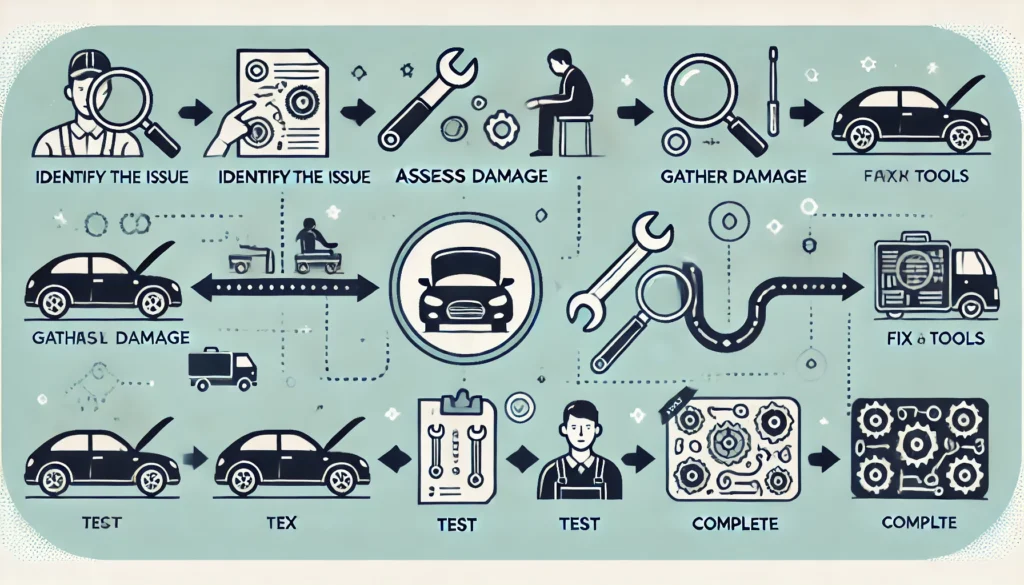
WhatsMiner Repair Process – Step-by-Step Guide
If your Whatsminer encounters a hardware or software issue, follow this official step-by-step repair procedure to ensure a smooth and efficient service experience.
1. Contact Customer Service
Reach out to WhatsMiner official after-sales support team via:
- The official website support page
- The customer service hotline listed in your user manual
💡 Always use official contact channels to ensure fast and secure service.
2. Fault Confirmation
Customer service will guide you to provide the following for preliminary diagnosis:
- Miner model and serial number
- Detailed fault description
- Dashboard screenshots
- Operation logs (if available)
✅ Accurate information helps determine if a return is necessary and saves time.
3. Mailing the Device
Once repair is confirmed, follow customer service instructions to ship the device:
- Package the miner securely to prevent damage in transit
- Include a copy of the repair form or ticket ID
- Ship to the designated repair center address
📦 Tip: Keep your tracking number for reference.
4. Repair and Testing
At the service center, the device will undergo:
- Comprehensive diagnostics
- Hardware or software repair
- Testing to ensure performance and stability before return
🔧 All repairs are handled by trained professionals using official tools and components.
5. Return Delivery
Once repaired, the Avalon Q will be:
- Shipped back via express delivery
- You’ll receive a tracking number once the device is dispatched
🚚 Expect delivery within a few working days, depending on your region.
Conclusion
Now that you’ve mastered the Whatsminer Immersion Cooling Miner setup, the crypto realm is yours to dominate. Will you optimize for maximum hashrate or efficiency? The choice is yours, adventurer.
💬 Comment below with your miner model and any quests (questions) you face!
Got questions? Drop them below—We’ll help you out! 🚀
Click here for more helpful resources and support!
Happy mining! ⛏️💰

