
Why Is the Antminer S19k Pro (120 TH/s) a Great Budget Miner for Beginners?
Opening the list is the Antminer S19k Pro, which offers high hash power at a surprisingly low price. I explore why this older model still appeals to beginners on a budget.
The Antminer S19k Pro is beginner-friendly due to its low cost (around $300–$400) and solid 120 TH/s output. New miners get respectable Bitcoin hashing power for a small investment, making it an attractive budget entry into mining.

Performance and Specs
The Bitmain Antminer S19k Pro delivers up to 120 TH/s of hashing power while consuming about 2760 W of electricity. Its energy efficiency is around 23 J/TH, placing it in a next-generation level for power use in its release era. This means it produces strong hash rate without extreme electricity waste. However, it’s an air-cooled unit with four fans, so it runs loud (about 75 dB, similar to a vacuum cleaner).
Beginners should plan for noise and cooling; running it in a garage or mining room is ideal. Importantly, the S19k Pro typically requires a 220–240V power source – a standard in industrial settings or many countries, but U.S. home users may need a special outlet or transformer. In my experience, the S19 series has proven robust over the years, and a new S19k Pro usually comes with a 1-year warranty for peace of mind.
Profitability and ROI
What makes the S19k Pro shine for newcomers is its low price. As of 2026, a new unit costs only around $300–$400, a fraction of newer models. For that cost, it generates roughly $4–$5 of Bitcoin per day at the current network difficulty. In other words, it produces about 0.00005–0.00006 BTC daily. With typical electricity rates, the S19k Pro’s running cost is high – it draws 2.76 kW continuously, so on $0.10/kWh power it would consume about $6.60 in electricity per day. This means at average rates it might not turn a profit (you could see a small daily loss without very cheap power).
For beginners with low-cost electricity (or those using the miner’s heat productively), the S19k Pro can pay for itself in well under a year. For example, at $0.05/kWh, its net profit might be around $1.50/day, yielding a hardware payback in roughly 6–8 months. I often recommend this model to budget-conscious beginners who have access to inexpensive power or want an affordable way to learn mining. Even if profits are slim at retail electricity prices, the low upfront cost means you’re mainly investing in learning. The S19k Pro has been a workhorse in the mining world, so you’re getting a proven device without breaking the bank.
Pros: Inexpensive hardware, respectable 120 TH/s hash rate, good efficiency for its price, widely available second-hand.
Cons: High power draw (2760 W), loud 75 dB noise, not profitable at high electricity rates, requires 220V power in many cases.
| Item | Antminer S19k Pro (Summary) |
|---|---|
| Price (2026) | $300–$400 |
| Hashrate | ~120 TH/s |
| Power Draw | ~2,760 W |
| Efficiency | ~23 J/TH |
| Noise Level | ~75 dB (loud, vacuum-like) |
| Cooling | Air cooling, 4 fans |
| Power Requirement | 220–240V recommended |
| Daily Revenue | ~$4–$5/day |
| Electricity Cost @ $0.10/kWh | ~–$6.60/day (often unprofitable) |
| Electricity Cost @ $0.05/kWh | ~+$1.50/day |
| Estimated ROI (cheap power) | ~6–8 months |
| Strengths | Very cheap, reliable, good hashrate for price |
| Weaknesses | High power use, loud, needs cheap electricity |
| Best For | Beginners with low-cost power who want to learn mining |
Is the Whatsminer M50S (126 TH/s) a Good ASIC for New Bitcoin Miners?
The MicroBT Whatsminer M50S is another strong contender for newcomers. It boasts slightly higher hash power and a reputation for stability. Here’s why it can be a smart choice for new miners.
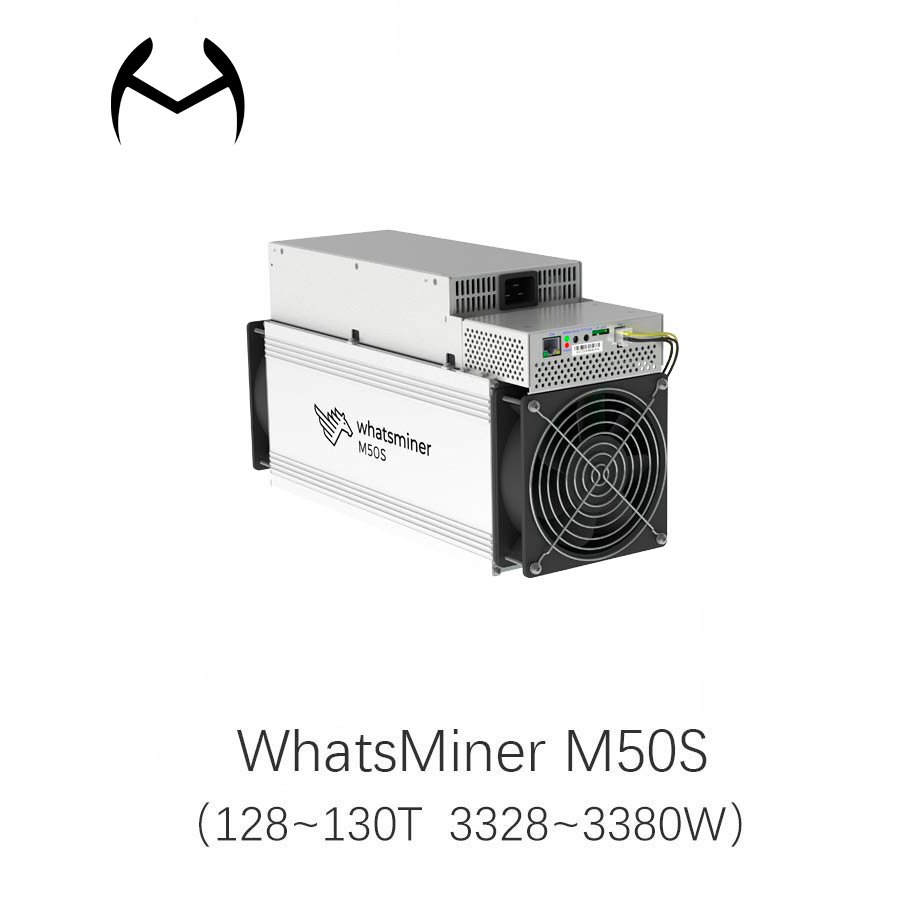
The Whatsminer M50S offers about 126 TH/s of SHA-256 hash rate with solid build quality. It’s beginner-friendly because it provides reliable performance and ease of use, though it costs more (around $700–$800) than an S19k Pro.
Specs and Efficiency
The Whatsminer M50S mines Bitcoin at roughly 126 TH/s with a power consumption of about 3276 W. Its efficiency is around 26 J/TH:contentReference[oaicite:14]{index=14}, slightly less efficient than the S19k Pro but still considered good for its generation (the M50S was launched in mid-2022). This miner uses 5 nm chips and has an excellent build – MicroBT (the manufacturer) is known for durable, “tank-like” hardware. The unit has dual fans and produces about 75 dB of noise, similar to the Bitmain units.
In practice, the noise is very loud for a home environment (comparable to a hairdryer running continuously). From my experience, the M50S runs a bit hot, so good ventilation is needed. It’s slightly smaller in dimensions than some Antminers, and its power supply is integrated into the chassis, which simplifies setup. One thing to note: the M50S typically comes with a 6-month manufacturer warranty, shorter than Bitmain’s standard, but still offering some protection for new buyers.
Daily Output and Reliability
At around 126 TH/s, the M50S currently earns roughly $4.5–$5.0 per day in Bitcoin revenue (before accounting for electricity). It produces essentially the same daily BTC as the S19k Pro (because hash rate is in the same class), maybe a tad more on lucky days. However, it also uses more power; at $0.10/kWh, it costs about $7.90 in electricity per day (3.276 kW × 24 h) which would outpace its earnings. Like most ASICs, cheap electricity (or subsidized power) is key to profitability – at $0.05/kWh, the M50S would roughly break even or earn a dollar or two per day after power costs. In terms of return on investment, at a ~$750 price, one could reach payoff in about 1.5–2 years at $0.05 power (or faster if BTC prices rise).
What makes the M50S attractive to beginners is its reliability and simple operation. In my experience running Miner Source, customers often praise how the M50S runs stably without much tinkering. One user review noted that all their M50S units were “brand new and have been running without issues”. Setup is straightforward: just plug in, connect to a pool via the web interface, and it starts mining.
Some owners even comment the M50S is quieter than expected and ready to use within minutes (though “quiet” is relative – it’s still loud, but perhaps a slightly lower pitch noise). Overall, the Whatsminer M50S is a solid mid-range miner – it’s more expensive than the S19k Pro, but you’re investing in a robust machine from a top manufacturer.
Pros: High hash rate (126 TH/s), solid build quality, stable long-term operation, simple setup, widely trusted brand (MicroBT).
Cons: Moderately high power use (3.3 kW), loud (75 dB) like other ASICs, initial cost higher than older models, only marginally profitable without cheap electricity.
| Item | Whatsminer M50S (Summary) |
|---|---|
| Price (typical) | $700–$800 |
| Hashrate | ~126 TH/s |
| Power Draw | ~3,276 W |
| Efficiency | ~26 J/TH |
| Chip Process | 5 nm |
| Noise Level | ~75 dB (very loud) |
| Cooling | Dual-fan air cooling |
| Power Supply | Integrated (simpler setup) |
| Warranty | ~6 months (typical MicroBT policy) |
| Daily Revenue | ~$4.5–$5.0/day (before electricity) |
| Electricity Cost @ $0.10/kWh | ~–$7.90/day (unprofitable) |
| Electricity Cost @ $0.05/kWh | ~breakeven to +$1/day |
| Estimated ROI (cheap power) | ~18–24 months |
| Strengths | Strong build quality, stable, easy setup, trusted brand |
| Weaknesses | High power use, loud, higher upfront price, needs cheap electricity |
| Best For | Beginners who want reliability and durability, and have low-cost power |
How Does the Avalon Mini 3 (37.5 TH/s) Offer a Beginner-Friendly Mining Experience?
Canaan’s Avalon Mini 3 is a unique entry on this list, targeting home miners who value quiet operation and low power. Let’s examine what makes the Mini 3 appealing to beginners.
The Avalon Mini 3 is a compact Bitcoin miner providing 37.5 TH/s while doubling as a space heater. It’s beginner-friendly due to its low 800 W power draw, whisper-quiet design (~33–55 dB), and easy Wi-Fi setup – ideal for home mining despite its smaller output.
Quiet Home Mining
When I first heard about the Avalon Mini 3, I was intrigued – it’s marketed as a “BTC heater” as much as a miner. This device runs at 37.5 TH/s and only uses about 800 W of power. That is a fraction of the electricity of the other miners on this list, more comparable to a high-end gaming PC or a small appliance. Because of this, the Mini 3 can plug into a standard 110–120V outlet in a home without issues. Its most remarkable feature is the quiet performance: noise levels range from just 33 dB to 55 dB, depending on fan speed. 33 dB is as quiet as a whisper or library, and even 55 dB is about the level of a normal conversation – a world apart from the 75 dB scream of typical ASICs. This noise profile means you could actually run the Avalon Mini 3 in a living space or an apartment without it being overbearing.
Canaan achieved this by designing the Mini 3 with efficient cooling and possibly running fans at lower RPM since the heat output is much lower. In fact, the heat generated is a feature: the Mini 3 is a dual-purpose miner + heater. According to Canaan, it can warm a 10 m³ room by about 6°C (from 15°C to 21°C) in roughly 10 minutes. I find this dual-use approach fascinating – in winter, the energy isn’t “wasted” as all heat can help warm your home. The device also comes with Wi-Fi connectivity and a mobile app for easy control.
From a beginner standpoint, this plug-and-play nature (no need to wire up Ethernet if you don’t want, and straightforward app controls) makes it very user-friendly. The Mini 3 is relatively compact (about 30 inches long, 4 inches tall, 8.5 inches wide), so it can sit along a wall or under a desk like a baseboard heater.
Hashrate and Returns
Of course, the trade-off for low power and silence is lower hash rate. At 37.5 TH/s, the Avalon Mini 3 generates much less Bitcoin per day than the 100+ TH/s machines. At current conditions, it earns roughly $1 to $2 USD in BTC per day (approximately 0.000015 BTC daily). That’s about one-third or less of the output of a 120 TH/s miner. With 800 W power usage, if you pay a high residential rate (say $0.15/kWh), it would cost about $2.88/day to run, exceeding the income. But if you have a cheaper rate or value the heat, the economics look better: at $0.05/kWh, the Mini 3’s electricity is ~$0.96/day. So effectively, you could break even or make a small profit while heating your space.
The Avalon Mini 3 is not a miner you buy for quick ROI – it’s more for hobbyists or those who want to learn mining in a convenient, unobtrusive way. With a price around $900–$1000, it is actually more expensive per terahash than bigger miners (you’re paying a premium for silence and low power). The “payback period” could be several years on pure mining income. However, many new miners choose the Mini 3 because it fits into a home environment seamlessly. In my case, I often recommend it to blockchain enthusiasts who want to run a miner in their living room or office quietly. It’s also a conversation piece – a heater that earns you Bitcoin!
Technically, the efficiency is decent at 21.3 J/TH – better than older large miners – thanks to its advanced 4 nm ASIC chips. This means it hashes fairly efficiently for the energy it uses. In summary, the Avalon Mini 3 offers a low-barrier, low-noise entry into mining. It won’t generate huge profits fast, but it provides a gentle learning curve and useful byproduct (heat), which is perfect for beginners in a home setting.
Pros: Ultra-quiet operation (as low as 33 dB), low power requirement (800 W), easy setup with Wi-Fi and app, provides home heating, no special electrical needs (runs on standard outlet).
Cons: High cost per TH (small capacity, ~$1000 for 37.5 TH/s), much lower daily BTC income, long ROI purely from mining, not suitable if your goal is maximum profit.
| Item | Avalon Mini 3 (Summary) |
|---|---|
| Target User | Home / quiet mining beginners |
| Price | ~$900–$1,000 |
| Hashrate | ~37.5 TH/s |
| Power Draw | ~800 W |
| Efficiency | ~21.3 J/TH |
| Noise Level | ~33–55 dB (very quiet) |
| Dual Use | Miner + space heater |
| Power Requirement | Standard 110–120V household outlet |
| Connectivity | Wi-Fi + mobile app |
| Heat Output | Can warm ~10 m³ room by ~6°C in ~10 minutes |
| Daily Revenue | ~$1–$2/day (≈ 0.000015 BTC) |
| Electricity Cost @ $0.15/kWh | ~–$2.88/day (unprofitable) |
| Electricity Cost @ $0.05/kWh | ~+$0–$1/day (depends on heat value) |
| ROI Expectation | Several years (more of a hobby/learning device) |
| Strengths | Ultra-quiet, low power, easy setup, doubles as heater, plug-and-play |
| Weaknesses | High cost per TH, lower output than large miners |
| Best For | Beginners wanting quiet, safe, home-friendly mining |
Why Is the Canaan Avalon Q (90 TH/s) Suitable for Home Miners?
The Avalon Q is Canaan’s larger home-oriented ASIC, packing more punch than the Mini but still focusing on efficiency and noise reduction. Here’s why the Avalon Q is a top choice for beginner miners who want a balance of power and quiet operation.
The Canaan Avalon Q offers 90 TH/s of hash rate at 1674 W with excellent efficiency (~18.6 J/TH). It’s beginner-friendly because it runs significantly quieter (around 45–65 dB) and on standard 110–240V power, making it ideal for home or small-office Bitcoin mining without the usual noise and power infrastructure headaches.
Home-Friendly Design
I’ve noticed many new miners gravitate toward the Avalon Q for its home-friendly features. This unit provides 90 TH/s of hashing power while drawing about 1674 W of electricity – roughly half the power of a typical 100+ TH/s miner. The efficiency is outstanding at 18.6 J/TH, meaning it squeezes a lot of hashes out of every watt (this efficiency is on par with some of the very latest models).
One big advantage is that the Avalon Q can operate on 110V or 220V input. For U.S. users, this means you can plug it into a normal household outlet (15A circuit recommended) without needing special power setup, as long as nothing else heavy is on the same circuit. This flexibility removes a barrier for beginners who might not have a 240V outlet ready.
Canaan designed the Avalon Q with an aim for low noise and flexible output modes. It features an air-cooling system that is much quieter than standard miners – noise is rated at 45–65 dB depending on mode. In Eco mode, users report the unit is extremely quiet, outputting around 53 TH/s but making about as much sound as a fan or quiet AC unit. In Turbo mode (if available), it might push near 90 TH/s with noise closer to 65 dB, which is still far quieter than 75–80 dB screamers.
I’ve heard from customers (and seen online feedback) that the Avalon Q “just works” – it’s a sturdy machine with straightforward setup like other Avalons. One Reddit user who sold many units noted they hadn’t received any complaints, and highlighted that the Avalon Q has Eco/Normal/Turbo settings, where the lowest mode’s efficiency rivals even Bitmain’s S21+. The build is relatively compact (about 44 cm x 44 cm x 13 cm in size, weighing ~10.5 kg), so it can fit in small spaces. It comes with Canaan’s typical web interface for configuration, which is user-friendly for novices.
Efficiency and Profit
With 90 TH/s, the Avalon Q currently yields around $3.5 in BTC per day (roughly 0.000037 BTC/day). Because of its superb efficiency, it produces this hash power at a much lower electricity cost: 1.674 kW usage translates to about $4.0/day at $0.10/kWh. That’s still slightly more than the income at high electricity rates, but at $0.06/kWh (a rate some U.S. home miners with solar or certain regions might have) it would cost about $2.41/day, leaving ~$1.1 profit per day. On cheap power or in a cold climate (where you can utilize the heat), the Avalon Q can be profitable and certainly more forgiving on the electric bill than older miners. Priced around $1,500–$1,800 for a new unit, it’s the priciest on this list aside from the S21+.
The payback period could be on the order of 2+ years at current conditions if one only counts mining income. However, the Avalon Q offers intangible benefits for a beginner: you get a near-industrial hash rate without industrial noise and power requirements. This miner is an excellent teacher for someone who wants to run a “serious” ASIC at home. It also may have better resale value in the future since quiet miners are relatively niche and might stay in demand among home miners.
From what I’ve observed, many small mining operators in places like North America and Europe pick the Avalon Q to start mining because they can integrate it into an office or home environment easily. It’s robust enough for continuous 24/7 operation – users have run them non-stop and reported that it’s “worth it” and stable. Canaan has a history of making miners that last a long time, often with slightly lower stress on the chips than Bitmain’s highest-power units. In conclusion, the Avalon Q is a premium beginner miner: it requires a higher upfront investment but provides a quieter, more efficient mining experience that can fit into everyday life.
Pros: Very efficient (18.6 J/TH) – saves power, much quieter than typical miners (45–65 dB), runs on 110V outlet (no special power needed), multiple performance modes (eco/turbo), solid build quality ideal for 24/7 home use.
Cons: Higher purchase price (≥ $1500), moderate hash rate (90 TH/s is half of top-end units), still outputs considerable heat (1.7 kW) so a warm location might need cooling, ROI can be slow unless power is cheap or BTC price rises.
| Item | Avalon Q (Summary) |
|---|---|
| Target User | Home / small-office miners wanting quiet + efficiency |
| Price | ~$1,500–$1,800 |
| Hashrate | ~90 TH/s (Eco/Normal/Turbo modes available) |
| Power Draw | ~1,674 W |
| Efficiency | ~18.6 J/TH |
| Noise Level | ~45–65 dB (quiet compared with typical ASICs) |
| Voltage | 110–240V (works on standard home outlet) |
| Design Focus | Quiet operation + energy efficiency |
| Modes | Eco / Normal / Turbo performance settings |
| Size & Weight | ~44 × 44 × 13 cm, ~10.5 kg |
| Daily Revenue | ~\$3.5/day (≈ 0.000037 BTC) |
| Electricity Cost @ $0.10/kWh | ~–$4.0/day (slightly negative) |
| Electricity Cost @ $0.06/kWh | ~+$1.1/day (depending on usage of heat) |
| ROI Expectation | ~2+ years (faster with cheap power or heat reuse) |
| Strengths | Very efficient, much quieter, standard outlet friendly, flexible modes, reliable build |
| Weaknesses | Higher upfront price, mid-range hash rate, still produces heat, ROI slower without cheap electricity |
| Best For | Beginners wanting a serious ASIC that fits comfortably in a home environment |
Should a Beginner Choose the Bitmain Antminer S21+ (216 TH/s) Under $2,000?
The Antminer S21+ is Bitmain’s flagship in this price range, delivering top-of-the-line performance. It’s powerful, but is it the right choice for a beginner? Let’s consider its merits.
The Antminer S21+ offers an impressive 216 TH/s hash rate with best-in-class efficiency (~16.5 J/TH). For a beginner willing to invest around $2,000, the S21+ provides the highest mining performance under $2k, translating to about $8+ in Bitcoin revenue per day. It’s a strong choice if one can accommodate its 3564 W power draw and 75 dB noise level.

Top-Tier Performance
Bitmain’s Antminer S21+ is arguably the most powerful “beginner-friendly” (sub-$2k) miner you can buy in 2026. It hashes at a massive 216 TH/s and consumes roughly 3564 W of power. This yields an efficiency around 16.5 J/TH, which is the best on this list – meaning it uses the least electricity for the amount of work done. In fact, the S21+’s efficiency is cutting-edge for early 2025 hardware, only beaten by specialized immersion-cooled units or future models. From a technical perspective, this miner likely uses Bitmain’s latest 5 nm or even 3 nm chips, and it shows in the performance.
Now, the downsides: the S21+ is big, loud, and power-hungry. Physically it’s similar in size to the S19 series (about 40 × 19.5 × 29 cm, but heavier around 20–22 kg). It has four high-speed fans and produces about 75 dB of noise at full tilt – essentially as loud as the older models. This is not something you’d run in a living space without serious soundproofing (imagine a vacuum running continuously). It also dumps a lot of heat (over 3500 W), so you need excellent ventilation or a cooling setup. For power, the S21+ definitely requires 220–240V supply; drawing ~15 A at 240V, you’d need a dedicated circuit (and at 110V it would draw over 30 A which is not feasible for standard outlets). In short, the S21+ is more suited to a garage, basement or a mining farm environment, even for a “beginner” user.
I’ve had a couple of new miners purchase S21+ units through Miner Source – usually these were technically inclined individuals or companies that wanted the latest gear and had arranged proper electrical capacity. Bitmain’s hardware quality for the S21+ is high, and it comes with a 1-year warranty typically. Operating it is similar to other Antminers via the web interface. It’s basically a professional-grade miner that has edged into an affordable price point.
Profit Potential
With great power comes great potential profit (and also cost). The Antminer S21+ currently generates around $8 to $9 USD per day in Bitcoin gross revenue, given its 216 TH/s might find ~0.00009 BTC daily. This is roughly double the income of a 120 TH/s miner. However, its electricity consumption is also double, so the net profit heavily depends on your power rate. At $0.10/kWh, running the S21+ costs about $8.56 per day in electricity, essentially eating up all the earnings. At $0.06/kWh (a rate some industrial or efficient home miners achieve), it costs about $5.13/day, leaving around $3.36 profit.
In regions with very cheap power ($0.03–0.04), the S21+ can be quite profitable, and if Bitcoin’s price surges, its high hashrate will capture that upside well. One benefit of its high efficiency is that it remains viable longer as mining difficulty rises – efficient miners stay profitable when older, less efficient ones have to turn off. Bitmain’s documentation and industry experts estimate an ROI for the S21+ of roughly 12–18 months under favorable conditions, which is relatively quick for mining investments. If a beginner has access to low-cost electricity or wants to start with a machine that will still be top-tier in a couple of years, the S21+ is compelling. Keep in mind, though, that managing the heat and noise is a real concern – you might need to treat this not just as a plug-and-play appliance, but as a small industrial machine in your home.
From my perspective, I advise new miners considering the S21+ to ensure they have the proper setup (electrical capacity, cooling, sound damping). Many large company buyers and serious enthusiasts – the kind we often serve in North America, Europe, and the Middle East – start with a few S21+ units to kickstart their mining operations because of the impressive output for the price. It’s a miner that can scale: if you learn on one S21+, you can easily transition to running a larger farm of them. In summary, the Antminer S21+ is the heavyweight champion under $2,000. It’s not as “easy” as the quieter models, but it offers the maximum hash power for your dollar and top-notch efficiency, which can pay dividends for those ready to handle it.
Pros: Highest hash rate (216 TH/s) in this class, industry-leading efficiency (16.5 J/TH), strong longevity potential, relatively affordable for its performance ($2000), backed by Bitmain’s 1-year warranty.
Cons: Very high power requirement (3.5 kW, needs special power setup), very loud (75 dB) – not suitable for quiet home use, substantial heat output, upfront cost is significant (budget needed for infrastructure like wiring or cooling).
| Item | Antminer S21+ (Summary) |
|---|---|
| Target User | Serious beginners willing to invest + handle power & noise |
| Price | ~\$2,000 |
| Hashrate | ~216 TH/s |
| Power Draw | ~3,564 W |
| Efficiency | ~16.5 J/TH (industry-leading in this group) |
| Chip | Latest Bitmain generation (5 nm / 3 nm class) |
| Noise Level | ~75 dB (very loud) |
| Heat Output | Very high — requires strong ventilation |
| Power Requirement | 220–240V (dedicated circuit recommended) |
| Size / Weight | ~40 × 19.5 × 29 cm, ~20–22 kg |
| Warranty | ~1 year |
| Daily Revenue | ~\$8–\$9/day (≈ 0.00009 BTC) |
| Electricity Cost @ $0.10/kWh | ~\$8.56/day (mostly cancels revenue) |
| Electricity Cost @ $0.06/kWh | ~\$5.13/day → ~\$3.3 net profit |
| ROI Expectation | ~12–18 months (with cheap power) |
| Strengths | Highest hashrate under \$2k, top efficiency, long usable life |
| Weaknesses | Very loud, needs special power & cooling, high heat, higher upfront setup cost |
| Best For | Beginners with low electricity costs who want maximum performance and plan to scale |
How Do These Bitcoin Miners Compare Overall?
Even among beginner-friendly ASICs, each miner has its own strengths and ideal use-case. Here I compare the key specs and considerations side by side.
All five ASIC miners have different strengths. The S21+ offers the highest hashrate and efficiency, whereas the S19k Pro is cheapest. Avalon models run quieter for home use. The Whatsminer M50S provides solid mid-range performance and reliability.

To help choose the right miner, consider this comparison of their specifications and typical costs:
| Miner | Hashrate | Power | Efficiency | Noise | Est. Daily BTC Income | Price (USD) |
|---|---|---|---|---|---|---|
| Antminer S19k Pro | 120 TH/s | 2760 W | ~23 J/TH | ~75 dB | ~$4.8/day | $300–$400 |
| Whatsminer M50S | 126 TH/s | 3276 W | ~26 J/TH | ~75 dB | ~$5.0/day | $700–$800 |
| Avalon Mini 3 | 37.5 TH/s | 800 W | ~21.3 J/TH | 33–55 dB | ~$1.5/day (est.) | $900–$1000 |
| Avalon Q | 90 TH/s | 1674 W | ~18.6 J/TH | 45–65 dB | ~$3.5/day | $1000–$2000 |
| Antminer S21+ | 216 TH/s | 3564 W | ~16.5 J/TH | ~75 dB | ~$8.5/day | ~$2000 |
Table: Comparison of the top 5 beginner ASIC miners. Hashrate and power define performance; efficiency (J/TH) measures electrical economy (lower is better). Noise is crucial for home use. Income is approximate and varies with Bitcoin’s price and network difficulty. Prices are current estimates for new units.
Looking at the table, the Antminer S21+ clearly leads in raw performance (216 TH/s) and efficiency (16.5 J/TH), but it’s also the most power-hungry and as loud as older miners. It suits those who want maximum output and have the setup to handle it. On the other hand, the Antminer S19k Pro has the lowest cost by far – you could buy 4–5 S19k Pros for the price of one S21+.
For beginners on a tight budget, that low entry price is very enticing, and a couple of S19k units could outperform a single expensive miner if electricity is cheap. The Whatsminer M50S sits in the middle: it costs more than the S19k Pro but offers a bit more hash power and a strong build quality. It’s a good “workhorse” choice, with reliability that appeals to miners who prefer MicroBT’s products. The Avalon Mini 3 and Avalon Q cater to a different segment – those who prioritize a home-friendly mining experience. The Mini 3 is ultra-quiet and low-power; it’s an excellent learning device or supplemental heater that mines Bitcoin.
The Avalon Q steps up the game by giving a near triple hash rate of the Mini 3 while still staying relatively quiet and efficient, making it perhaps the best compromise for at-home mining in this list. In terms of daily profit vs. cost, if you have access to cheap electricity, the S19k Pro can actually pay back fastest due to its very low price (even though it’s less efficient) – essentially, you’re trading higher electricity bills for a drastically lower hardware cost. If electricity is expensive or noise is a concern, the Avalon Q might yield the best user experience and long-term value, despite its higher price, thanks to its efficiency and quieter operation.
Ultimately, the right choice depends on your situation:
- If you’re a hobbyist in an apartment, an Avalon Mini 3 could let you mine modestly without bothering anyone.
- If you have a garage or basement and decent power rates, an S19k Pro or M50S could be a cost-effective start, giving you major hash power for little money down (just be mindful of the noise).
- If you aim to scale or want the latest tech, the S21+ is the powerhouse that can anchor a larger setup.
- If low noise and high efficiency for home use are top priority, the Avalon Q stands out as the balanced choice.
Many of my beginner customers in North America, Europe, and even tech-forward regions like the UAE start with one of these models. I’ve seen large company buyers pick up S21+ units to dip their toes into mining, while solo enthusiasts often go for Avalons to run at home quietly. In our Hong Kong and Shenzhen warehouses, we stock all these models to meet the diverse needs of new miners around the world. Whether you’re a blockchain hobbyist or a small business, these five ASICs cover the spectrum from ultra-budget to high-end, all under $2,000.
Conclusion
In summary, choosing a beginner-friendly ASIC miner is about balancing cost, power, and performance. These five options each offer a unique path to start Bitcoin mining with confidence.
| Miner | Core Strength | Biggest Trade-Off | Best For | Why You’d Pick It |
|---|---|---|---|---|
| Antminer S21+ (216 TH/s, 16.5 J/TH) | Highest performance + best efficiency | Expensive & very power-hungry, loud | Scaling setups & serious miners | Anchors a larger farm; future-proof hash power |
| Antminer S19k Pro (120 TH/s) | Lowest price ($300–$400) | Less efficient; loud; needs cheap power | Budget beginners | Fastest payback if electricity is cheap |
| Whatsminer M50S (126 TH/s) | Reliable “workhorse”, strong build | Higher price than S19k; power use | New miners who want stability | Runs smoothly with minimal tinkering |
| Avalon Mini 3 (37.5 TH/s) | Ultra-quiet, low power, plug-and-play | Low hashrate; slow ROI | Apartment / hobby use | Mines quietly & doubles as a heater |
| Avalon Q (90 TH/s, 18.6 J/TH) | Quiet + efficient + home-friendly | Higher upfront price | Home miners wanting balance | Best compromise: low noise + strong efficiency |
Small apartment / quiet required → Avalon Mini 3
Home mining with normal outlets & quiet preferred → Avalon Q
Lowest budget & cheap electricity → S19k Pro
Durability and “set-and-forget” → Whatsminer M50S
Planning to scale later → S21+

