
How low have Bitmain’s Antminer S19 and S21 prices fallen?
To understand the impact, I dug into the data. The numbers confirm just how far these once high-end miners have sunk in value, validating that “rock bottom” is no exaggeration.
They’ve plunged to unprecedented lows. Bitmain’s S19 series now sells for around $3–$4 per terahash (down from roughly $90 at the 2021 market peak), and even the newer S21 units have fallen to roughly $9 per TH in recent clearance deals.

The price collapse in Bitmain’s mining rigs is stark when we compare current prices to past highs. At the height of the 2021 bull market, Antminer S19 models commanded close to $90–$100 per TH. By early 2024 (just before the Bitcoin halving), those same machines had already retreated to around $15 per TH (as market conditions softened). Fast forward to late 2025, and S19 units are roughly $3–$4 per TH in Bitmain’s latest fire-sale promotions – a drop of over 90% from their peak. Bitmain’s newer S21 series hasn’t been spared either: introduced in 2024 at a premium (initially around the high teens or $20 per TH), S21 prices slid below $10/TH by the end of 2025 as demand weakened and discounts kicked in. The chart below visualizes this multi-year price plunge:
Figure: Antminer price per TH, comparing pre-halving (early 2024) versus post-crash (late 2025) for S19 and S21 models. Bitmain’s older S19 series dropped from around $15/TH pre-halving to roughly $3/TH in late 2025, while the S21 series fell from about $20/TH to ~$7/TH in the same period.
Cheaper Than the Competition?
Bitmain’s aggressive price cuts have made their rigs some of the cheapest on the market per unit of hashpower. For example, by late 2025 Bitmain was offering S19 models at about $3–$4/TH, a level previously seen only in distressed second-hand sales. In contrast, comparable models from competitors like MicroBT (Whatsminer series) or Canaan’s Avalon have generally been trading at higher prices per TH. Even mid-2025, a Whatsminer M50 (around 110–120 TH) was about $6/TH new, and Bitdeer’s efficient Sealminer A2 debuted around $13/TH to undercut Bitmain’s pricing. Bitmain’s deeper discounts in late 2025 gave it a temporary price advantage – essentially forcing rivals to either follow suit or cede market share. As a result, Bitmain’s hardware offers an unusually low upfront cost per hash compared to other brands. This absolute price advantage is a double-edged sword, however: it reflects not just Bitmain’s sales strategy, but also the severe pressure on older hardware that prompted such markdowns.
Near the “Shutdown Price”
The term “shutdown price” refers to the point where mining revenue barely covers electricity costs – beyond that, miners are better off switching off their machines. Today’s bargain prices are rooted in the fact that many S19 and S21 units are flirting with this threshold. After Bitcoin’s 2024 halving, mining revenue (hashprice) plunged roughly 50%, leaving older 30 J/TH miners like the S19j Pro unable to break even above about $0.076 per kWh in electricity costs. At a typical industrial power rate (say $0.07–$0.08/kWh), an S19’s daily Bitcoin earnings barely offset its electricity bill – essentially a zero-profit scenario. This underlying economics explains why so many of these rigs hit the secondary market at fire-sale prices (some public miners literally dumped thousands of S19 units for as low as $1.9/TH just to recoup something. The S21 series, while more efficient, also faces profitability pressure at normal power rates. When revenue per TH dropped post-halving, even those newer machines saw their margins shrink. In short, prices have “bottomed out” because, at current network difficulty and Bitcoin price, these miners are hovering around the shutdown point for anyone paying average electricity rates. The only way to entice buyers is to price the hardware so low that it becomes worth the gamble – and Bitmain has done exactly that.
| Topic / Model | Antminer S19 | Antminer S21 | Notes |
|---|---|---|---|
| Current Price (late 2025) | ~$3–$4 / TH | ~$7–$9 / TH | Historic lows / clearance |
| Price at Launch Peak (2021–2024) | ~$90–$100 / TH | ~$18–$20 / TH | Premium era |
| Pre-Halving (early 2024) | ~$15 / TH | ~$20 / TH | Market softening |
| Total Price Drop | ↓ ~90%+ | ↓ ~50–65% | Multi-year crash |
| Compared to Competitors | Cheaper than Whatsminer/Avalon | Often cheapest high-efficiency option | Bitmain regained price edge |
| Reason for Crash | Near shutdown economics | Shrinking margins post-halving | Weak demand + oversupply |
| “Shutdown Price” Effect | Struggles above ~$0.076/kWh | Still pressured at normal rates | Hardware repriced to sell |
| Buyer Takeaway | Ultra-cheap entry cost | Efficient but still risky | Profit depends on cheap power |
Why did this mining rig price crash happen now?
The timing of this crash is no coincidence. A perfect storm hit in late 2024: a scheduled Bitcoin halving slashed mining rewards, and at the same time, technology leaps by competitors put older machines under immense pressure.
It happened now because Bitcoin’s April 2024 halving suddenly halved mining rewards to 3.125 BTC per block, gutting miners’ revenue. Older Antminer S19/S21 units that were marginally profitable before became unprofitable at typical power costs overnight, spurring a mass sell-off. This crunch coincided with rivals like Canaan and Bitdeer rolling out more efficient ASICs (some under 17 J/TH, which squeezed Bitmain’s market share and forced the dramatic price cuts.

Several converging factors explain why the “crash” in mining rig prices is happening at this particular moment:
Post-Halving Profit Squeeze
The most direct trigger was the 2024 Bitcoin halving. In April 2024, Bitcoin’s block subsidy was cut from 6.25 BTC to 3.125 BTC. This meant that overnight, miners’ revenue from each block dropped by 50%, while energy and operating costs stayed the same. Hashprice – the income per unit of hash power – nosedived accordingly. In fact, one year after the halving, hashprice was about 60% lower than before, creating a brutal profit squeeze. Many older mining rigs that were barely profitable before quickly turned cash-flow negative unless one had very cheap electricity. For example, by late 2024 the S19j Pro (≈30 J/TH) could not break even if power cost more than about $0.076/kWh. Miners holding fleets of such machines suddenly faced either running at a loss or shutting them off. This halving shock effectively flooded the market with unwanted older-generation rigs – pushing prices down sharply. It’s no coincidence that immediately post-halving, some mining firms began retiring and selling off S19-series miners en masse. Bitmain, as the manufacturer, also had to adjust: unsold inventory of S19/S21 units was piling up at exactly the moment demand evaporated, so they slashed factory prices to move units. In summary, the halving lit the fuse: it slashed rewards, shrank margins, and turned once-valuable machines into hard sells, precipitating the crash in hardware prices at this time.
Intensifying Hardware Competition
This price crash also came on the heels of an aggressive leap in mining hardware technology. By late 2024 and into 2025, competing manufacturers released new models with far better energy efficiency, directly undermining Bitmain’s S19 and even S21 series. For instance, in mid-2024 Canaan launched the Avalon A15 series with efficiencies as low as 16.8 J/TH – a significant improvement over Bitmain’s previous-gen S19 (~29–30 J/TH). By the end of 2024, Bitdeer (helmed by former Bitmain CEO Jihan Wu) introduced the Sealminer A2, an ASIC pushing 16.5 J/TH at 226 TH/s, slightly outclassing Bitmain’s air-cooled S21 (~17.7 J/TH). This new wave of hardware meant that mining operators suddenly had options that could produce the same hashpower for half the wattage. It technologically “squeezed out” the S19/S21 – miners looking to invest capital naturally gravitated towards the latest units from Avalon, Whatsminer, or Bitdeer to maximize efficiency. Bitmain’s response was to heavily discount its existing models to stay competitive. Indeed, by late 2025 Bitmain even introduced an enhanced S21 XP series (with hydro-cooling) boasting ~12 J/TH, but competitors already announced roadmaps to 5 J/TH ASICs by 2025, signaling an accelerated arms race. The key point: the crash happened now because Bitmain’s older models lost their technological edge exactly when profits shrank. With newer machines yielding much better output per watt, the market value of S19s (and even standard S21s) nosedived. Essentially, Bitmain had to “clear the shelves” at rock-bottom prices to make way for next-gen gear, or risk losing relevance in an efficiency-driven market.
Shifting Industry Priorities
A broader, less obvious factor is the shift in strategy among mining companies. Over the past year, miners have become far more focused on energy efficiency and diversification than simply amassing raw hashpower. Facing slim margins, large operations started reallocating budgets towards next-generation miners or even completely different computing ventures, rather than buying more of the same old machines. For example, several publicly traded miners not only upgraded hardware (dumping S19s for S21s or newer) but also began exploring uses for their infrastructure beyond Bitcoin mining. In 2025, we saw miners like Core Scientific and Iris Energy pivot partial operations to high-performance computing (AI/ML hosting) – Core went so far as to ink a $5.5 billion lease with AWS to supply power for cloud AI compute. This trend means capital that might have bought mid-tier mining rigs went elsewhere (into more efficient miners or GPU clusters). The net effect: demand for older-generation ASICs dried up further. Moreover, miners are now laser-focused on the joules-per-TH metric; many have internal mandates to improve fleet efficiency every quarter. Equipment that can’t keep up is quickly written off. For instance, one major miner (Bitfarms) improved its fleet efficiency from 35 J/TH to 27 J/TH in 2024 by swapping out old units for Bitmain T21s – demonstrating that companies would rather invest in newer tech than keep power-hungry boxes running. Bitmain’s S19/S21 sell-off in late 2025 thus reflects this industry narrative: the market “crash” is partly an overdue correction, aligning hardware prices with a new reality where only the most efficient miners retain value. In short, the timing makes sense in a macro view – a halving-induced profit crunch, combined with leaps in technology and a strategic shift among miners, all converged to make late 2024 the tipping point for hardware values.
| Driver | What Happened | Impact on S19 / S21 | Key Takeaway |
|---|---|---|---|
| 2024 Bitcoin Halving | Block reward cut from 6.25 → 3.125 BTC; hashprice dropped ~50–60% | Older rigs (≈30 J/TH) could not break even above ~$0.076/kWh; fleets shut down | Halving triggered mass sell-offs & surplus supply |
| New, More Efficient ASICs | Rivals launched 16–17 J/TH models (Avalon A15, Sealminer A2, etc.) | S19/S21 looked outdated; buyers preferred newer hardware | Technology leap devalued previous generations |
| Shift in Miner Strategy | Miners focused on efficiency, upgrades & AI/HPC diversification | Demand for mid-tier rigs collapsed; inventories piled up | Capital flowed to next-gen gear, not old machines |
| Bitmain’s Response | Aggressive clearance and fire-sale pricing | S19 to $3–$4/TH, S21 to $7–$9/TH | Prices cut to move stock and stay competitive |
Who are the winners and losers of this mining rig price crash?
Every upheaval creates winners and losers. In this case, the crash in rig prices has very different implications depending on who you are. As both a miner and a supplier, I’ve seen firsthand how some are seizing the moment while others are feeling serious pain.
Large operators holding fleets of S19s are on the losing side – many face tough choices to run at a loss, shut down, or sell their hardware for pennies on the dollar (one public miner sold over 4,500 S19 units at just $1.9/TH. In contrast, newcomers and small miners could be winners, as the cost to enter Bitcoin mining has plummeted. Distributors like Miner Source (my company) have had to adapt instantly – slashing prices and offering new services – to survive this shake-up. Even the Bitcoin network itself will feel a brief reprieve, as these inefficient machines going offline may slow hashrate growth and ease difficulty in the short term.
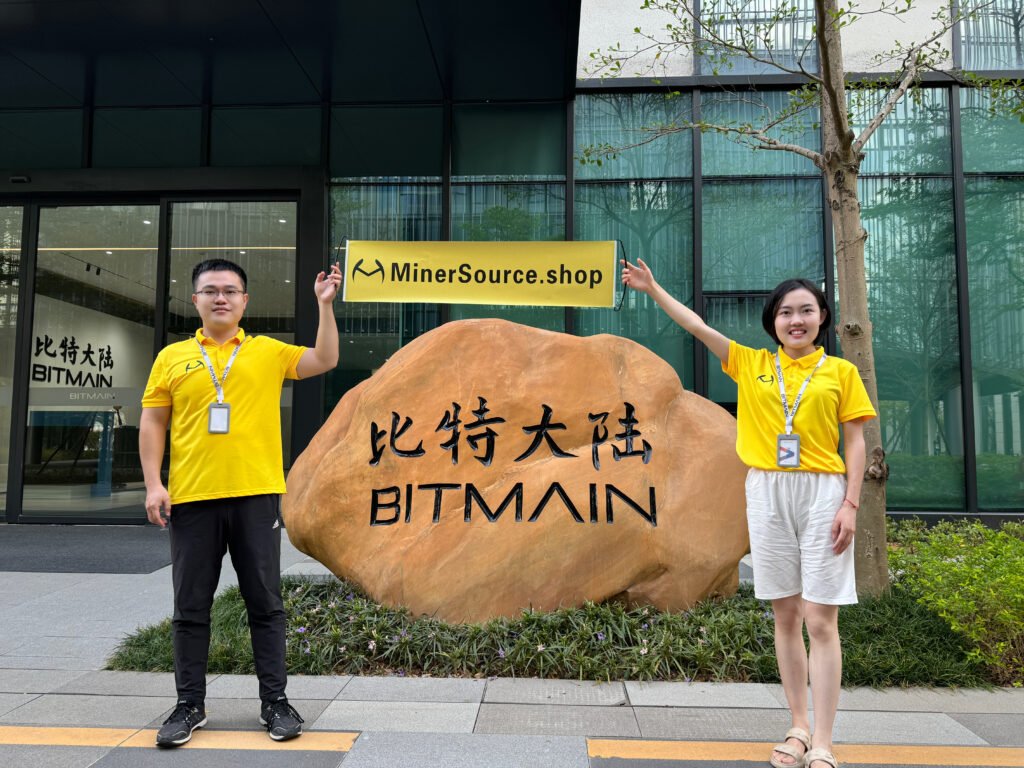
The fallout of Bitmain’s price crash isn’t uniform – it produces different outcomes for different players in the mining ecosystem. Here’s a breakdown of who gains and who loses in this scenario:
Existing Miners with Older Fleets – Dilemma and Hard Losses
If you’re an established miner operating large farms of S19-series machines, this crash has likely put you in a bind. These operators are arguably the biggest losers in the short term. The halving and resulting profit crunch have eroded the revenue of S19 farms, leaving many barely above break-even or worse at typical power rates. As a result, operators have faced a painful dilemma:
- Endure: Keep running the S19s and hope Bitcoin’s price rises enough to restore profitability. This is essentially a bet on a market upswing to bail out the equipment’s economics.
- Shut down: Power off the machines to cut losses on electricity. We saw a wave of this after the halving – some mining firms literally idled large portions of their older units. A notable example is CleanSpark, which began phasing out all S19-class miners after the halving and aimed to retire them entirely by end of 2024.
- Sell off: Try to liquidate the hardware while it still has some value. Many did exactly this, flooding the resale market. Bit Digital, for instance, sold 4,509 S19 miners at an average of $1.9/TH in late 2024 – an enormous loss relative to their original investment, but at least recovering some capital.
- Upgrade: Bite the bullet and invest in more efficient rigs. Some miners took the opportunity to buy newer models (often from Bitmain’s S21 series or competitors). Bit Digital simultaneously bought 941 S21 units after selling its S19s, indicating a strategic pivot to efficiency.
For these incumbent miners, none of the options are easy. Selling thousands of machines at rock-bottom prices is disheartening (and can even depress the market further), yet holding them can bleed cash daily. Upgrading requires fresh capital in a tough environment. In practice, many are doing a mix – dumping a portion of old inventory, reallocating power to newer gear, and awaiting a Bitcoin price breakout to possibly redeploy some old units during profitable spikes. From conversations with several mining farm managers I know, there’s a sense of being “caught in the middle of a cycle” – they expanded with S19-generation hardware when it was profitable, but the halving flipped the script faster than they could adapt. Unless they secured ultra-cheap electricity or had hedged their operations well, a lot of these mid-generation miners are swallowing significant losses right now. The silver lining? Those who survive the shake-out (by cutting costs or upgrading) may come out leaner and better positioned. But undoubtedly, in the winner-loser spectrum of this crash, operators of outdated fleets took one of the hardest hits.
| Group | What They Did | Why | Short-Term Result | Long-Term Outlook |
|---|---|---|---|---|
| Endure (Keep Running) | Continue operating S19 fleets | Hope BTC price rebounds | Often near break-even or small losses | Works only with very cheap power or price surge |
| Shut Down | Power off unprofitable units | Avoid paying loss-making electricity | Revenue stops; reduces burn rate | Can restart later if hashprice improves |
| Sell Off | Liquidate old rigs (e.g., S19s at ~$1.9/TH) | Recover remaining capital | Sell at massive loss; resale market flooded | Frees cash to redeploy into newer tech |
| Upgrade | Replace with efficient models (e.g., S21, newer rivals) | Chasing lower J/TH & profitability | Requires new capital during downturn | Positions fleet for next cycle & halving |
Newcomers and Small Miners – A Golden Opportunity?
On the flip side, new entrants to Bitcoin mining or small-scale miners could be the unexpected winners of this situation – if they play it smart. The barrier to entry in terms of hardware cost has collapsed. Just a year or two ago, the latest-gen machines were so expensive that a small miner had to invest tens of thousands of dollars to get meaningful hashpower. Now, with S19 Pros and similar units available for only a few hundred dollars each on secondary markets, an enthusiast or a small startup operation can assemble a modest mining setup for a fraction of the previous cost. For example, instead of paying $10,000 for a handful of brand-new units, a newcomer might spend the same $10k now and acquire dozens of used S19 units. That dramatically increases their initial TH/s capacity for the money.
This sounds great – and indeed, I’ve seen a surge of inquiries from first-time miners who see these fire-sale prices as a chance to finally get into the game. For those with access to low-cost power (more on that in the next section), this could be a historic opportunity to snag bargain hardware and build up cheap hashpower. We’ve seen cycles in the past where those who bought hardware at the bottom (when everyone else was panic-selling) ended up reaping huge rewards in the next Bitcoin bull run. A classic example was the Antminer S9: miners who bought S9s for pennies in the 2015–2016 downturn enjoyed windfall profits in the 2017 boom. Similarly, someone picking up S19s for $200–$300 now could see excellent returns if Bitcoin’s price rallies strongly or if they can optimize costs.
However, newcomers should also beware: “cheap” doesn’t automatically mean “profitable.” The power efficiency gap cannot be ignored – running a fleet of older machines could prove futile if electricity is expensive (they might never turn a profit and just generate heat and noise). Also, older hardware has higher failure rates. So, the savvy new entrants – the true winners – will be those who:
- Secure very low electricity rates or utilize excess energy (some are leveraging things like flared gas or hydro surplus – effectively power that costs < $0.04/kWh).
- Take a long-term view and can afford to wait for favorable market conditions (they’re not mortgaging their house expecting immediate profit, but rather speculating that they’ll ROI when conditions improve).
- Buy from reliable sources and maybe overhaul/refurbish the units (ensuring the cheap rigs are in decent working order and not about to fail).
- Have a plan for the eventual phase-out (e.g., they’ll mine with these cheap rigs for a year or two, then dispose or upgrade when next-gen devices become affordable).
In summary, the crash has lowered the bar to entry significantly – which is a win for aspiring miners who were previously priced out. It’s a bit like an industry yard sale: those who know what to look for can get great deals. But they’ll only “win” if they fully understand the risks and costs that come with these discounted machines. For novices diving in purely because hardware is cheap, the outcome might be mixed – some will luck out, others might end up with a pile of doorstop miners if they can’t cover operating costs. Still, it’s fair to say that relative to 18 months ago, new and small miners are in a much better position now in terms of initial hardware investment required.
| Topic | What Changed | Why It Matters | Who Benefits Most |
|---|---|---|---|
| Hardware Prices | S19-class rigs now only a few hundred dollars | Entry cost collapsed; can build fleets cheaply | New miners building first setups |
| Hashpower per Dollar | $10k can now buy dozens of S19s (vs. few units before) | Much higher initial TH/s capacity | Small farms scaling quickly |
| Historic Upside | Buying at market bottoms has paid off before (e.g., S9 era) | Hardware bought cheap can profit big in next bull run | Long-term thinkers |
| Electricity Sensitivity | Older rigs = worse efficiency | Profits vanish without cheap power (<$0.04/kWh) | Operators with surplus/cheap energy |
| Reliability Risks | Used units fail more often | Repairs + downtime add cost | Buyers who refurbish/check units |
| Cash Flow Reality | ROI may take time | Must afford to wait for cycles | Patient investors, not gamblers |
| Exit/Upgrade Plan | Cheap rigs will age out | Need plan to phase into newer ASICs later | Strategic planners |
Distributors and Resellers – Adapt or Perish
Another group heavily impacted by the price crash is the mining hardware supply chain – the distributors, resellers, and brokers who buy and sell ASICs (like my company, Miner Source). For us, this period has been a frantic scramble. In many ways, we’re the “in-between” party trying to turn a chaotic situation into an opportunity, but it’s challenging. The losers among distributors will be those caught flat-footed with high-priced inventory, whereas the winners will be those who adapt quickly and find ways to add value in a flooded market.
When Bitmain slashed primary market prices, it instantly devalued every distributor’s stock of S19/S21 units. Imagine having warehouses in Shenzhen and Hong Kong (like we do) full of miners purchased at prices that assumed a certain market level – overnight, those prices became outdated. To avoid steep losses, we and others had to immediately adjust our pricing strategies. That meant:
- Marking down inventory dramatically to stay in line with the new reality. There’s no room for hesitation – if Bitmain is selling at $3/TH, a reseller can’t hope to move units at $5/TH. We’ve had to accept razor-thin margins or even selling at a loss for older stock.
- Bundling value-added services. This is key to stand out when hardware itself is commoditized and cheap. For example, some distributors (including us) started offering bundled hosting or power solutions – “buy X miners and get a hosting slot at Y cents/kWh in our partner facility.” Bitmain itself did something similar by bundling hosting at ~$0.055–$0.07/kWh with hardware sales. As a reseller, if we can connect a buyer to affordable electricity or a reliable mining farm for a hosted solution, the hardware becomes more attractive. We’ve also seen offers like extended warranties, bulk package deals, or on-site installation support thrown in.
- Quickly shifting inventory mix. Many resellers are quickly pivoting to offer newer models or alternative brands. For instance, if S19s are crashing, maybe focus on selling Whatsminer M50s or Avalon A15s to customers who are more efficiency-conscious. In our case, we ramped up sourcing of the latest Bitmain models and even GPUs for AI, anticipating some miners might switch focus. Diversification in product offerings is a survival tactic now.
- Emphasizing trust and verification. With the second-hand market booming (and rife with bad actors), a reputable distributor can win by assuring quality. I’ve personally leaned into things like providing test videos, serial number verification for each used unit we sell, and transparent grading (e.g., indicating if a miner was refurbished or has new fans). Building customer confidence is crucial, because buyers are wary of deals that seem “too good to be true.” If we can be the source that vets and guarantees these cheap rigs, customers are more likely to choose us over a random online seller.
In this tumult, some distributors will inevitably lose – those who perhaps bought heavy at high prices and cannot move inventory now, or those with thin capital who can’t withstand selling stock at a loss to generate cash flow. On the other hand, those who quickly innovate their business model can actually thrive. There’s heightened demand in some segments (e.g., small miners buying a few units, overseas buyers in regions with cheap power). By pivoting to serve these segments with tailored offerings, a distributor can turn the crash into an opportunity to build market share and customer loyalty. From what I’ve experienced, the crash has also fostered more direct conversations with clients – we’re not just selling a box, we’re consulting on how to make that box profitable for them. In a weird way, this might strengthen the long-term role of trusted resellers. But make no mistake: the past months have been a trial by fire for anyone in the ASIC sales business. Adaptation is the only way to avoid becoming collateral damage in this rapid market shift.
| Area | What Happened | Impact on Distributors | Winning Strategy |
|---|---|---|---|
| Price Collapse | Bitmain slashed S19/S21 prices | Existing inventory instantly devalued | Reprice fast; accept thin margins if needed |
| Inventory Risk | Warehouses full of older units | High risk of selling below cost | Aggressive markdowns + fast turnover |
| Commoditization | Hardware became “cheap & everywhere” | Harder to differentiate | Add services, not just sell boxes |
| Bundled Solutions | Hosting + hardware deals became common | Buyers want all-in packages | Offer hosting, setup, warranties, support |
| Market Shift | Customers prefer more efficient miners | Outdated stock harder to move | Pivot to latest models & top brands |
| Used Market Surge | Second-hand trade exploding | More scams + distrust | Testing, serial verification, honest grading |
| Capital Pressure | Cash flow under stress | Some resellers forced to sell at losses | Keep liquidity, rotate inventory quickly |
| Customer Relationships | Buyers seek guidance, not just price | Consulting now part of sales | Act as advisor — help clients stay profitable |
The Overall Network – A Temporary Breather
Finally, let’s consider the Bitcoin network hashrate and mining difficulty – essentially the aggregate of winners and losers combined. When many miners with older devices capitulate (shut off or sell off), the network experiences a lull in growth or even a slight dip in hashrate. In the short term, this can be seen as a “winner” scenario for the remaining miners: if enough hashpower goes offline, the mining difficulty will adjust downward, making it a bit easier (and more profitable) for those still mining. We’ve already observed hints of this. After the April 2024 halving, there were projections of a modest difficulty drop (~3%) as some unprofitable miners quit. And while the network continued to grow through 2025, there were periods of leveling off. Notably, as we approached late 2025 amidst this sell-off, hashprice briefly stabilized around a low point, and difficulty increases slowed, indicating that the hashrate wasn’t surging as relentlessly as before. Essentially, the purge of inefficient machines gave the network a temporary breather – the “survivors” (efficient miners) enjoyed slightly better share of rewards during that window.
However, it’s likely a short-lived effect. History shows that any dip in hashrate/difficulty due to older gear retiring is soon offset by new-generation hardware coming online. Indeed, despite this turbulent year, the Bitcoin network’s 30-day average hashrate is still up roughly 40% in the year following the halving, and by October 2025 it even hit record highs over 1 ZH/s. A significant portion of that growth was attributed to deployment of S21s and other new rigs. Looking forward, analysts project the network will keep climbing – CoinShares, for instance, expects total compute power to reach ~2 ZH/s by 2027. What does that mean in the context of this price crash? It implies that the “losers” (obsolete miners) dropping out now might barely dent the long-term upward trend of network security, but they could cause a small, momentary plateau. We might see a slight slowdown in hashrate growth or a one-time difficulty reduction as the dust settles from the sell-off. For the Bitcoin network’s health, that’s not a bad thing – it smooths the transition by easing mining conditions for a bit.
In summary, the network impact is a nuanced one: in the immediate term, the exit of S19-era machines can reduce competition for remaining miners (good for those who stay on, arguably making them “winners” for a brief period). But in the long run, the continuous improvement and deployment of new hardware will resume the march upward. The overall winner is efficiency – the network sheds inefficiencies and becomes composed of a higher proportion of state-of-the-art miners. And the “loser,” if we personify it, is any miner (or piece of hardware) that can’t keep up with that relentless progress.
| Topic | What Happened | Short-Term Effect | Long-Term Reality |
|---|---|---|---|
| Older miners capitulate | S19-era fleets shut off or sold | Network hashrate pauses or dips slightly | New efficient rigs replace them |
| Difficulty adjusts | Fewer active miners → lower difficulty | Remaining miners earn slightly more BTC per TH | Difficulty rises again as new rigs join |
| Hashprice behavior | Revenue per TH briefly stabilizes | Short window of better margins for survivors | Trend resumes downward when hashrate grows |
| Post-halving effect | Profit squeeze pushes inefficient miners out | Cleans out weakest machines | Makes room for newer, stronger fleets |
| Network strength | Temporary slowdown | Still highly secure | Long-term upward trend continues (toward ~2 ZH/s projected by 2027) |
| Who “wins”? | Efficient miners who stay online | Short-term advantage | Must keep upgrading to stay competitive |
| Who “loses”? | Outdated hardware that can’t compete | Forced shutdown or resale | Ultimately disappears from the network |
Should you buy these mining rigs now or stay away?
With prices in the gutter, it’s only natural to ask whether now is the time to scoop up miners or avoid them. As someone who both operates miners and advises buyers, I grapple with this question daily. The answer depends on your specific situation – chiefly your electricity cost, scale, and tolerance for risk.
It truly depends on your circumstances. If you have access to ultra-cheap power (under about $0.05/kWh) and can accept a long payback period, then buying these heavily discounted miners now can make sense for a high ROI play. However, at normal electricity rates (around $0.08–$0.10/kWh), these older rigs struggle to stay profitable – meaning most people should be cautious or consider investing in newer, more efficient models instead.

Whether to buy or avoid the current “bargain” Bitmain rigs is a nuanced decision. Let’s break it down into scenarios and considerations:
Scenario A: Ultra-Low Electricity (< $0.05/kWh) – A Green Light to Buy
If you are lucky enough to have very cheap electricity (think $0.05 per kWh or below), the math shifts in your favor. In this scenario, buying these rock-bottom priced miners now can be a high-ROI opportunity. Why? Because with low operating costs, the ongoing expense of running even an inefficient S19 becomes manageable, and the extraordinarily low upfront cost means your break-even point (ROI) could be reached relatively quickly if conditions hold.
For example, at an electricity rate of $0.04/kWh, an Antminer S19j Pro (~100 TH/s, ~2950 W) would cost roughly $2.83 in power per day. At current hashprice levels (around $35–$40 per PH/day), that S19 might earn about $3–$4 per day in Bitcoin. That’s a slim daily profit, but importantly it’s positive. Over time, those few dollars add up. If you paid only ~$300 for the unit, even a $1–$2 daily profit could mean you recoup your investment in under a year (market swings notwithstanding). Any Bitcoin price increase or difficulty drop would accelerate that payback. Essentially, cheap power gives you a cushion to absorb the miner’s lower efficiency.
We’ve seen savvy miners in regions with surplus or subsidized power (parts of the Middle East, some Central Asian countries, areas with stranded energy like flared natural gas projects) snapping up these discounted rigs. For them, the calculation is straightforward: the capital expense is minimal now, and they know their operational costs are among the lowest globally, so even older hardware can generate solid returns. In fact, some large-scale miners with access to $0.03/kWh power are reportedly buying containers of used S19s because at that power cost, even post-halving, those machines print money.
That said, a few caveats for Scenario A buyers:
- Plan for downtime and lifespan: These are older units and more prone to failures. You might need to overbuy (get spare units for parts or replacement) to ensure you maintain your expected hashrate. The good news is the low price allows for that redundancy.
- Secure the cheap rate long-term: If your $0.04/kWh deal is short-term or promotional, be careful. You want confidence that you’ll have this low rate for the majority of the miner’s useful life, or else the economics could sour if your power cost doubles later.
- Watch market shifts: Even with cheap power, you are not invincible. If hashprice falls further (say if Bitcoin’s price drops or difficulty shoots up more), your margin could vanish. But with a low cost basis, you have more breathing room than others.
In summary, if you check the box on ultra-low-cost power, buying these rigs now is akin to a value investment. You’re buying productive assets at pennies on the dollar. And as long as you can run them inexpensively, you stand to profit handsomely if Bitcoin’s price even modestly appreciates or during periods of network difficulty stagnation. For this group of miners, I would say the risk/reward skews positively – it’s a green light to carefully accumulate cheap hardware.
Scenario B: Standard Electricity Costs (~$0.07–$0.10/kWh) – Approach with Caution
For the majority of people and businesses, electricity costs are in a moderate range (often around 7–10 cents per kWh for industrial usage, sometimes higher for residential). In this scenario, the outlook for running last-generation miners is far less rosy. In fact, I’d categorize this as proceed with extreme caution, if not a general red light on buying old rigs with the expectation of profit.
As we discussed earlier, at roughly $0.08/kWh (a common rate), an S19’s revenue tends to barely equal its electricity cost at current network conditions. For instance, if an S19 generates, say, $3.50/day in BTC and consumes $3.30/day in electricity at $0.08, you’re netting just $0.20/day. That’s an incredibly thin margin – and one that could turn into a loss with the slightest uptick in difficulty or dip in Bitcoin price. At $0.10/kWh, even many newer models like the S21 can’t break even at all, which means older models certainly won’t. Indeed, miners paying around $0.10 have, by and large, already shut off all their S19-class machines after the halving because each additional difficulty increase effectively puts them further underwater.
So, should you buy cheap miners if your cost is $0.10 or $0.08 and hope for the best? In my view, that’s more of a gamble than an investment at this point. You’d essentially be betting on a strong Bitcoin price rally in the near future to bail out the economics. If BTC price were to surge (for example, to $150k+), then even inefficient miners could become profitable again, and your cheap hardware could pay off handsomely. But absent that kind of price action, you might find yourself with machines that eat up electricity and deliver negligible returns. One telling metric: payback periods for even latest-gen equipment have stretched past 1000 days in current conditions – that’s nearly three years. For older gear at normal power rates, payback could be “never” (meaning you’d retire the machine before it ever fully pays for itself).
There are some exceptions or strategies if you’re in this scenario and still want to dabble:
- Hobby mining: If you’re a hobbyist who doesn’t mind slim-to-no profits (you might value the heat output to warm your garage, or you just want to accumulate satoshis with hardware you control), then buying an S19 for a few hundred bucks could be a fun project. Just know it may not make you money when power is priced normally – you’re doing it for other intangible benefits.
- Optimizing operations: Sometimes, industrial miners at $0.07–$0.08 can make borderline gear work by optimizing all other aspects – e.g., running firmware to slightly boost efficiency, strategic curtailment when electricity prices spike, participating in demand response programs to get rebates, etc. But this is complex and often not accessible to smaller players.
- Speculative purchase, delayed deployment: One could theoretically buy cheap rigs now (while the market is flooded) but not deploy them until a bull run improves economics. This is risky (hardware can degrade in storage, and future conditions are uncertain), but it’s a play some make – stockpiling hardware at lows to use later. I only mention this as a strategy, not necessarily a recommended one, because it requires storage capacity and capital that can sit idle.
For most rational investors/miners with standard power rates, the prudent call is to stay on the sidelines or focus on efficiency. If you have, say, $10,000 to invest in mining, you might be far better off buying one or two cutting-edge units (with much lower power draw per TH) than a pile of old ones, if your electricity is $0.10. The new units will have a better chance at remaining profitable through the difficulty increases ahead.
In summary, if your power costs are average-to-high, don’t let the cheap sticker price fool you – those miners could become expensive paperweights. Unless you have a compelling reason to expect drastically improved conditions, it’s wise to be very selective or simply hold off on buying older rigs in this scenario.
Scenario C: Large-Scale Deployment – Strategic Bulk Decisions
What if you’re considering a large-scale deployment? Perhaps you manage a mining farm or are planning to deploy a substantial amount of capital into mining hardware. Does it ever make sense to load up on a large number of these cheap S19/S21 units? The answer is tricky – it can, but it requires the right infrastructure and strategy, and even then it might be a short-term play.
Some factors a large-scale operator would weigh:
- Infrastructure capacity: Do you have unused space, power, and cooling capacity just lying around? Some mining farms expanded facilities anticipating new machines that then got delayed or canceled. If you have empty racks and megawatts of power available, filling them with dirt-cheap miners for interim hashing might be reasonable. Even if each unit’s profit is small, the aggregate across hundreds or thousands could be meaningful, essentially monetizing idle capacity.
- Deployment and maintenance overhead: Managing 1000 old miners is quite different from managing 1000 new ones. Older miners may fail more often, require more hands-on maintenance (replacing fans, troubleshooting hashboard issues), and consume more power per hash – which also means more heat to dissipate. You need to factor in the operational cost: do you have enough technicians to handle the increased workload? Sometimes, the cost of maintaining twice as many machines eats into the savings from buying cheaper equipment.
- Time horizon: For large deployments, think about how long you plan to run these units. If you’re looking at it as a 6-12 month filler until you can get next-gen machines, it might make sense. But if you need them to be viable for 2+ years, that’s much riskier, as difficulties will likely rise and make them obsolete before that period is over.
- Opportunity cost: By using up your facility’s power on lower-efficiency machines, you might be crowding out the opportunity to install better hardware later. For example, if you deploy an extra 5 MW of S19s now and max out your substation, what happens when Bitmain releases an S23 or Bitdeer ships a 5 J/TH model and you want to upgrade? You’d have to retire something or invest in more infrastructure. Some large miners prefer to keep power capacity in reserve for new machines rather than deploy it on hardware that barely breaks even – essentially a strategic wait.
That said, we have seen some large-scale moves. Notably, when Bitmain and others offered bulk auctions and “name your price” bundles for S19s, a few big players did snap them up in tens of thousands of units (likely those with very low power costs as per Scenario A, or hosting companies that can resell them to clients). For example, a mining firm in a region with $0.03 power might buy 10,000 S19s at $250 each, invest in the manpower to run them, and expect that even if each makes $0.50 profit a day, the combined cash flow is significant.
If you are considering a large-scale purchase, due diligence is critical. One approach is to do a pilot: deploy 5% of the intended units and monitor the performance and maintenance effort for a few weeks. See if the economics align with theory and if your team can handle the load. Also, negotiate hard – at volume, you should be paying below the going market rate per TH since you’re basically doing the seller a favor by taking so many units off their hands.
Lastly, synergy with future plans is a consideration. Some large miners integrate these cheaper rigs as a stop-gap: run them now, generate some Bitcoin and revenue, and simultaneously place orders for next-gen miners. When the new gear arrives, they phase out the old. In this sense, the older miners serve as a bridge to maintain cash flow.
In conclusion, for large-scale deployments, buying cheap miners can make sense in niche cases – typically when power is abundant and cheap, infrastructure is ready, and this is part of a larger upgrade roadmap. Otherwise, many big miners are choosing to steer capital toward efficiency (even if that means running fewer total TH, it’s more profitable TH). It’s a strategic decision with no one-size-fits-all answer, but caution and thorough analysis are advised.
“Trap” Warning: Second-Hand Market Risks
It must be said: the frenzy around cheap mining rigs has also created a minefield of scams and pitfalls in the second-hand market. If you do decide to buy, especially from unofficial channels or individuals, beware of deals that seem too good – there’s a chance they are.
Some common risks and how to mitigate them:
- Refurbished or Counterfeit Units: There have been instances of sellers passing off heavily refurbished miners as new, or even putting older model chips into newer model cases. Bitmain reported scams where buyers ordered a newer model but received an old machine in disguise. Always check serial numbers on the manufacturer’s warranty website. As I often do for customers, verify that the serial and model match the listing and see if there’s any remaining warranty. If a unit claimed to be “new” has no valid warranty or a mismatched serial, that’s a red flag.
- Modified Firmware (“Ghost” hashrate): A particularly insidious trick is custom firmware that falsifies the miner’s performance. Scammers might disable faulty chips on a hashboard and overclock the remaining ones, then use firmware to still display full hash rate and normal operation. To an unsuspecting buyer, the miner’s web interface looks fine, but in reality it’s performing worse and will likely die soon due to the strain. The solution is to independently test any used miner upon receiving it – check actual hash output via a trusted pool, and use stock firmware or known good firmware to see real stats. If the machine’s efficiency or hashrate doesn’t align with the stock specifications, something’s wrong.
- No Warranty or Support: When buying second-hand, assume no warranty unless explicitly provided. Many miners being sold cheap are out of warranty. This means if it fails in a week, you’re on your own. That’s why paying a bit more to a reputable dealer who can offer a short-term guarantee or at least test results is often worth it. I’ve had buyers come to me after being burned on forums – they got a “great price” on an S19, but it arrived DOA or died shortly after, and the seller ghosted them. In contrast, an established seller values their reputation and will usually help in such cases (either with a refund, repair, or replacement unit from stock).
- Locked or High-hours Hardware: Some miners might come from institutional farms with custom firmware locks or simply massive hours on them (running non-stop for years). Hardware that’s been through the wringer may have a much shorter remaining lifespan. If possible, ask for the control board logs or a status screenshot – these can show uptime and any Xilinx locks or errors. Units that have extremely high uptime or show signs of tampering might be best avoided unless you’re capable of repairing them.
- Scams and Non-Delivery: And of course, the age-old risk – outright scams. The crypto mining space is full of fly-by-night sellers on Telegram or social media claiming to have unreal deals. Use escrow or trusted marketplaces where possible. If someone is offering brand new S19j Pros for $100 each, it’s probably a scam. During this crash I’ve seen an uptick of fake inventories being advertised, trying to capitalize on buyers eager for a deal.
The bottom line is caution: do due diligence on the seller and the equipment. In a buyer’s market, legitimate sellers will often accommodate verification steps (serial checks, live video, etc.). If they refuse, that’s a red flag. Personally, as a distributor, I encourage buyers to verify anything they need – I’d rather spend extra time proving authenticity than have an unhappy customer. Reputable channels (whether direct from manufacturer or well-known resellers) might cost a bit more than the absolute lowest grey-market price, but that premium buys peace of mind that you’re getting real, functional hardware.
As the saying goes, “buy cheap, buy twice.” The goal is to leverage the current low prices without falling into a trap that nullifies the cost savings. With careful shopping, you can indeed get genuine bargains – just keep your guard up in the wild west of the second-hand ASIC market.
| Scenario / Topic | Power Cost / Context | Should You Buy? | Core Logic | Key Tips / Warnings |
|---|---|---|---|---|
| Scenario A – Ultra-Low Electricity | < $0.05/kWh (e.g., $0.03–$0.04, surplus / stranded energy) | ✅ Generally YES (value play) | Even inefficient S19-class rigs can be profitable because power is so cheap; rock-bottom hardware + low OPEX = reasonable ROI if conditions hold | Overbuy a bit for spares; confirm cheap rate is long-term; monitor hashprice & BTC price closely |
| Scenario B – Standard Power | ~$0.07–$0.10/kWh (typical industrial / many regions) | ⚠ High Caution / Mostly NO | At ~$0.08, S19 revenue ≈ power bill; at ~$0.10, even S21 often loses money. Payback can stretch to “never” unless BTC pumps hard | Only consider for hobby mining, heat reuse, or speculative “buy now, deploy later”; otherwise focus on new-gen efficient miners |
| Scenario C – Large-Scale Deployment | Farms with MWs of available capacity | ⚖ Case-by-case | Cheap bulk S19/S21 can monetize idle power short term, but bring higher failure rates, more maintenance and opportunity cost vs. saving capacity for next-gen ASICs | Do a small pilot (≈5% of planned units); check tech team capacity; ensure this fits your upgrade roadmap; negotiate very aggressive bulk pricing |
| Second-Hand Market – General Buyers | Buying used rigs from brokers / individuals | 🚨 Buy only with strong safeguards | Crash has created a “wild west”: scams, fake firmware, refurbished junk, no warranty. Cheap price can be wiped out by DOA / early failures | Verify serials on OEM site; test hashrate at a trusted pool with stock firmware; beware “too good to be true” prices; prefer reputable distributors who offer testing and some form of guarantee |
| Overall Guideline | Match rig to power + risk profile | 🧠 Depends on your inputs | Cheap hardware alone ≠ good deal; profitability is driven by power cost, time horizon, and hardware quality | Ultra-cheap power + patience → buy selectively; normal / high power → prioritize efficiency or wait; always do due diligence on second-hand gear |
Conclusion
The crash in Bitmain’s miner prices marks a turning point in the Bitcoin mining industry. It’s cleared out the excess and lowered the entry bar, but it also underscores a new era where only the efficient survive. Whether this rock bottom becomes your springboard or your downfall depends on how strategically you navigate the opportunities and risks now on the table. Contact MinerSource Team Purchase Now

