
Why do Bitcoin ASIC miners overheat easily?
I used to wonder why my mining rigs got so hot within minutes of running. Understanding the source of this heat was the first step to solving the problem.
Bitcoin ASIC miners overheat due to intense power consumption that generates heat. Each device draws hundreds or thousands of watts, which convert to heat; without proper ventilation, this heat quickly accumulates and pushes temperatures dangerously high.

Heat output of ASIC miners
ASIC miners essentially act like high-power heaters while they work. All the electricity they consume turns into heat. For example, one Antminer S19 Pro draws about 3250 W of power and outputs roughly 11,000 BTU of heat per hour – similar to several small space heaters running at once. Multiply that by a few machines in a closed room, and you can imagine the heat buildup.
| Miner Model | Power Use | Heat Output (BTU/hour) | Suggested Cooling |
|---|---|---|---|
| Antminer S19 Pro | 3250 W | ~11,000 | High-capacity exhaust |
| Whatsminer M30S+ | 3400 W | ~11,600 | Industrial ventilation |
| Antminer S9 | 1320 W | ~4,500 | Standard home cooling |
Without a way to remove this heat, the ambient temperature in the mining area will spike rapidly. I learned this first-hand: when I ran multiple miners in my garage without proper ventilation, the room became as hot as a sauna within an hour. This overheating triggers miners’ built-in safety mechanisms – they will throttle performance or even shut down once internal temperatures hit critical levels (often around 80–85 °C). If the heat persists, components can get permanently damaged over time.
High temperatures also shorten the lifespan of electronics, as chips and capacitors wear out faster under thermal stress. Additionally, poor ventilation often comes with dust accumulation, which makes things worse. Dust blankets the heatsinks and clogs fans, acting as an insulating layer that traps heat. I now regularly clean my miners and their filters, after once discovering dust buildup had raised my miner’s temperature by over 10 °C. All these factors show why strong ventilation is critical – it’s the only way to continuously evacuate heat and keep the environment at safe temperatures.
How do you ventilate a Bitcoin mining room properly?
At first, I had fans running everywhere with little effect. I realized a planned approach was needed to truly flush out the hot air and bring in cool air.
To ventilate a mining room, use a balanced intake and exhaust system. Pull hot air out with high-CFM exhaust fans and draw in cooler air through intake vents, ideally placing intakes low and exhausts high to remove rising heat.

Airflow planning and fan capacity
Ventilation works only if you provide enough airflow to carry the heat away. Simply put, the volume of hot air produced by your miners has to be matched by an equal volume of cool air coming in. A good guideline I use is to exchange the air in the mining room at least 20 to 30 times per hour. For example, a 10×10 ft room might need about a 500 CFM (cubic feet per minute) fan to achieve around 30 air changes per hour, whereas a larger 20×20 ft room could require 1200+ CFM of exhaust capacity. The table below gives an idea of ventilation requirements:
| Room Size | Minimum Fan Capacity | Fan Size Recommendation | Air Changes/Hour |
|---|---|---|---|
| 10×10 ft | 500–600 CFM | 6-inch inline duct fan | ~30–36 |
| 15×15 ft | 800–1000 CFM | 8-inch inline duct fan | ~21–26 |
| 20×20 ft | 1200–1500 CFM | 10-inch (or two 8-inch) fans | ~18–22 |
In my own setup, I actually went a bit above the minimum CFM to have a safety margin – it’s better to have more airflow than not enough. Make sure to use fans that are designed for continuous operation; I learned that cheap household fans can burn out or shut off when run 24/7. Now I stick to industrial-grade inline duct fans that can handle constant use.
Intake and exhaust setup
Proper placement of vents and fans is just as important as fan power. Hot air naturally rises, so I position my exhaust fans near the ceiling on one side of the room. The intake vents or fans are placed low on the opposite side, pulling in cooler air at floor level. This creates a steady cross-breeze through the room, sweeping heat away from the miners. I also use ducts to channel the hot air directly out of a window or vent, which prevents it from lingering or recirculating.
To maximize effectiveness, try to create a mostly sealed environment except for the planned intake and exhaust. I sealed up other gaps and cracks in the room after discovering hot air was sneaking back in through small openings. By maintaining a slight negative pressure (more exhaust capacity than intake), any stray air leakage actually draws in extra outside air rather than letting hot air seep into other parts of the building. This setup confines the heat to the mining area and ejects it outside.
Don’t forget to put filters on your intake vent. Initially, I skipped filters and regretted it when dust accumulated inside my miners. Using a simple HVAC filter on the incoming air will catch dust and debris, keeping your rigs cleaner. Lastly, consider the layout of your miners – they should have some space between them and not be pushed right against walls. You want unobstructed airflow around each unit. In my case, I leave at least 30 cm of clearance behind and in front of each miner so that hot air can flow out freely and fresh air can reach the machine’s intake. All these steps ensure the hot air has a clear path out and cool air is constantly feeding the devices.
| Setup Area | Practical Actions | Result / Benefit |
|---|---|---|
| Exhaust Placement | Install exhaust fans high near the ceiling where hot air rises | Efficient removal of hot air |
| Intake Placement | Place intake vents or fans low on the opposite side of the room | Draws in cooler floor-level air |
| Cross-Breeze Design | Arrange intake and exhaust on opposite sides | Creates steady airflow across miners |
| Hot Air Ducting | Use ducts to send exhaust air directly outdoors | Prevents heat recirculation |
| Room Sealing | Seal gaps and cracks in walls or doors | Stops hot air from leaking back inside |
| Negative Pressure Setup | Make exhaust slightly stronger than intake | Ensures stray airflow pulls fresh air inward |
| Intake Air Filters | Install HVAC filters on intake vents | Reduces dust buildup inside miners |
| Miner Spacing | Leave ~30 cm clearance in front and behind each unit | Prevents airflow obstruction |
| Overall Outcome | Directed airflow path | Stable temperatures and higher mining efficiency |
How do you reduce heat and noise from ASIC miners?
The constant fan roar was almost as frustrating as the heat itself. I discovered that tackling the heat problem also helped quiet down my mining operation.
Lowering the ambient temperature keeps fans from running full blast, reducing noise. Keep the room around 20–25 °C, and use sound-dampening measures like enclosures or insulated ducts to further quiet the mining rigs.
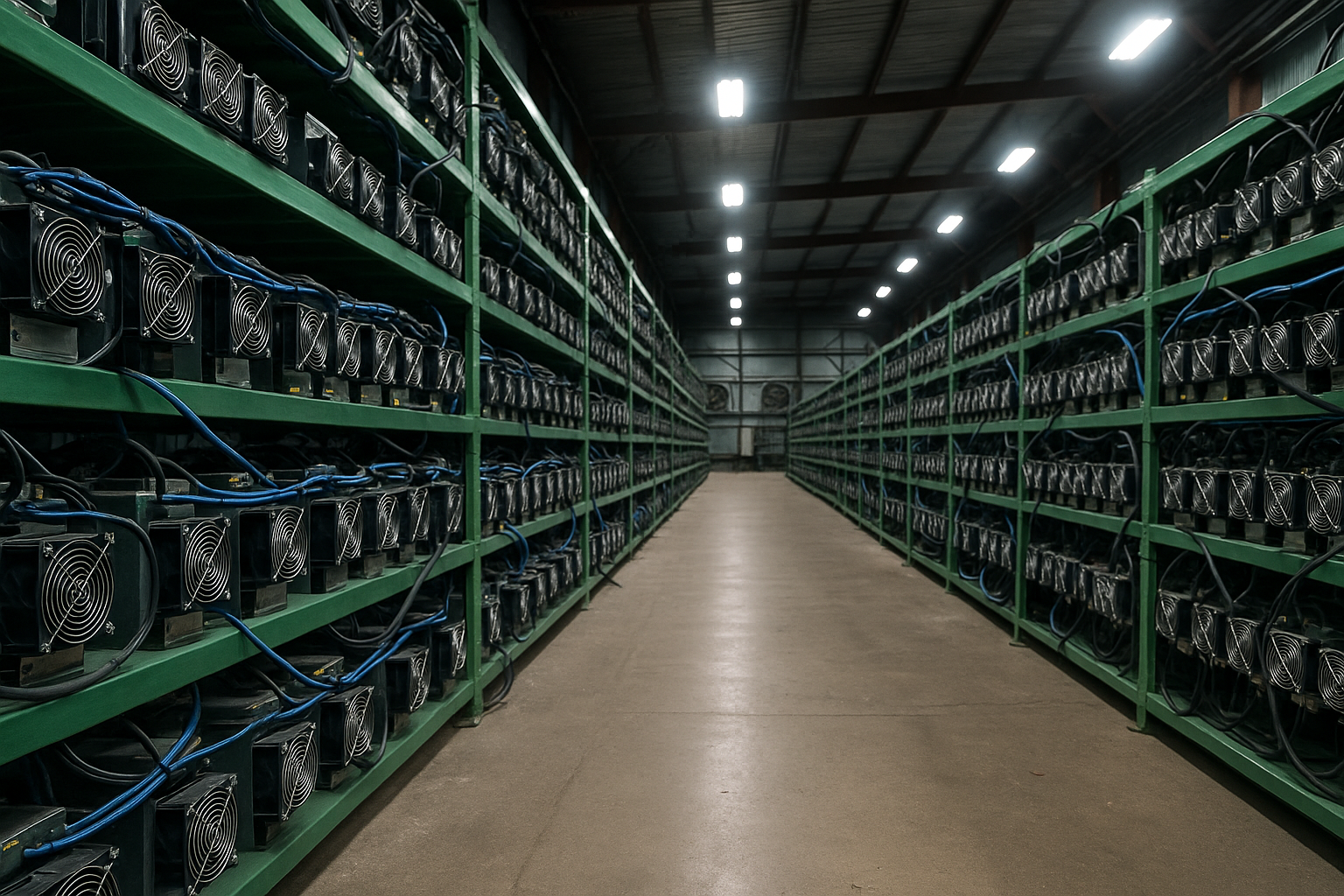
Maintain optimal temperatures
Keeping the ambient temperature in the right range is crucial for both performance and equipment longevity. I aim to keep my mining room’s climate below about 30 °C at all times, and ideally in the mid-20s. This often means increasing ventilation during the summer or even using an air conditioner or evaporative cooler on extremely hot days. In practice, many ASIC miners can run safely with just airflow up to around 35 °C ambient, but pushing beyond that is risky. I schedule intensive mining sessions during the cooler night hours when possible, as the outside air coming in is colder and my cooling system doesn’t have to work as hard.
Monitoring is a big part of temperature control. I have a couple of digital thermometers in different corners of the mining room to watch for any hot spots. Some of my miners also report their internal temperatures via software, which I check regularly. If I notice one area of the room is getting warmer than the rest, I adjust by increasing fan speed or improving airflow to that section (for example, adding a small booster fan or opening another vent). Regular maintenance helps too – cleaning out dust filters and ensuring fans are spinning freely can immediately drop temperatures by a few degrees. I also stay on top of firmware updates for my ASICs, since manufacturers sometimes tweak fan control algorithms or temperature thresholds in updates. Little steps like these keep the whole system running cooler.
| Focus Area | Practical Actions | Result / Benefit |
|---|---|---|
| Ambient Room Temperature | Keep mining room below ~30°C (ideal mid-20s) using ventilation, AC, or evaporative cooling | Prevents overheating and hash rate throttling |
| Night-Time Cooling Strategy | Run intensive mining during cooler night hours | Reduces cooling load and electricity waste |
| Temperature Monitoring | Use room thermometers + miner internal temperature dashboards | Early detection of hot spots |
| Airflow Optimization | Add booster fans, improve vent placement, avoid hot-air recirculation | Even temperature distribution |
| Dust & Fan Maintenance | Clean filters, heat sinks, and fans regularly | Immediate temperature drop and better airflow |
| Firmware Updates | Install latest manufacturer firmware | Improved fan control and thermal stability |
| Advanced Cooling (Optional) | Liquid or immersion cooling for extreme climates | Solves persistent heat problems in harsh environments |
| Overall Outcome | Consistent thermal control | Higher uptime, longer hardware lifespan |
Noise reduction strategies
When I first started mining, the noise was overwhelming – my family could hear the fans’ high-pitched whine throughout the house. I tackled the noise from two angles: lowering the source and blocking the sound. Lowering the source meant getting those miner fans to run slower, which, as mentioned, happens naturally when the machines run cooler. Once I improved the ventilation and kept temperatures down, I noticed the miner fans didn’t ramp up to full speed as often, which cut a lot of the noise.
The second angle is physical sound dampening. I built a simple enclosure for my miners using plywood with acoustic foam padding on the inside. It’s not airtight (they still need airflow), but it helps muffle the sound significantly. You can also buy or DIY insulated “mining exhaust” boxes or sound-dampening cases that are designed to reduce noise. Another trick was attaching insulated ducting to the exhaust fans – the ducts not only carry hot air outside but also absorb sound, so the fan noise doesn’t transmit straight through the vents. Relocating miners can help too: I moved my loudest units to a corner of the basement, which naturally contains the noise better than when they were in an open area near living spaces.
Some miners swap out the stock fans for aftermarket models that run quieter. This can work, but I personally only do this on older units because it might void the warranty on newer devices. If you try it, be sure the replacement fans still provide sufficient airflow. In the end, the biggest win for noise was cooling – by solving the heat problem, the noise issue diminished considerably as well. Now, with my current setup, the hum of the miners is more like background white noise instead of an aggressive roar.
| Noise Source Area | Practical Actions | Result / Benefit |
|---|---|---|
| Fan Ramp-Up Noise | Keep miners cool so fans run at lower RPM | Naturally quieter operation |
| Sound-Dampening Enclosures | Build plywood boxes with acoustic foam lining | Blocks direct sound transmission |
| Insulated Exhaust Ducts | Attach sound-absorbing air ducts to exhaust | Removes heat while reducing noise |
| Miner Placement | Move miners to basements or isolated corners | Natural sound containment |
| Aftermarket Quiet Fans | Replace stock fans on older miners (if safe) | Lower mechanical noise |
| Space Layout | Ensure clearance between miners | Prevents vibration amplification |
| Overall Outcome | Cooling + sound control combined | Background hum instead of disruptive roar |
Are there alternatives to ventilation for cooling ASIC miners?
I wondered if there was a more efficient way to cool my miners than fans alone. This curiosity led me to explore high-tech solutions like liquid and immersion cooling.
Besides ventilation, miners can be cooled with liquid-based systems or immersion. Immersion cooling submerges devices in special fluid for silent, efficient heat removal, while some setups use water cooling or AC to maintain safe temperatures at a higher cost.
Immersion cooling
Immersion cooling is a cutting-edge solution where you submerge the entire ASIC miner (minus the power supply) in a bath of special non-conductive liquid. The fluid directly absorbs heat from the components much more efficiently than air. I visited a mining farm that implemented immersion cooling – the miners sat in tank-like containers filled with coolant, and heat was carried away through fluid pumps to a large radiator outside. The results were astonishing: the hardware ran at consistently low temperatures and the usual fan noise was completely gone (since the fans are removed in immersion setups). Immersion cooling also keeps dust and moisture away from the electronics, as the environment inside the tank is sealed and controlled.
The benefits do come with significant costs and complexity. Setting up an immersion system requires purchasing or building tanks, buying large quantities of dielectric fluid, and installing pumps, heat exchangers, or cooling towers. It also requires careful maintenance – for example, monitoring the fluid quality and temperature, and ensuring there are no leaks. This kind of solution has typically been used by industrial-scale operations that can afford the investment, or by hobbyists who want a near-silent home mine. In my case, I haven’t taken the plunge into immersion yet, given the expense. However, I’ve seen that immersion setups can even allow for higher hashrates (by overclocking the ASICs safely) since the cooling is so effective. As technology progresses, immersion cooling is gradually becoming more accessible and cheaper each year.
| Aspect | Description | Result / Benefit |
|---|---|---|
| Cooling Method | Miners are submerged in non-conductive dielectric liquid | Direct and highly efficient heat removal |
| Heat Transfer System | Heated fluid is pumped to radiators or heat exchangers | Maintains stable low operating temperatures |
| Fan Removal | Fans are removed in immersion setups | Near-silent mining operation |
| Dust & Moisture Protection | Sealed liquid environment isolates electronics | Prevents corrosion and dust buildup |
| Performance Potential | Allows safe overclocking due to superior cooling | Higher hashrate without thermal risk |
| Infrastructure Needs | Requires tanks, dielectric fluid, pumps, radiators | High initial setup cost |
| Maintenance Requirements | Monitor fluid quality, temperature, and leaks | Ensures long-term system stability |
| Typical Users | Industrial farms and advanced home miners | Best suited for large-scale or premium setups |
| Overall Outcome | Maximum cooling efficiency | Silent operation, longer hardware life, higher performance |
Water cooling and air conditioning
Water cooling is a step between standard air cooling and full immersion. Some modern ASIC models (like Bitmain’s Antminer Hydro series) are built with water-cooled systems. Instead of loud high-RPM fans, these units use a radiator and a pump – similar to a car’s cooling system – to carry heat away from the miner. Water (or coolant) flows through plates attached to the heat-generating chips, transferring heat to an external radiator where fans disperse it. This method can prevent overheating very effectively. One big advantage I’ve observed is the noise reduction: without high-speed fans on the miner itself, water-cooled models are much quieter (around 50 dB) compared to traditional air-cooled miners that can hit 75+ dB in operation. On the other hand, water cooling setups require extra attention – you need a reliable water source or reservoir, and you must be vigilant about leaks or pump failures which could damage your equipment.
For most small to mid-size mining operations, though, good old air ventilation is usually sufficient. In fact, many miners run fine with just well-planned airflow even when outside temperatures are up to ~35 °C, making air conditioning unnecessary in moderate climates. I initially considered installing a dedicated AC unit for my mining room, but the additional power cost would have eaten into my profits. Instead, I improved my vent system, and it managed the heat even during the peak of summer. In very extreme heat conditions, some miners do resort to AC or supplement their ventilation with evaporative cooling pads. Evaporative coolers use water-soaked pads to pre-cool the incoming air by 10–15 °F while consuming far less electricity than a traditional AC unit, though they only work well in dry climates. These methods can be effective, but they add complexity and cost. In general, unless you’re dealing with scorching ambient temperatures or an exceptionally large installation, a properly set up ventilation system is the most practical and cost-effective way to keep ASIC miners cool.
| Cooling Method | How It Works | Advantages | Considerations |
|---|---|---|---|
| Water Cooling (Hydro Miners) | Coolant flows through plates attached to chips, carrying heat to an external radiator | Highly effective heat removal, much quieter (~50 dB), prevents thermal throttling | Requires pumps, coolant loops, leak monitoring, higher setup complexity |
| Noise Reduction Effect | Eliminates high-RPM miner fans | Far quieter than air-cooled miners (~75+ dB) | Pump or radiator fans still produce some sound |
| Reliability Factor | Stable chip temperatures under heavy load | Longer hardware lifespan, allows higher sustained performance | Pump or coolant failure can cause rapid overheating |
| Standard Air Ventilation | Uses intake/exhaust airflow to remove hot air | Lowest cost, simple setup, sufficient up to ~35°C ambient | Requires good room airflow design |
| Air Conditioning (AC) | Mechanical cooling lowers room temperature | Works in extreme heat climates | High electricity cost reduces mining profitability |
| Evaporative Cooling | Water-soaked pads pre-cool incoming air | Energy-efficient cooling in dry climates | Less effective in humid regions |
| Best Practical Approach | Optimized ventilation first, water cooling for higher-end setups | Balanced cost vs. performance | AC only when climate demands it |
| Overall Outcome | Controlled temperatures without unnecessary power waste | Stable mining with optimized operating cost |
Conclusion
My journey in cooling miners taught me that proper ventilation is the lifeline of any mining operation. With these strategies, you can keep your ASICs cool, safe, and efficient. Contact Miner Source Team Purchase Now


