
How Does Bitcoin Mining Work Under the Hood?
Many people think mining is about solving complex math problems. That description is technically correct but misses the point. Mining is actually about guessing numbers as fast as possible. Your machine generates trillions of guesses per second. Each guess is a hash. When your hash matches the network target, you earn the right to add a new block to the blockchain. You then collect the block reward and any transaction fees included in that block.
Bitcoin mining uses proof-of-work consensus. Specialized computers called ASICs run the SHA-256 hashing algorithm continuously. These machines guess random numbers and hope to produce a hash below a certain target value. Your probability of finding a winning hash equals your share of the total network hashing power. The network automatically adjusts the difficulty every 2,016 blocks to keep block times around 10 minutes. If more miners join, difficulty goes up. If miners leave, difficulty goes down.
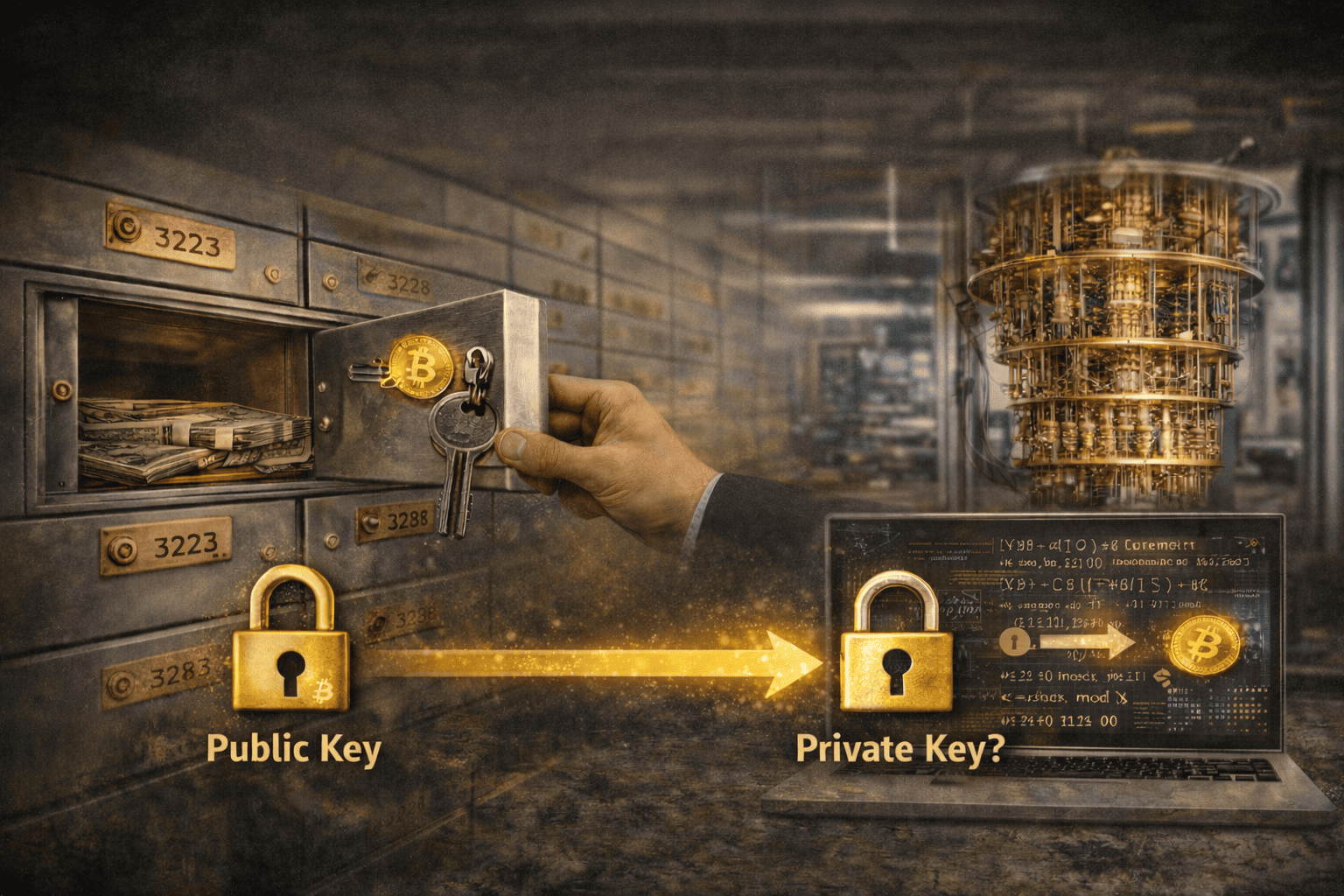
The Block Creation Process Explained
The actual process follows a clear sequence of steps:
- Step 1: Transaction Selection – Your miner pulls pending transactions from the mempool. These are transactions waiting to be confirmed. The miner chooses which ones to include based on transaction fees offered.
- Step 2: Merkle Root Construction – The selected transactions get hashed together in pairs repeatedly. This creates a single hash called the Merkle root. This root represents all transactions in that block.
- Step 3: Block Header Assembly – Your miner builds a block header containing the previous block’s hash, the Merkle root, a timestamp, and a special number called the nonce. The header also includes a version number and the current difficulty target.
- Step 4: Hashing Loop – The miner hashes the block header repeatedly while changing the nonce and timestamp. This loop runs trillions of times per second. The goal is to produce a hash that is numerically smaller than the target.
- Step 5: Broadcast and Validation – When a miner finds a winning hash, it broadcasts the new block to the network. Other nodes verify the header and Merkle root. If everything checks out, they add the block to their copy of the blockchain.
Why Hardware and Electricity Costs Matter for Security
The proof-of-work system ties network security directly to real-world costs. An attacker would need to control more than half of the network’s hashing power to rewrite history. Acquiring that much hardware and paying for that much electricity costs real money. This economic barrier protects the network from attacks. The same principle applies to your operation. Your hardware cost and electricity expense determine whether you can mine profitably.
Key Metrics You Must Monitor Daily
Your mining operation lives or dies based on a few critical numbers:
| Metric | What It Measures | Why It Matters |
|---|---|---|
| Hashrate | Your mining speed in TH/s | Directly determines your chance of earning rewards |
| Efficiency | Joules per terahash (J/TH) | Controls your largest ongoing expense |
| Difficulty | Network-wide target adjustment | Changes your expected daily BTC output |
| Uptime | Percentage of time you mine | Lost time means lost revenue permanently |
| Pool Fees | Percent taken by mining pool | Reduces your gross income |
How Do You Calculate Your Potential ROI Accurately?
Most beginners make one big mistake when calculating mining returns. They use the manufacturer’s spec sheet numbers and current BTC price. Then they assume those numbers stay the same forever. This approach leads to bad decisions and lost money. You need a realistic model that accounts for changing conditions.
The basic formula for daily Bitcoin earnings is: (your hashrate × 86,400 seconds × block reward) / (network difficulty × 2^32). Let us walk through a real example using current typical numbers. Assume you have a 100 TH/s miner running at 3,250 watts. Network difficulty sits at 80 trillion. Block reward is 3.125 BTC after the last halving. Your daily earnings come to about 0.0000786 BTC. At $60,000 BTC price, that equals $4.72 per day before any costs. Your electricity at $0.06 per kWh costs $4.68 daily. A 2 percent pool fee takes another $0.09. Your net profit becomes negative $0.05 per day. This shows why you must run the numbers with your actual costs.

Building Your Personal ROI Spreadsheet
We recommend creating a simple spreadsheet with these inputs:
- Hardware Specifications
- Manufacturer hashrate in TH/s
- Actual measured power draw in watts
- Purchase price including shipping and customs
- Expected useful life in years
- Operating Costs
- Electricity rate per kWh including all fees and taxes
- Pool fee percentage
- Facility costs like cooling and rent if applicable
- Maintenance and repair budget
- Network Variables
- Current network difficulty
- Assumed annual difficulty growth rate (we use 15-25 percent)
- Current BTC price
- Assumed future BTC price scenarios
- Performance Assumptions
- Realistic uptime percentage (95% is a good starting point)
- Expected efficiency degradation over time
- Cooling system power consumption
Running Different Scenarios Changes Your View
You should always run at least three scenarios before buying hardware:
Conservative Scenario:
- BTC price drops 30 percent from current
- Difficulty increases 30 percent per year
- Electricity rate stays the same
- Uptime hits only 90 percent due to issues
- Result shows if you can survive bad conditions
Base Scenario:
- BTC price stays flat
- Difficulty increases 20 percent per year
- Electricity rate stays the same
- Uptime reaches 95 percent
- Result shows expected normal performance
Optimistic Scenario:
- BTC price rises 50 percent
- Difficulty increases only 10 percent
- Electricity rate drops slightly
- Uptime reaches 98 percent
- Result shows potential upside
Hidden Costs That Kill Profitability
Many miners forget to include these expenses:
| Cost Category | Typical Amount | When It Applies |
|---|---|---|
| Shipping and customs | $300-500 per unit | International orders |
| Electrical installation | $500-5000 | New circuits and breakers |
| Ventilation and cooling | $200-2000 | Fans, ducting, or AC |
| Networking equipment | $50-500 | Switches and monitoring |
| Spare parts inventory | 5-10% of hardware cost | Fans and power supplies |
| Insurance | Varies by location | Commercial operations |
How Do You Choose the Right ASIC Miner and Avoid Bad Deals?
Hardware selection makes or breaks your mining operation. We have seen clients buy machines based solely on highest hashrate. Then they discover those machines draw so much power that profits disappear. Others buy the cheapest units available and deal with constant failures. The right choice balances throughput, efficiency, and reliability.
You should compare miners using three numbers: terahashes per second, watts per terahash, and purchase price per terahash. A newer miner might cost more upfront but use half the electricity. Over two years of operation, the efficient machine often costs less total. For example, an older model at 40 J/TH using $0.08 power costs about $2,800 per year in electricity for a 100 TH/s unit. A newer model at 25 J/TH costs only $1,750 for the same work. The $1,050 yearly savings can justify a higher purchase price.
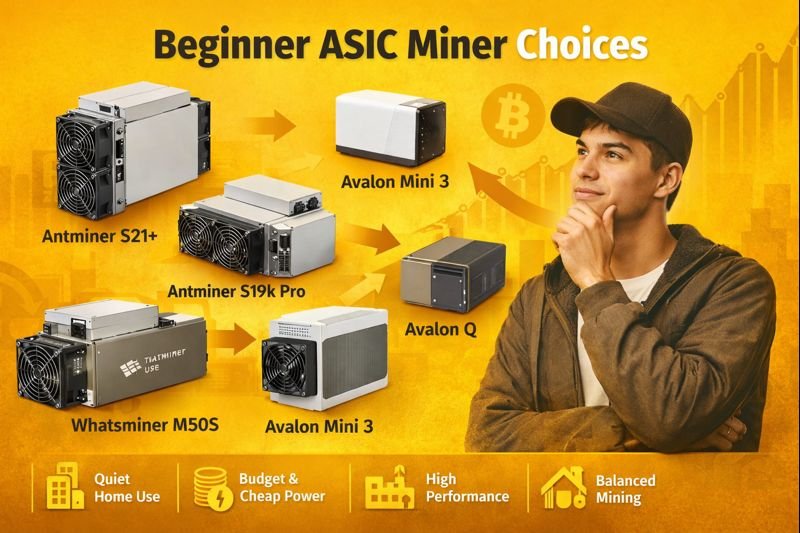
Comparing Current Generation Miners
Here is how popular models stack up on key metrics:
| Model | Hashrate | Power Draw | Efficiency | Approx Price |
|---|---|---|---|---|
| Antminer S19j Pro | 104 TH/s | 3068 W | 29.5 J/TH | $400/unit |
| Antminer S19 Pro | 110 TH/s | 3250 W | 29.5 J/TH | $400/unit |
| Whatsminer M50S | 125 TH/s | 3250 W | 26.0 J/TH | $800/unit |
| Whatsminer M30S++ | 112 TH/s | 3472 W | 31.0 J/TH | $200/unit |
| Antminer S21 | 200 TH/s | 3500 W | 17.5 J/TH | $1,500/unit |
Infrastructure Requirements You Cannot Skip
Mining hardware needs proper electrical setup to run safely and reliably:
- Voltage and Amperage – Most miners over 3,000 watts need 240 volt circuits. A 20 amp circuit can handle about 4,800 watts safely. You need 25 percent headroom above your miner’s draw.
- Connector Types – Check whether your miner uses C13, C19, or proprietary connectors. Have spare cables on hand.
- Cooling Requirements – Intake temperatures should stay below 30 degrees Celsius. Exhaust air needs a clear path out of the building. Recirculating hot air kills efficiency and damages hardware.
- Monitoring Systems – Install temperature sensors and smart power distribution units. Set up alerts for high temperatures or power loss. Remote monitoring lets you respond quickly to problems.
Red Flags When Dealing with Hardware Suppliers
We have been in this industry for years. We have seen many scams and bad deals. Watch for these warning signs:
Red Flag Scenarios:
- No Physical Photos – The seller cannot provide photos of actual units with handwritten dates. Stock photos mean nothing.
- Guaranteed Returns – Anyone promising fixed daily returns is lying. Mining income varies with Bitcoin price and network difficulty.
- Unclear Ownership – The seller cannot explain warranty terms or who handles RMAs. You need this in writing before payment.
- Opaque Shipping – They give vague shipping timelines and cannot provide tracking. Get specific dates and carrier information.
- Pressure Tactics – The seller claims you must decide now or the deal disappears. Legitimate suppliers let you think.
Questions to Ask Before You Buy
Get answers to these questions in writing:
- What is the exact shipping cost to my address?
- Who handles customs clearance and pays duties?
- What is the warranty period and what does it cover?
- Who do I contact if a unit fails?
- Can you provide serial numbers and photos of my actual units?
- What is the estimated delivery timeline?
- Do you have references from buyers in my country?
What Are Your Options for Mining: Solo, Pool, or Cloud?
Not all mining methods work the same way. Your choice affects how often you get paid, how much you pay in fees, and how much risk you take. Each approach has trade-offs you need to understand.
Pool mining remains the best choice for most individual miners and small operations. You combine your hashrate with others and share rewards based on contributed work. This reduces the variance in your income. You get smaller but steady payouts instead of rare big wins. Solo mining only makes sense if you have massive hashing power or enjoy gambling. The odds of finding a block alone with 100 TH/s are extremely low. Cloud mining contracts usually offer poor value because the provider takes a cut and bears no hardware risk.
Pool Reward Models Explained
Different pools pay you in different ways:
| Model | How It Works | Best For |
|---|---|---|
| PPS | Pool pays fixed rate per share regardless of blocks found | Steady predictable income |
| PPLNS | Pool pays based on shares in last N blocks, rewards loyalty | Long-term pool members |
| FPPS | Includes transaction fees in payout, usually higher fees | Maximizing total return |
| Solo | You keep entire block reward if you find one, get nothing otherwise | Gamblers and large miners |
Questions to Ask Before Joining a Pool
- What is the pool’s fee structure?
- How often does the pool pay out?
- Is there a minimum payout amount?
- What is the pool’s historical uptime?
- Where are the pool servers located geographically?
- Does the pool have a good reputation in mining communities?
Why We Generally Avoid Cloud Mining
Cloud mining contracts let you rent hashrate without buying hardware. The provider owns and runs the machines. You pay upfront or monthly for a share of the output. We rarely recommend this for several reasons:
- Counterparty Risk – You trust the company to actually mine and pay you. Many cloud mining operations turn out to be scams.
- High Fees – The provider takes a significant cut before you see any returns.
- No Hardware Asset – You own nothing at the end of the contract. With physical miners, you still have equipment you can sell.
- Opaque Operations – You cannot verify the company actually has the hashrate they claim.
Setting Up Your First 30 Days
We advise new miners to follow this checklist:
Week 0-1: Order and Preparation
- Order hardware from reputable supplier
- Track shipping and document everything
- Take photos immediately upon receipt
- Store warranty documents safely
Week 1-2: Site Preparation
- Have electrician install dedicated circuits
- Set up ventilation and cooling
- Install network cabling and monitoring
- Verify all connections before powering up
Week 2-3: Configuration
- Install trusted firmware from manufacturer
- Configure pool settings and credentials
- Validate network connectivity and time sync
- Start mining and monitor initial hashrate
Week 3-4: Baseline Monitoring
- Log temperatures, hashrate, and uptime daily
- Compare actual performance to expectations
- Check pool payouts against calculators
- Document any issues for warranty purposes
Conclusion
Bitcoin mining in 2026 comes down to simple math. Your revenue depends on hashrate, difficulty, and Bitcoin price. Your costs depend on hardware efficiency and electricity rates. The difference between profit and loss often comes from small improvements in efficiency or small reductions in electricity cost. We have helped clients across North America, Europe, and Dubai navigate these decisions. Some started with a single miner and now run small farms. Others bought turnkey solutions and expanded quickly. The common thread is they did their homework first.
You should start by modeling your potential returns with realistic numbers. Include all costs from shipping to customs to installation. Compare multiple hardware options using efficiency as a key metric. Choose a reputable supplier who provides clear shipping timelines and warranty terms. Pick a mining pool with fair fees and reliable payouts. Monitor your operation daily and respond quickly to problems.
If you want to compare real quotes from verified suppliers, we can help. Contact us at https://wa.me/8613871817151 with your electricity rate and target hashrate. We provide consolidated shipping from our Shenzhen and Hong Kong warehouses. We handle customs guidance and warranty support. Our clients in North America, Europe, Canada, and Dubai trust us to deliver working hardware on clear timelines. Run your numbers first, then reach out when you are ready to move forward.

