
What Is an HS Code, and Why Does It Control Duties for ASIC Miners?
Many buyers hear “HS code” and assume they need a customs degree. We use a simpler view. We treat the HS code as the product’s shared language in the customs system. Customs officers use that code to decide the duty rate, and they also use that code to trigger controls and data checks
An HS code is the official product classification number that customs uses to calculate duties and apply import rules. When we use the right HS code and support it with a clear product description, we reduce reclassification risk and we speed up clearance.
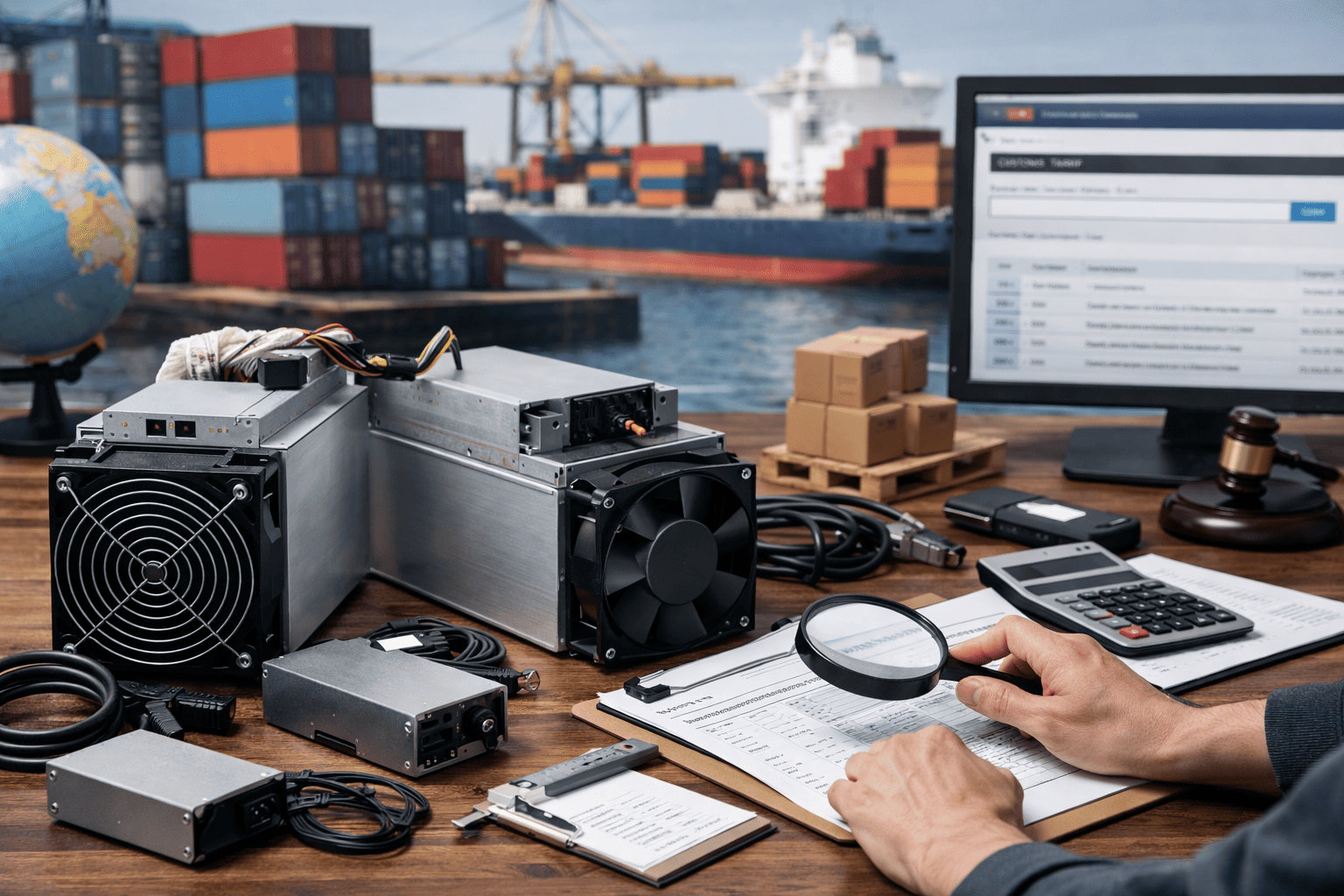
We use the HS system as the “common base,” and we expect local extensions
We follow the global HS framework first because it is the base system. The World Customs Organization explains the HS as an international product nomenclature that many customs administrations use as a foundation. We start there, and then we move to each destination country’s tariff schedule.
We also remind buyers about one practical detail: many countries use the same structure at the start and then add more digits for local control. So we never treat a code from one country as a guaranteed match in another country.
| What we check | What it means in practice | What we do at Miner Source |
|---|---|---|
| The HS “base logic” | Customs needs a category that matches the product’s function | We write a short classification rationale in plain English |
| The destination-country tariff line | The country may add digits and add rules | We pull the code from the official tariff database for that destination |
| The “trigger rules” around the code | Some codes bring extra questions | We prepare supporting facts (model list, specs, use case) |
We explain the miner in functional terms, not marketing terms
We do not rely on broad names like “mining machine.” We describe what the unit does and what the shipment includes. We also keep the wording consistent across the invoice, packing list, and broker entry.
We use a simple template for the description:
- We name the category: “ASIC mining hardware.”
- We name the brand and model: “Antminer [model] / Whatsminer [model].”
- We state that it is computing equipment designed for hash calculations.
- We state if the shipment includes PSUs, cables, spare fans, or control boards.
We avoid the fastest mistake: guessing the code
Many buyers want a fast number. But a guessed code can cost more than the time it saves. A wrong code can cause:
- duty overpayment,
- rework fees from brokers,
- customs holds for review,
- and sometimes penalties if customs treats the error as negligent.
We reduce this risk by using official tariff tools and a repeatable classification method.
How Do We Find the Right HS Code for Antminer and Whatsminer Shipments?
We see buyers copy an HS code from a friend’s old entry. We understand why they do it. They want speed. But customs wants consistency and proof. We use a process that produces a code and an explanation, not just a number.
We find the right HS code by defining the miner’s core function, searching the destination country’s official tariff database by function keywords, and confirming the final tariff line with a broker or a formal ruling tool when the shipment value is high.
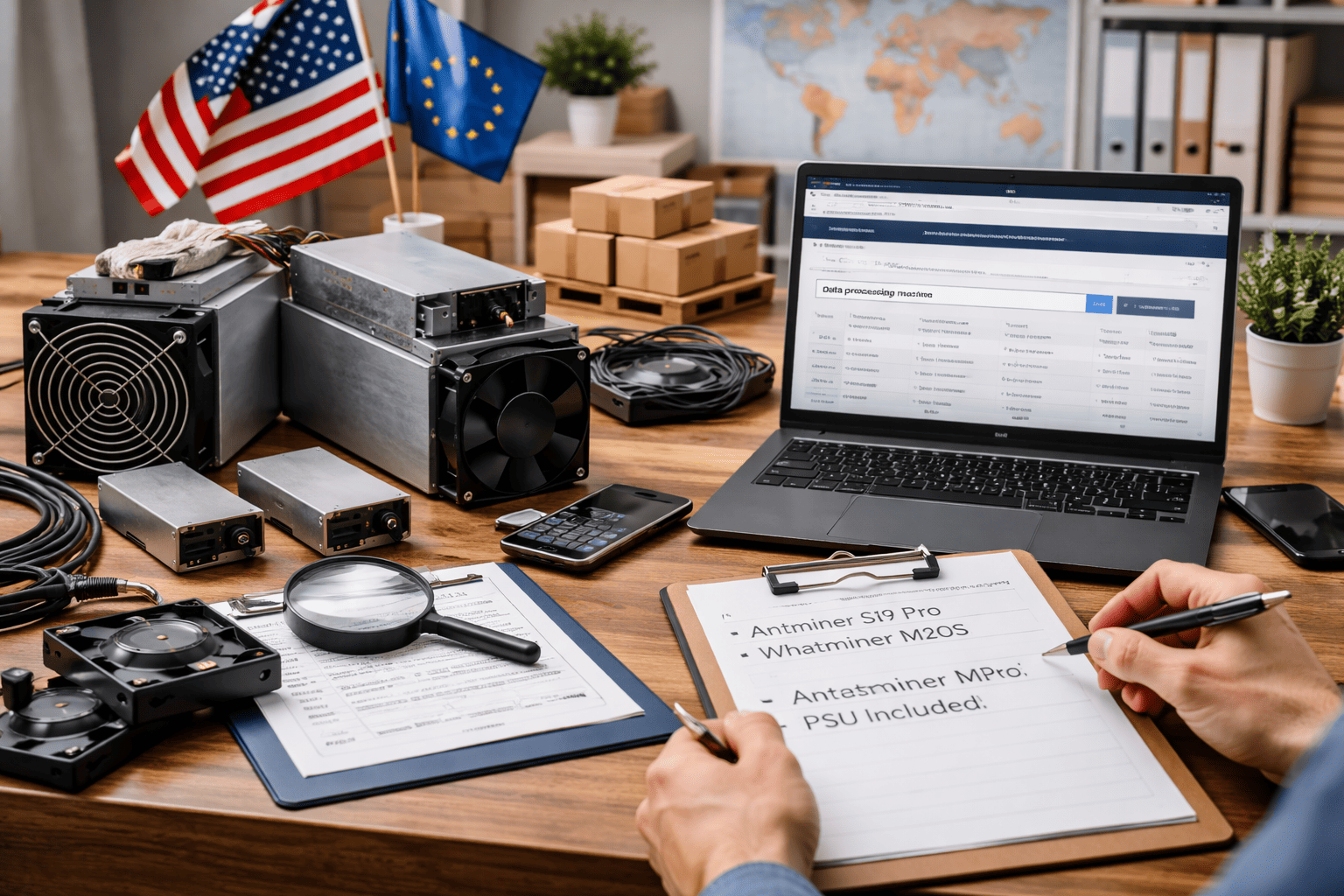
Step one: we list the product facts that customs cares about
We start with facts, because facts drive classification. We ask you for:
- the exact model list (example: “Antminer S-series / Whatsminer M-series”),
- whether the shipment includes PSUs or ships as “main unit only,”
- the unit value and currency,
- and the destination country and importer name.
We also ask you for one sentence on usage. We use that sentence to keep the description consistent across every document.
Step two: we search the official tariff tool for the destination market
We use official tools because they show the legal tariff structure and the duty rate line. We also use them because your broker will use them.
| Destination | Official tool we use | What we search for |
|---|---|---|
| United States | USITC HTS Search | “data processing,” “computing,” “server,” “electrical apparatus” |
| European Union | EU TARIC and Access2Markets | “classification,” “tariff code,” then the product code flow |
| Canada | CBSA Customs Tariff and Canada Tariff Finder | “computing,” “processing,” then refine by the tariff headings |
We also use guidance pages when we want a cleaner method. The USITC explains how classification relies on the General Rules of Interpretation, and it warns buyers not to rely on keyword search alone. You can read that here: USITC HTS classification FAQs.
Step three: we increase certainty when the shipment size increases
We use a simple rule: the bigger the shipment, the more we pay for certainty.
If you import into the EU and you need legal certainty on classification, you can look at the EU Binding Tariff Information (BTI) approach described in Access2Markets: Access2Markets — Tariffs and BTI overview.
If you import into Canada, you can use CBSA classification guidance and the official tariff files. The CBSA also provides a “Guide to tariff classification for Canadian imports” through its Customs Tariff portal.
We had a client who imported a mixed pallet of miners and spare parts. The team used one generic product description for everything. Customs asked for a corrected breakdown by item type. The shipment waited at the terminal.
How Do Duties and Import Taxes Differ in the U.S., EU, and Canada?
Many buyers only ask, “What is the duty rate?” We ask a different question first. We ask, “What is the full import cost stack?” A country can show low duty and still create a high cash payment at the border because of VAT or GST/HST.
We compare markets by separating duty from import taxes: the U.S. often focuses on tariff duty and policy-driven add-ons, the EU often adds import VAT as a major cash item, and Canada often charges duty plus GST/HST that can vary by province and transaction type.
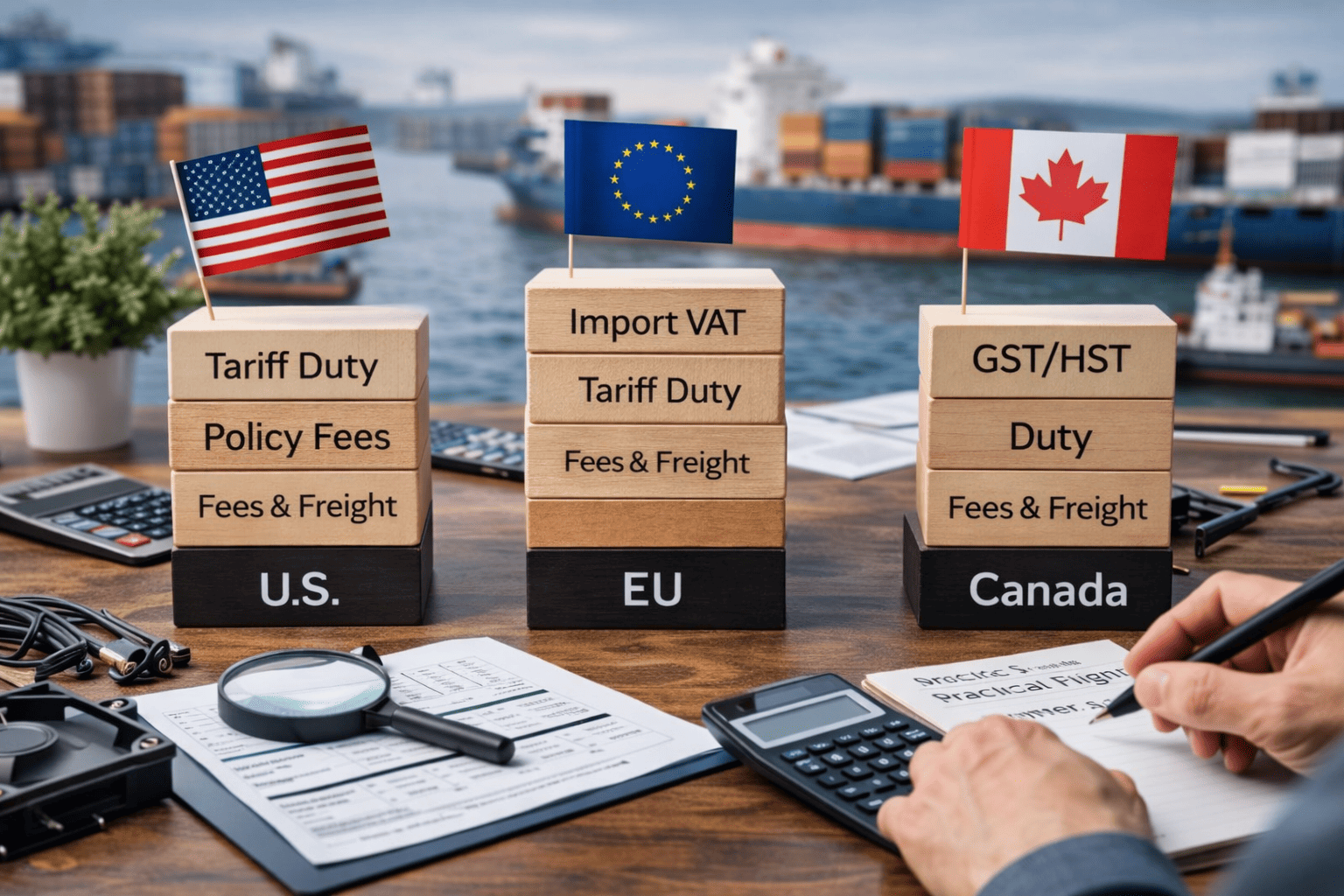
We build a “cost stack” instead of one percentage
We use three buckets in our estimates:
- tariff duty (by HS code),
- import taxes (VAT or GST/HST),
- fees and freight items that affect the tax base (broker fees, freight, insurance, and local port fees).
We do not publish duty rates in this article, because duty depends on the exact tariff line and the policy notes attached to it. We always pull current rates from the official tools in the prior section.
We treat EU VAT as a planning item, not a surprise
If you import into the EU, you often pay import VAT at the border. The European Commission explains the VAT rate framework, and it notes that each EU country sets its standard rate within EU rules. You can check the EU VAT framework here: European Commission VAT rates framework.
We want buyers to plan cash flow. A border VAT payment can be large, even when the duty rate is low.
We treat Canada GST/HST as location-sensitive
Canada uses GST/HST rules that can vary by province and timing. The Canada Revenue Agency lists GST/HST rates and the rate logic by province. You can start here: CRA — Which rate to charge (GST/HST).
A simple comparison table we use for buyer discussions
| Market | What usually drives the cash payment at import | Our practical planning tip |
|---|---|---|
| United States | Tariff duty and policy notes tied to the HTS line | We tell you to read the HTS notes, not only the headline rate |
| European Union | Import VAT plus any tariff duty | We tell you to plan VAT cash flow early and align with your tax team |
| Canada | Duty plus GST/HST logic | We tell you to confirm GST/HST handling with your broker and accountant |
We can build a draft landed-cost sheet for you if you share your destination port and your model list. We can also format it so your broker can reuse it.
What Changed With U.S. De Minimis (Section 321), and Why Should Mining Buyers Care?
Many teams used to treat low-value shipments as “easy imports.” Some teams used small parcels for test orders, spare parts, or sample units. But U.S. policy around duty-free de minimis has changed, and this change can affect how you ship even small items.
U.S. duty-free de minimis treatment no longer works as a stable “plan A” for low-value imports, because Executive Order 14324 suspended duty-free de minimis treatment and federal implementation notices set new entry and duty collection requirements. We tell buyers to assume formal entry steps for shipments that used to qualify under de minimis, and we tell buyers to confirm the latest rules before every shipment.
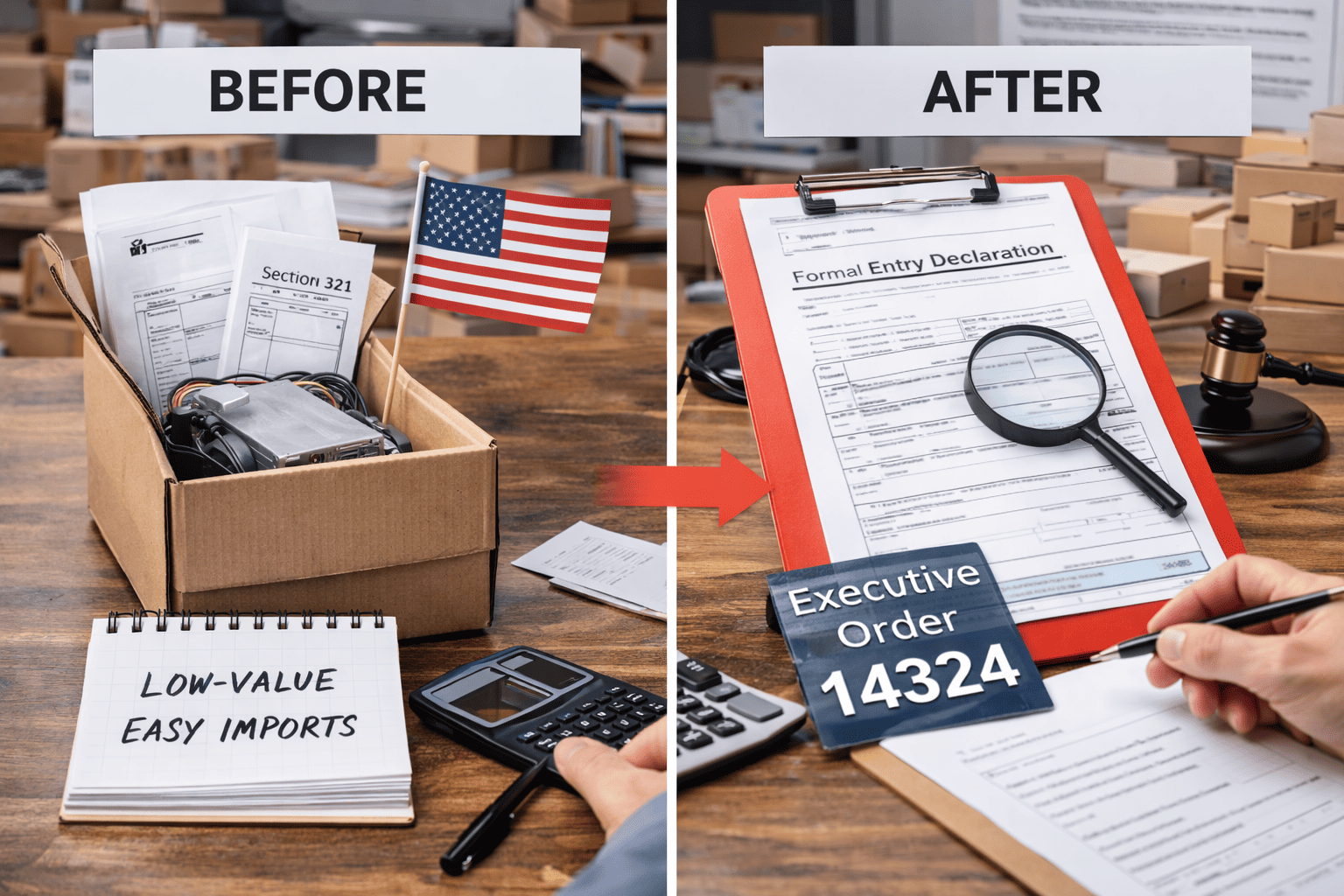
We anchor our process on official notices, not on old industry habits
We do not rely on old forum posts or old shipping playbooks. We rely on official notices and updates:
- Federal Register implementation notice for Executive Order 14324: Federal Register — Notice of Implementation (EO 14324)
- White House executive action that continues the suspension: White House — Continuing the Suspension (Feb 2026)
- Federal Register notice that continues the suspension: Federal Register — Continuing the Suspension (2026)
These documents change how we advise buyers on samples, spares, and split shipments.
What this change means for mining hardware buyers
We see four real impacts on mining buyers:
- You may need a broker entry even for shipments that used to be simple.
- You may see duty and fee collection on shipments that used to clear with minimal duty.
- You may need cleaner product descriptions and values, because customs can review more small parcels.
- You may need more lead time for spare parts if you previously relied on “quick small parcels.”
A “before vs after” table for planning team discussions
| Shipping scenario | Old expectation many buyers had | What we plan for now |
|---|---|---|
| Sending one unit as a test | “It will clear fast with low friction” | “We may need formal entry steps and full paperwork” |
| Sending spare parts to a farm | “We can ship anytime in small parcels” | “We should ship earlier and include complete paperwork” |
| Splitting a big order into many parcels | “We can reduce duty risk by splitting” | “We avoid structuring shipments around de minimis assumptions” |
If you ship to the U.S. and you want a clean plan, we can align your shipment plan with your broker’s current entry workflow. We can also pre-pack spares in our Hong Kong or Shenzhen warehouse so you can send one clean shipment instead of many reactive parcels.
How Can We Legally Reduce or Delay Duty Payments on Large Mining Hardware Imports?
Large buyers often care more about cash flow than about one headline duty rate. A duty payment can tie up money before you deploy miners and start earning. So we look for legal tools that delay or reduce duty payments without creating compliance risk.
We reduce or delay duty payments legally by using duty-deferral zones (like U.S. Foreign-Trade Zones), by planning re-exports correctly, and by using “certainty tools” like rulings when classification risk is high. We avoid any method that depends on under-valuation or fake descriptions.
We use FTZ logic when the shipment value and workflow justify it
U.S. Foreign-Trade Zones can support duty deferral and some logistics benefits in the right setup. The U.S. Department of Commerce describes typical FTZ benefits like duty deferral, duty exemption on re-exports, and streamlined procedures. You can read that here: trade.gov — About FTZs.
We use a simple screening rule:
- We consider FTZ planning when you import high-value batches and you release miners in stages.
- We also consider FTZ planning when you re-export part of the inventory.
We still tell you to confirm requirements with your broker and FTZ operator because FTZ programs have operational rules.
We separate “duty relief on parts” from “duty relief on finished goods”
Some markets publish duty relief or suspension tools, but they often focus on materials and components. The EU trade portal explains that tariff suspensions usually apply to materials or components and not to finished goods. You can read the EU overview here: Access2Markets — Tariffs and duty relief/suspension.
So we do not promise a finished-miner duty exemption in the EU. We only promise careful planning around legal tools that actually fit mining hardware imports.
A decision table we share with procurement teams
| Your situation | The tool that may fit | The key requirement you must check |
|---|---|---|
| You release miners over months | FTZ or bonded storage concepts | You need an operator workflow and broker alignment |
| You re-export some inventory | FTZ “duty exemption on re-exports” | You need clean traceability and export proof |
| You worry about classification disputes | BTI / advance ruling paths | You need the time to apply before shipping |
How our Hong Kong and Shenzhen warehouses support this planning
We do not treat warehouses as “tax tricks.” We treat warehouses as control points.
- We use our Shenzhen warehouse to consolidate supply, inspect units, and match serial lists to documents.
- We use our Hong Kong warehouse to support faster dispatch options and cleaner split shipments when buyers need staged deliveries.
These steps reduce document chaos, and they reduce customs questions.
If you want us to build a shipment plan for your next batch, contact us at https://wa.me/8613871817151. We will reply with a simple checklist and the document template set we use for large B2B buyers.
What Documents Do We Prepare to Clear Customs Faster, and What Mistakes Cause Holds?
We see fewer “product problems” than “paper problems.” Customs can clear mining hardware fast when the documents match and tell one clear story. Customs can also stop a shipment fast when values, quantities, and descriptions conflict
We clear customs faster when we keep five documents consistent: a commercial invoice, a packing list, the transport document (B/L or AWB), a clear HS code and model list, and any destination-required declarations. We also reduce holds when we keep the product description and declared values consistent across every page.
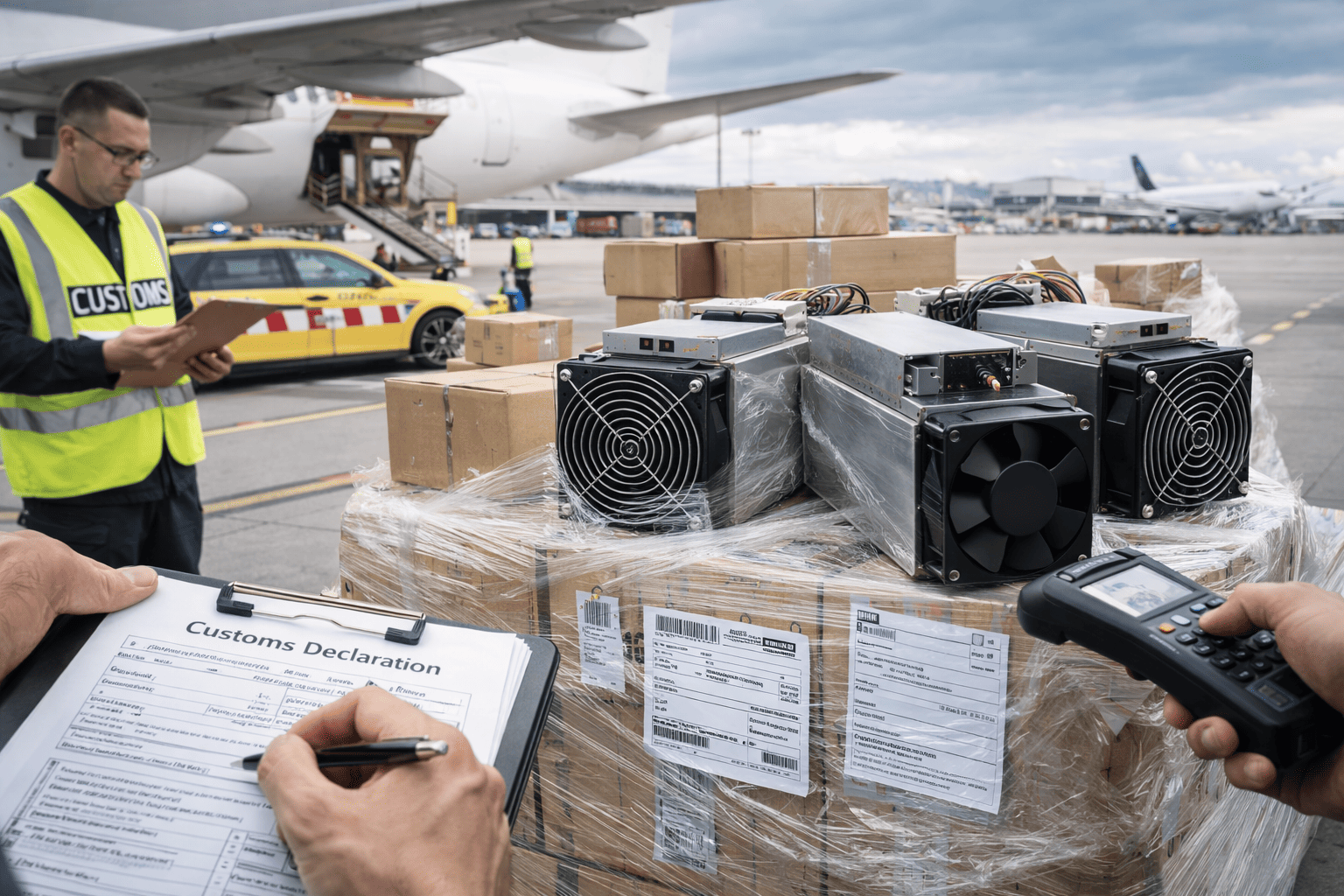
The core document set we use for ASIC miner imports
We treat this as the minimum package for most B2B shipments:
- Commercial Invoice
- Packing List
- Bill of Lading (ocean) or Air Waybill (air)
- Model list with quantities and HS code references
- Broker authorization paperwork (varies by country and broker)
For Canada, we also point buyers to CBSA invoice requirements because CBSA sets clear expectations for commercial invoices. You can read CBSA guidance here: CBSA Memorandum D1-4-1 — Invoice Requirements.
The “match test” we run before we release cargo
We run a simple test before we ship. We compare key fields across every document.
| Field | Invoice | Packing list | B/L or AWB | Broker entry |
|---|---|---|---|---|
| Consignee / importer name | Must match | Must match | Must match | Must match |
| Product description | Must match | Must match | Can be shorter, but still accurate | Must match |
| Model and quantity | Must match | Must match | Totals must match | Must match |
| Unit value and total value | Must match | N/A | N/A | Must match |
| Incoterms and currency | Must match | N/A | N/A | Must match |
We also keep the language simple. We do not use vague words like “electronics.” We name the product and models.
The three mistakes that trigger the most holds
We see these mistakes often:
- A team writes one description on the invoice and another description on the broker entry.
- A team mixes “miner units” and “spare parts” under one line with one value.
- A team changes the quantity at the last minute and does not update every document.
We worked with a North America buyer who imported a full batch for a new facility. The buyer’s finance team edited the invoice values after the warehouse packed the cargo. The packing list and the invoice no longer matched. The broker had to rework the entry.
[Client story placeholder: add the buyer type, the delay, the cost, and the lesson.]
If you want us to prepare a broker-ready invoice and packing list set, we can do it before you ship. We do it every week. Contact us at https://wa.me/8613871817151 and tell us your destination country, your model list, and your shipment size. You can also visit us at www.minersource.shop.
Why Do Buyers Choose Miner Source for International Miner Shipments?

Many buyers do not only need a machine supplier. They also need a partner who understands export coordination, shipping documents, and cross-border miner deliveries.
At Miner Source, we support clients with miner sourcing, shipping coordination, and customs document preparation experience based on real international orders. With warehouse support in Hong Kong and Shenzhen, we can respond more flexibly to stock movement, export arrangements, and different shipping plans.
Our Practical Advantages
- Hong Kong and Shenzhen warehouse support
This gives us more flexibility when arranging shipment plans and coordinating export handling. - Experience with global B2B miner shipments
We work with buyers in North America, Europe, the Middle East, and other international markets. - Faster document coordination
We can help clients review commercial invoices, packing lists, and shipment details before dispatch. - More transparent communication
Before you place an order, you can discuss customs concerns, product descriptions, and shipping details with us in advance instead of guessing after the goods are already on the way.
Conclusion
We do not treat customs as a mystery. We treat customs as a process. We start with HS code logic and we use official tariff tools. We then estimate duties and import taxes as separate items, because each market uses a different stack. We also track policy changes like the U.S. de minimis suspension, because policy shifts can change small-shipment planning overnight. We finally protect clearance speed by making every document match line by line and by keeping product descriptions clear.
We built Miner Source for buyers who need stable supply and stable export execution. We operate Hong Kong and Shenzhen warehouses, so we can inspect units, split batches, and ship in a controlled way for large B2B orders. If you want a clean plan for your next Antminer or Whatsminer import, contact us at https://wa.me/8613871817151. We will reply with our checklist and templates, and we will help you reduce customs surprises.

