
What taxes are included in cryptocurrency mining taxes?
As a crypto miner, I was surprised to learn how many different taxes can apply. Knowing each tax type helps me plan my finances and avoid surprises. Crypto mining taxes usually include income tax and capital gains tax. I pay income tax on the value of mined coins when I receive them. If I later sell those coins at a profit, I owe capital gains tax.

Income Tax on Mining Rewards
Most tax authorities count newly mined cryptocurrency as taxable income. When I successfully mine coins, their market value at that moment is added to my income. For example, if I mine 1 BTC valued at $30,000 today, I must report $30,000 as income. This income gets taxed at my ordinary tax rate, just like a paycheck. I learned that even if I don’t sell the coins immediately, the tax man still considers them income upon receipt. In the US and UK, this means my mining rewards are treated like earnings and taxed accordingly. If I mine as a business, I also have to pay any applicable self-employment or business taxes on that income. The good news is I can often deduct mining costs (like electricity or hardware) to offset some of this income, which can lower the tax.
| Category | Explanation | Examples / Notes |
|---|---|---|
| Tax Trigger | Mining rewards are treated as taxable income at the moment you receive the coins | Equivalent to earning a paycheck |
| Tax Basis Value | Market value of the mined crypto at the time of receipt | Example: Mine 1 BTC at $30,000 → report $30,000 as income |
| Tax Rate | Ordinary income tax rate (varies by country) | U.S., U.K. both treat mining rewards as income |
| Business Mining | Mining as a business may incur self-employment or corporate taxes | Additional filings may be required |
| Deductions | Electricity, hardware, hosting fees, repairs, etc. may offset income | Lowers taxable income |
Capital Gains Tax on Crypto Sales
After mining, I usually hold or eventually sell the coins. When I sell mined cryptocurrency, I trigger a capital gains tax event. The tax is based on the price difference: how much the coin’s value changed from when I received it to when I sold it. If I sell for more than its value at mining time, that profit is a capital gain and is taxed. If I sell for less, I have a capital loss, which might offset other gains. The rate of capital gains tax depends on the jurisdiction and sometimes how long I held the coin. In the US, if I hold the mined crypto for more than a year, I qualify for a lower long-term capital gains tax rate. In some countries, long-term holding can even eliminate the tax entirely. (For instance, in Germany if I hold crypto for over one year, the sale can be tax-free.) In most cases though, I pay a capital gains tax, often ranging from around 0% up to 20-30% depending on local laws and income level. I always track the value of my coins at the time of mining, because that becomes the cost basis to calculate any gain or loss later.
| Category | Explanation | Examples / Notes |
|---|---|---|
| Tax Trigger | Selling mined crypto creates a capital gains event | Gain = Sell Price – Value at time of mining |
| Cost Basis | The value at the moment of mining becomes your cost basis | Crucial to track correctly |
| Capital Gains Rate | Depends on jurisdiction + holding period | Often 0%–30% |
| Long-Term Benefits | Lower tax rates for long-term holding in many countries | U.S.: >12 months = lower rateGermany: >1 year = tax-free |
| Capital Losses | Selling for less than cost basis = capital loss | Can offset other gains in many countries |
Other Tax Considerations
I also keep in mind other tax factors beyond income and capital gains. If I mine as a business, I may face business taxes or need to register for tax purposes. For example, mining as a business in my country might require me to pay additional social taxes or contributions on my earnings. If I incorporate a mining company, the company’s profits could be subject to corporate tax. Some countries have unique taxes that can affect miners. (Spain, for example, has a wealth tax for high net-worth individuals, and crypto holdings might count toward that.) The silver lining is that many jurisdictions do not levy sales tax or VAT on mining rewards. Since mining doesn’t involve a traditional sale of goods or services to a customer, taxes like VAT/GST usually don’t apply to the act of mining itself. (In Russia’s new rules, for instance, mining operations are explicitly exempt from VAT.) Overall, the main taxes I worry about are the income tax on the mined coins and the capital gains tax when disposing of them. Everything else depends on my specific business setup and local laws.
| Category | Explanation | Examples / Notes |
|---|---|---|
| Business Taxes | Mining as a business may require registration, corporate tax, social contributions | Depends on local rules |
| Special Taxes | Some countries have extra taxes like wealth tax | Spain: high-net-worth individuals taxed on crypto holdings |
| VAT / Sales Tax | Mining rewards typically not subject to VAT/GST | No “sale of goods” occurs in the mining process |
| Jurisdiction Example | Russia explicitly exempts mining from VAT | Shows global variations |
| Main Taxes to Track | Income tax (upon receiving crypto) + capital gains tax (when selling) | Primary focus for miners |
How do cryptocurrency mining tax policies differ in the USA, UK, Russia, China, and other countries?
My customers range from the US to Europe to Asia. I’ve learned that every country taxes crypto mining differently. From strict regulations to tax havens, the differences can be dramatic. Cryptocurrency mining tax policies vary widely worldwide. For example, the United States and UK tax mining as regular income, while countries like the UAE impose no personal tax on mining earnings. Some jurisdictions even completely ban crypto mining.
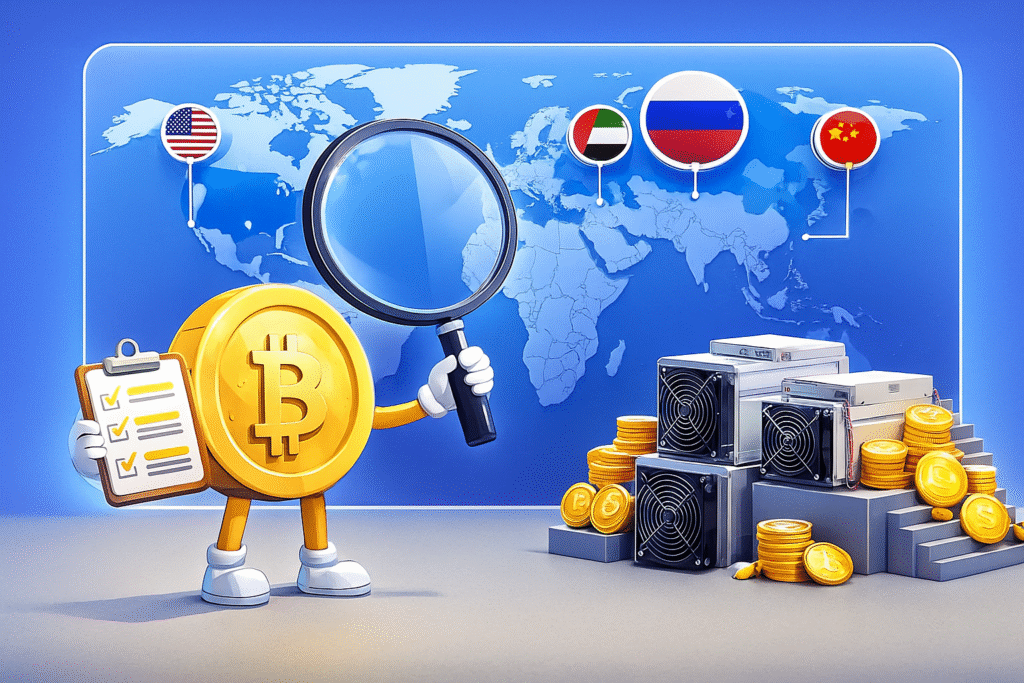
Cryptocurrency mining regulations and taxes are not the same everywhere. Here is an overview of how different countries handle mining taxes:
| Country / Region | Tax Treatment of Mining Rewards | Tax on Selling Mined Crypto | Other Notes |
|---|---|---|---|
| United States | Mining rewards taxed as ordinary income at FMV when received (10%–37% federal). Business miners may also owe self-employment tax. | Subject to capital gains tax (0%–20%) based on holding period and income level. | Business miners can deduct electricity, equipment, etc. |
| United Kingdom | Mining rewards taxed as income at personal rates (20%–45%). If considered a business, may owe National Insurance. | Gains taxed at 10% or 20% depending on bracket; CGT allowance applies. | Mining may be classified as “trading” if activity is substantial. |
| Russia (2025 rules) | Individuals pay 13% (or 15% for high earners). Mining operations exempt from VAT. Companies pay 25% corporate tax. | Gains taxed normally depending on whether individual or corporate. | Mining officially legalized & regulated. |
| China (Mainland) | Mining is illegal; no official tax treatment. | No legal framework because mining is banned. | Only compliant option is not to mine. HK is more open but large-scale mining uncommon. |
| Canada | Hobby mining: not taxed at receipt. Business mining: taxed as business income at FMV when mined. | Hobby miners: only capital gains when coins sold; only 50% of gains are taxable. | Business miners can deduct expenses. No special mining tax. |
| United Arab Emirates (UAE) | Zero personal income tax → no tax on individual mining profits. | No capital gains tax for individuals. | Mining companies pay 9% corporate tax on profits above ~AED 375,000. |
| Australia | Hobby mining: no tax at receipt. Business mining: taxed as ordinary income (up to ~47%). | CGT applies when sold; individuals get 50% CGT discount if held >12 months. | Business miners can deduct expenses & depreciate equipment. |
| Spain | Mining treated as commercial activity → taxed at regular income rates (up to 47%). | Capital gains taxed at 19%–28% depending on profit amount. | Wealth tax may apply for high-value holdings; strict reporting rules. |
| Netherlands | Mining rewards taxed as income (Box 1) if considered active activity. | No standard CGT. Crypto held is taxed annually under wealth tax (assumed return ~6%, taxed at 31%–36%). | Active miners often treated as businesses; wealth tax applies on holdings. |
As you can see, crypto mining tax laws span from very strict to very lenient. It’s essential for me (and any miner) to understand the specific rules in each country where we operate. I deal with buyers in many of these regions, and being aware of these differences helps me advise them and plan my business. For example, I know mining in a high-tax country means I must budget for a big tax bill, while mining in a place like the UAE could let me keep all my crypto. Staying compliant everywhere is challenging, but it’s non-negotiable if I want to run a global mining operation.
How to avoid paying taxes on cryptocurrency mining?
As a miner, I want to keep as much of my earnings as possible. While I can’t dodge taxes illegally, I’ve found legal strategies to reduce or even eliminate my crypto tax bill. I legally minimize crypto mining taxes by relocating to countries with no crypto tax, by deducting my mining expenses to reduce taxable income, and by timing my coin sales for the right times to qualify for lower tax rates.

Every crypto miner dreams of paying little to no tax – and some actually achieve it within the law. Over time, I’ve implemented a few key strategies to keep my mining profits in my pocket and out of the tax office’s hands. Below I break down how I (and other savvy miners) avoid or minimize taxes on mining, all through legitimate means:
Relocate to Tax-Friendly Jurisdictions
One of the most powerful ways to avoid heavy taxes is choosing the right location for mining. I moved part of my operation to a country with crypto-friendly tax laws, and the savings are huge. Some countries simply don’t tax cryptocurrency mining or investments at all. For example, when I base my mining in the United Arab Emirates, I pay no personal income or capital gains tax on those earnings. The UAE, along with places like Singapore and Cayman Islands, has zero tax on individual crypto income, meaning all the mined coins I earn are mine to keep. Other nations offer limited-time tax breaks: Belarus, for instance, has extended an exemption so that both individuals and businesses pay no tax on crypto activities (mining, trading, etc.) through 2025. This effectively makes mining income tax-free there, at least for now.
There are also regions like Puerto Rico that, while not completely tax-free, provide special incentives – U.S. citizens who become Puerto Rico residents can greatly reduce or eliminate capital gains taxes on crypto. As a U.S. miner, relocating to Puerto Rico could exempt my future crypto gains from U.S. federal tax, though I’d still follow Puerto Rico’s local tax rules.
In practice, I’ve found that operating in a low-tax jurisdiction is the closest thing to “avoiding” taxes outright. It might mean physically moving myself or my equipment, or setting up a legal entity in that country. I had to weigh the costs of relocating against the tax savings. In my case, moving to a tax haven country significantly boosted my net profits. Of course, moving isn’t feasible for everyone – family, business ties, or legal constraints can get in the way. But if you’re flexible, establishing residency in a crypto tax haven can lawfully shield your mining income from taxes. I always ensure it’s done above-board, obtaining proper residency or business registration, so that the tax benefits are legitimate. This strategy requires big life changes, but it can eliminate the tax line item from a miner’s balance sheet.
| Strategy Area | Key Points | Examples / Notes |
|---|---|---|
| 1. Relocate to Low-Tax or Zero-Tax Countries | Moving mining operations or personal residency to tax-haven jurisdictions can legally eliminate income and capital gains taxes on mined crypto. | UAE, Singapore, Cayman Islands → 0% personal income & capital gains tax on crypto. |
| 2. Countries with Temporary Crypto Tax Exemptions | Some governments offer limited-time tax holidays for mining, trading, and crypto business activities. | Belarus: full tax exemption for individuals & companies on crypto activities through 2025. |
| 3. Special U.S. Territories with Crypto Incentives | Certain regions offer special tax rules that reduce federal tax burden for U.S. citizens. | Puerto Rico: relocating allows U.S. citizens to eliminate U.S. federal capital gains tax on future crypto gains (subject to PR rules). |
| 4. Setting Up a Legal Entity in a Tax-Friendly Country | Creating a mining company in a low-tax jurisdiction can reduce or remove tax obligations on mining profits. | Requires local registration, compliance, residency, and possible relocation of hardware. |
| 5. Residency-Based Tax Advantages | Many crypto tax havens require physical residency or minimum days spent in country to access benefits. | UAE residency, Singapore residency, Puerto Rico bona fide residence test. |
| 6. Practical Considerations Before Moving | Must weigh relocation costs vs. tax savings; evaluate family, work, and legal constraints. | For flexible miners, relocating can dramatically increase net profit by eliminating taxes. |
| 7. Fully Legal & Compliant Approach | Must obtain proper residency, visas, or business registration to legally qualify for tax benefits. | Ensures tax savings are legitimate and compliant with international tax laws. |
Deduct and Depreciate Mining Expenses
If moving isn’t an option, the next best way I avoid taxes is by lowering my taxable income. I do this by taking every deduction I possibly can related to my mining operation. Mining can be expensive – I spend a lot on electricity, mining hardware, cooling systems, and warehouse space. The upside is that in most tax systems, business expenses are deductible from income. I classify my mining as a business so I can subtract these costs from my mining earnings. For example, when I earn $10,000 worth of crypto and spent $6,000 on electricity and rig maintenance, I only have to pay tax on the $4,000 profit, not the full $10,000. The tax laws encourage business investment by allowing these deductions, and I take full advantage of that.
Another key deduction is depreciation of equipment. My ASIC miners and GPU rigs lose value over time, or become obsolete as technology advances. Tax rules let me depreciate (gradually write off) the cost of this equipment over a few years. Each year, I deduct a portion of the hardware’s cost as an expense. This means if I bought mining machines for $20,000, I might deduct, say, $5,000 per year for four years. These depreciation deductions significantly reduce my taxable income in those years. In some countries, there are even accelerated depreciation schemes or investment allowances for high-tech equipment – I check local tax incentives to maximize these benefits.
By carefully tracking all my receipts and costs, I often find extra write-offs. Did I travel to inspect a mining facility? That’s a business travel expense. Did I pay for specialized software to monitor my miners? That’s deductible too. I’ve basically turned minimizing taxes into a game of “find every expense.” It’s crucial to keep thorough records – invoices for hardware, electricity bills, repair receipts – so I can prove these expenses if audited. Using this strategy, I often see my effective tax rate drop because I’m only paying taxes on a much smaller profit margin. In summary, I avoid paying more tax than necessary by ensuring I’m taxed only on net profit, not gross revenue.
| Strategy | How It Works | Benefits | Examples |
|---|---|---|---|
| Deduct Operating Expenses | Treat mining as a business; deduct electricity, hardware, cooling, rent, software, travel, etc. | Lowers taxable income significantly | Earn $10,000 → spend $6,000 on power → tax only on $4,000 profit |
| Depreciate Equipment | Write off ASIC/GPU cost over several years (or faster under accelerated schemes). | Reduces taxable income each year | $20,000 hardware → deduct ~$5,000 yearly over 4 years |
| Track Every Expense | Maintain receipts for deductions (hardware, repairs, electricity, tools). | Maximizes write-offs; protects during audit | Travel to mining site → deductible business expense |
Time Your Sales and Holdings
Tax timing is another powerful tool I use to my advantage. The idea is simple: when I sell or use my mined crypto can change the amount of tax I owe. I plan the timing of my sales to minimize the tax impact. One approach is holding onto mined coins long enough to qualify for lower tax rates. In the United States, for example, I hold my mined Bitcoin for over one year whenever possible, so that any gain qualifies as a long-term capital gain – taxed at a much lower rate than short-term income. This can be the difference between a 37% tax hit (short-term, treated as income) and a 15% tax hit (long-term, capital gains) for someone in my bracket. Waiting a few extra months to sell can literally cut my tax bill in half in that case.
In some countries, the benefit of patience is even greater. I mentioned Germany earlier – if I hold mined crypto for more than one year, I can sell it completely tax-free on the gain (Germany doesn’t tax long-held crypto as it’s considered a private sale). Knowing this, if I were mining in Germany, I’d be very keen to HODL my coins for at least that one-year mark to avoid taxes entirely on the sale.
Beyond holding periods, I also consider the calendar and my personal income situation. I try to sell coins in a year or time when I have lower overall income or other losses to absorb the gains. For instance, one year I decided to sell a chunk of Ethereum I had mined, but only after I quit my high-paying day job. With my salary gone, my taxable income was much lower, so the crypto sale fell into a lower tax bracket – resulting in less tax due. I’ve also timed sales to match up with other losing investments. In a year when the crypto market dipped, I sold some older holdings at a loss and used that capital loss to offset other mining profits. This tax-loss harvesting strategy meant the losses I realized reduced the taxable gains on my mined crypto.
Another timing trick is spreading out sales. If I have a large amount of crypto to liquidate, I don’t do it all in one tax year if that would push me into a higher tax bracket. I might sell half in December and half in January, so the income splits between two years. This way, I stay in a lower bracket each year. The key is planning and foresight – I keep an eye on tax deadlines, holding period cut-offs, and my overall income picture. By being strategic about when I convert crypto to cash or make trades, I legally avoid paying higher taxes than necessary. It requires patience and discipline (and sometimes nervously watching the market), but it often pays off in substantial tax savings.
| Strategy | How It Works | Benefits | Examples |
|---|---|---|---|
| Long-Term Holding | Hold mined crypto long enough to qualify for reduced capital gains tax rates. | Cuts tax rate dramatically | U.S.: >1 year = 15% CGT vs 37% short-term |
| Tax-Free Holding Jurisdictions | Some countries eliminate tax on long-term gains. | Zero tax on sale | Germany: crypto held >1 year = 0% tax |
| Sell in Low-Income Years | Plan sales when personal income is lower to stay in lower tax bracket. | Lower tax on crypto gains | Sold ETH after quitting day job → fell to lower bracket |
| Tax-Loss Harvesting | Sell losing assets to offset taxable gains. | Reduces net taxes owed | Sell losing coins in bear market to offset mining gains |
| Split Sales Across Tax Years | Spread large disposals across two calendar years. | Avoids being pushed into higher bracket | Sell half in December + half in January |
Leverage Tax-Advantaged Entities and Regions
In some cases, I’ve explored setting up specific business structures or taking advantage of regional incentives to reduce taxes. For example, I considered establishing an international subsidiary of my company in a low-tax country. By doing so, profits from mining could be realized in that country and taxed at a lower corporate rate, rather than at a high personal rate in my home country. This approach has to be done carefully – international tax law is complex, and you have to avoid illegal evasion schemes. But large mining operations sometimes base themselves through companies in crypto-friendly nations to benefit from things like 0% corporate tax (as in certain offshore jurisdictions) or special economic zones.
Some regions offer tax holidays or credits for tech businesses or renewable energy usage. My mining rigs consume a lot of electricity, so I looked into areas that provide tax credits for renewable energy. One example: a U.S. state provided a credit or rebate for businesses that set up solar panels. If I power part of my mining farm with solar and meet the program’s criteria, I could get a break on state taxes or at least a rebate on equipment costs. This indirectly reduces my tax burden by lowering costs (which, as discussed, lowers taxable profit).
Furthermore, I try to take advantage of any tax-free thresholds or exemptions. Some countries allow a small amount of income to be earned tax-free. In the UK, for instance, there was a £1,000 trading and property allowance that could potentially cover small-scale mining income – meaning I wouldn’t pay tax on that first £1,000 if I qualified. Spain and other EU countries have an income threshold under which no income tax is paid. Keeping some of my operations or side projects below those thresholds (where feasible) effectively makes that portion tax-free. It’s a minor gain, but every bit helps.
All of these methods require thorough understanding of the laws and sometimes professional advice. I’ve consulted with tax professionals to ensure that my strategies – whether it’s relocating, deducting expenses, timing sales, or structuring businesses – are all legal and won’t backfire. The last thing I want is to attempt a tax dodge and end up with penalties. Instead, I stick to legitimate tax avoidance (the legal kind of avoidance) and steer clear of tax evasion (the illegal kind). By combining these tactics—choosing a favorable jurisdiction, maximizing deductions, and planning transactions wisely—I manage to significantly reduce the taxes on my crypto mining, allowing me to keep more of my hard-earned coins without ever breaking the law.
| Strategy | How It Works | Benefits | Examples |
|---|---|---|---|
| Set Up Entity in Low-Tax Country | Establish a mining company in a favorable jurisdiction. | Lower corporate tax; protected profits | Offshore jurisdictions with 0% corporate tax |
| Renewable Energy Tax Credits | Some regions reward solar/wind-powered mining with rebates or credits. | Reduces equipment cost OR state tax | U.S. states offering solar installation rebates |
| Use Tax-Free Income Thresholds | Keep some activities below local tax-exempt allowances. | Makes part of income tax-free | UK £1,000 trading allowance; EU low-income exemptions |
| Special Economic Zones | Operate in regions offering incentives for tech/energy businesses. | Reduced corporate or local taxes | Certain Asian & Middle Eastern SEZs |
| Professional Tax Planning | Work with advisors to ensure strategies remain legal. | Avoid penalties; maximize legal savings | Ensures actions stay within avoidance (legal) not evasion (illegal) |
Conclusion
Crypto mining taxes can be complex, but by staying informed and proactive, I manage to stay compliant and keep more of my hard-earned crypto profits. Contact Miner Source Purchase You Mining Rigs Now!

